
Sustainable longevity requires a practical balance between extended healthspan, athletic performance, and personal enjoyment without adopting rigid or extreme daily routines.





The pursuit of longevity is often presented as an all-or-nothing effort. Popular media suggests that living a long and capable life requires endless tracking, rigid diets, and extreme morning protocols. In reality, longevity is not a single outcome that can be maximized in isolation. It is a dynamic balance between how long you live, how well you perform, and how much you enjoy your daily existence.
True longevity management is about strategic resource allocation. It is the conscious process of balancing your time, physical energy, financial investment, and personal freedom. When you treat health as a portfolio of capabilities, you quickly realize that every intervention carries a cost. Pursuing extreme athletic endurance can wear down joint cartilage and disrupt family dinners. Restricting calories to chase a biomarker can drain your energy and strain your mood. Conversely, ignoring basic conditioning limits your independence and cuts short your active years.
This guide provides a comprehensive framework to help you evaluate interventions, resolve competing goals, and build a sustainable routine. Whether your focus is hiking remote alpine trails, staying competitive on the tennis court, or preserving sharp cognitive function, this resource helps you make intelligent decisions without turning your life into a full-time medical project.
The Longevity Trade-Offs Framework is a practical decision model designed to help active adults evaluate health interventions. It recognizes that healthspan, physical performance, and personal enjoyment frequently pull in opposite directions. Rather than attempting to maximize every metric simultaneously, the framework guides you toward optimal alignment.
The core premise rests on understanding that every health protocol consumes four limited currencies: time, attention, money, and opportunity. An intervention that slightly improves a laboratory biomarker while ruining your sleep or social life is a net loss. This framework forces an honest accounting of both the benefits and the secondary costs of any health behavior.
To apply the framework effectively, you must distinguish between your non-negotiable foundations and optional optimizations. Foundational actions, such as consistent resistance training and sufficient sleep, provide massive returns across all areas of health. Optimizations, such as advanced supplement stacks or extreme cold exposure, deliver small returns and demand high effort.
By categorizing your goals and scoring interventions systematically, you can cut through marketing hype. You will invest your resources where they produce measurable improvements in vitality and capability. Most importantly, you will protect the spontaneity, recreation, and social connections that make a longer life worth living.
To navigate health decisions intelligently, you need clear definitions grounded in physiology. The World Health Organization defines healthy aging as the process of developing and maintaining the functional ability that enables wellbeing in older age. This definition shifts the focus away from merely delaying chronological death. It centers on preserving your ability to do what you value most.
Functional ability is determined by the relationship between your intrinsic capacity and your surrounding environment. Intrinsic capacity is the composite of all your physical and mental capacities. It encompasses your cardiovascular fitness, muscular strength, cognitive sharpness, sensory perception, and psychological resilience.
Biological reserve represents the safety margin between your peak capacity and the minimum capacity required for daily life. For example, consider the muscular strength required to stand up from a low chair. A young adult uses roughly thirty percent of their maximum leg strength for this task, leaving a wide reserve. An individual with severe muscle loss might need ninety percent of their maximum capacity, turning a basic movement into a maximal effort.
Physical reserve operates across several physiological domains:
When you invest in structured strength training protocols, you build a deep physical buffer. This reserve protects you against unexpected illness, injury, or age-related decline. The biological goal of longevity training is not to set temporary athletic records. It is to build and maintain this functional buffer across every decade of life.
Conflicts between health goals are inevitable. Recognizing these trade-offs early prevents frustration, chronic fatigue, and wasted financial resources. Most conflicts fall into five distinct categories.
Athletic performance often demands acute physiological stress that can undermine long-term joint health and systemic recovery. High-volume marathon preparation, for example, builds exceptional aerobic capacity. Yet, the repetitive impact and massive weekly mileage can accelerate joint wear and increase chronic systemic inflammation.
Similarly, pushing for visible muscular definition through severe caloric deficits suppresses thyroid function and reduces bone mineral density. A competitive athlete may accept these risks during a short competitive season. However, adopting these practices as a permanent lifestyle can compromise long-term functional ability.
Rigid longevity protocols frequently create social friction and mental strain. When dietary rules prevent you from sharing meals with family or enjoying local cuisine during travel, your social health suffers.
The medical journal The Lancet observed that while no level of alcohol consumption is entirely free of risk, the absolute risk of light drinking is relatively small. An individual may rationally decide that sharing a glass of wine with friends provides a social and psychological benefit that outweighs the minor biological risk. Longevity advice fails when it treats all pleasure as a medical error. A sustainable health plan leaves room for spontaneous dinners, celebration, and leisure.
Looking lean and fit can correlate with good health, but appearance is a poor proxy for internal biological resilience. Many aesthetic protocols actively undermine functional capacity. Extreme leanness impairs hormonal balance, degrades sleep quality, and increases susceptibility to viral illnesses.
Dehydration routines used to enhance muscle definition before events can place severe acute stress on renal function. True vitality prioritizes durable muscle tissue, stable energy, and strong bones over temporary cosmetic extremes.
Professionals and entrepreneurs frequently use excessive stimulants to sustain focus during long work hours. While high doses of caffeine or cognitive supplements provide short-term alertness, they disrupt sleep architecture.
The Centers for Disease Control and Prevention notes that physical activity provides acute cognitive and mood improvements on the same day. Relying on movement and natural circadian rhythms creates sustainable mental sharpness. Using chemical stimulants to mask underlying sleep debt degrades executive function and emotional regulation over time.
Attempting to eliminate all physical risk leads to a sedentary, overprotected existence. Avoiding vigorous sports, skiing, or hiking out of fear of injury causes muscular atrophy and balance deficits.
Controlled physical stress is essential for human vitality. Exposing your body to progressive resistance training, varied terrain, and balance challenges forces your tissues to adapt. Avoiding all physical challenges eliminates immediate minor risks while guaranteeing long-term frailty.
With thousands of health products and protocols on the market, choosing where to direct your focus can feel overwhelming. To bring clarity to your decisions, our team uses a straightforward five-axis evaluation model.
For any proposed intervention, rate each axis on a scale from one to five:
You can calculate an overall priority rating with a simple relationship:
Priority Score = (Benefit × Evidence × Relevance × Feasibility) / Burden
This scoring system organizes potential health actions into four distinct operational tiers.
Foundational interventions offer proven benefits, high feasibility, and low relative burden. These actions influence multiple physiological systems simultaneously and form the bedrock of your routine:
Tier 2 actions address specific personal risks or physical limitations. These protocols provide substantial value when matched to a diagnosed need:
Once your foundational habits and specific clinical needs are stable, Tier 3 strategies offer incremental refinements:
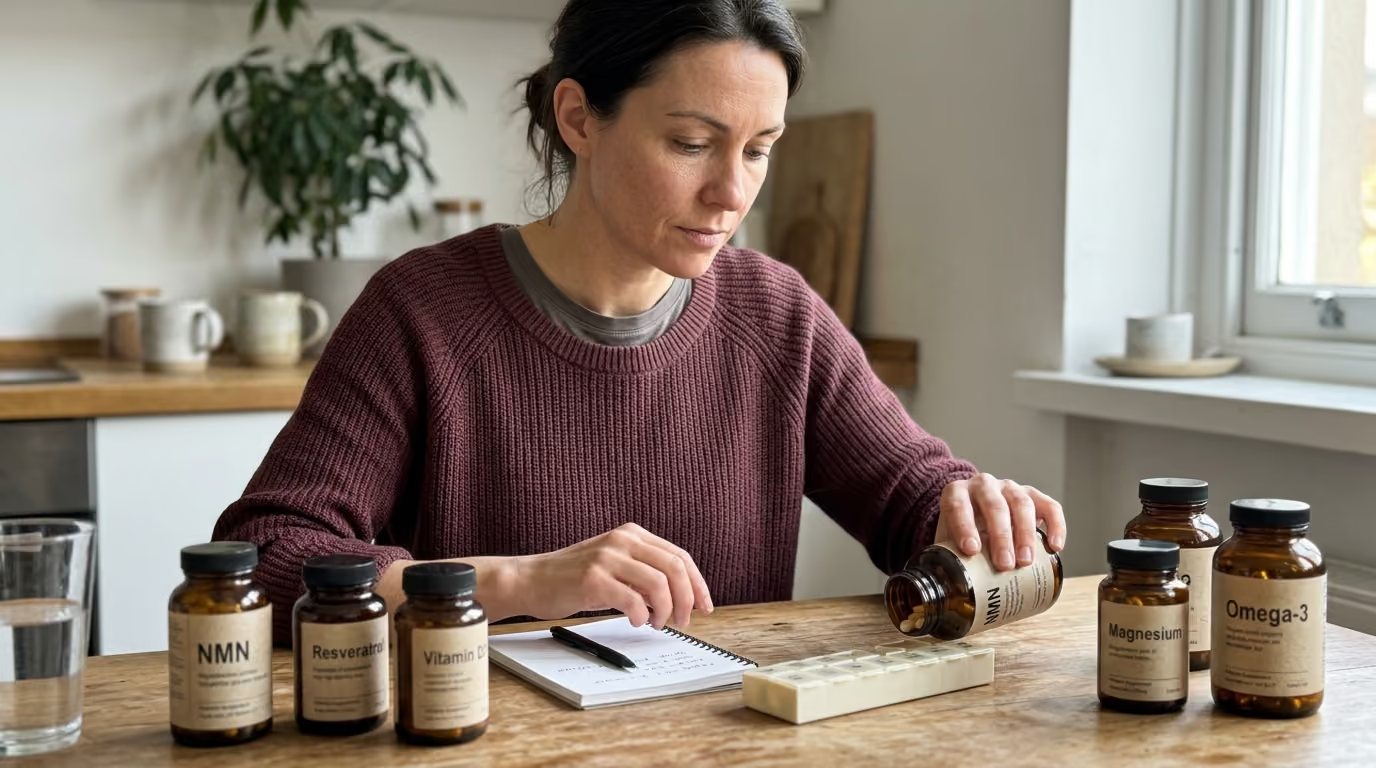
Tier 4 includes emerging supplements, biological age clocks, and unvalidated longevity therapies. These interventions typically carry high financial costs, weak human clinical evidence, and unknown long-term risks.
A biomarker showing a temporary shift does not prove that an intervention extends lifespan or prevents disease. For instance, recent research from the National Institutes of Health evaluated circulating taurine levels across species and age groups. The researchers concluded that taurine is unlikely to serve as a reliable aging biomarker and noted a lack of clinical evidence showing that supplementation improves human longevity. Approaching Tier 4 claims with healthy skepticism protects both your wallet and your wellbeing.
The minimal effective dose is the smallest amount of an intervention required to produce a meaningful biological adaptation. Applying this principle prevents overtraining, mental burnout, and unnecessary financial waste. More is not always better in human physiology.
A reader recently asked our team if they needed to start a complicated, three hour morning routine they saw online. We told them absolutely not. When we looked at the research they referenced, the actual benefits were marginal compared to simply getting eight hours of sleep and lifting heavy things twice a week. Distraction by the top one percent of optimization often causes people to forget that the foundation delivers almost all the real results.
You do not need to spend hours in the gym each day to maintain exceptional physical reserve. A major systematic review published in the British Journal of Sports Medicine examined the relationship between resistance training and health outcomes. The researchers found that any resistance training was associated with a 15 percent lower risk of all-cause mortality and a 19 percent lower risk of cardiovascular mortality.
The maximum mortality reduction occurred at approximately 60 minutes of total resistance training per week. Beyond that point, the health longevity curve flattened significantly. While competitive athletes require higher training volumes for sports performance, an active adult can build substantial strength and bone density in just two 30-minute sessions per week.
Your weekly movement portfolio should include:
Sleep is the single most powerful biological recovery system available. The American Academy of Sleep Medicine consensus panel recommends seven to nine hours of sleep per night for optimal adult health. Regularly sleeping six hours or less is associated with impaired immune function, metabolic dysfunction, and higher cardiovascular risk.
Rather than buying elaborate sleep tracking gadgets, focus on optimizing recovery and sleep habits through simple behavioral cues:
Complex dietary restrictions often lead to poor compliance and social isolation. Observational research consistently supports dietary patterns rich in whole foods, dietary fiber, vegetables, and lean protein sources. A long-term study following 25,315 women over 25 years found that higher adherence to a Mediterranean dietary pattern was associated with a 23 percent reduction in all-cause mortality.
To establish a sustainable nutritional baseline, follow these basic principles:
For deeper insights into establishing metabolic flexibility, review our work on balanced nutrition and metabolic health.
Applying the Longevity Trade-Offs Framework becomes intuitive when you look at practical, real-world situations. Here is how active adults across different life stages can balance competing demands.
Consider a 48-year-old executive training for mountain trail running events. High weekly running mileage causes persistent achilles tendon tightness, chronic fatigue, and friction with family commitments.
Using the framework, the runner shifts from an extreme training volume to an aligned sustainability model:
A 52-year-old partner at a consulting firm struggles with irregular sleep, high mental stress, and frequent international travel. They have been trying to follow a five-day bodybuilding split while surviving on six hours of sleep and high caffeine intake.
The framework redirects their energy toward physiological sustainability:
A 68-year-old retired architect wants to maintain the physical capacity to travel independently, ski, and manage a large property. However, mild balance concerns and a fear of falling have led to reduced physical activity.
The framework prioritizes confidence and physical reserve:
Understanding how to align your physical capabilities with your values is central to the principles of longevity and living well.
Travel and outdoor exploration represent the ultimate test of physical reserve. Demanding itineraries expose every weakness in your aerobic capacity, joint mobility, and systemic resilience. However, approaching travel with an obsessive longevity mindset can ruin the experience.
When preparing for demanding travel and adventure itineraries, your training priorities must adapt. The primary physical requirements for adventure travel are walking tolerance, eccentric leg strength for downhill hiking, luggage management, and rapid circadian adaptation.
To optimize your physical readiness without overcomplicating your lifestyle, consider these travel-specific trade-offs:
The goal of longevity preparation is to build a body capable of experiencing the world fully. Health protocols should serve your adventures, not restrict them.
The modern wellness industry is filled with absolute statements that collapse under scientific scrutiny. Correcting these misconceptions frees up mental energy and prevents costly mistakes.
Exercise exhibits a clear hormetic curve where benefit rises, plateaus, and eventually declines. Extreme chronic exercise volume without adequate recovery increases the risk of overuse injuries, cardiac arrhythmias, and chronic fatigue. Finding your optimal volume ensures long-term joint health and consistent training adherence.
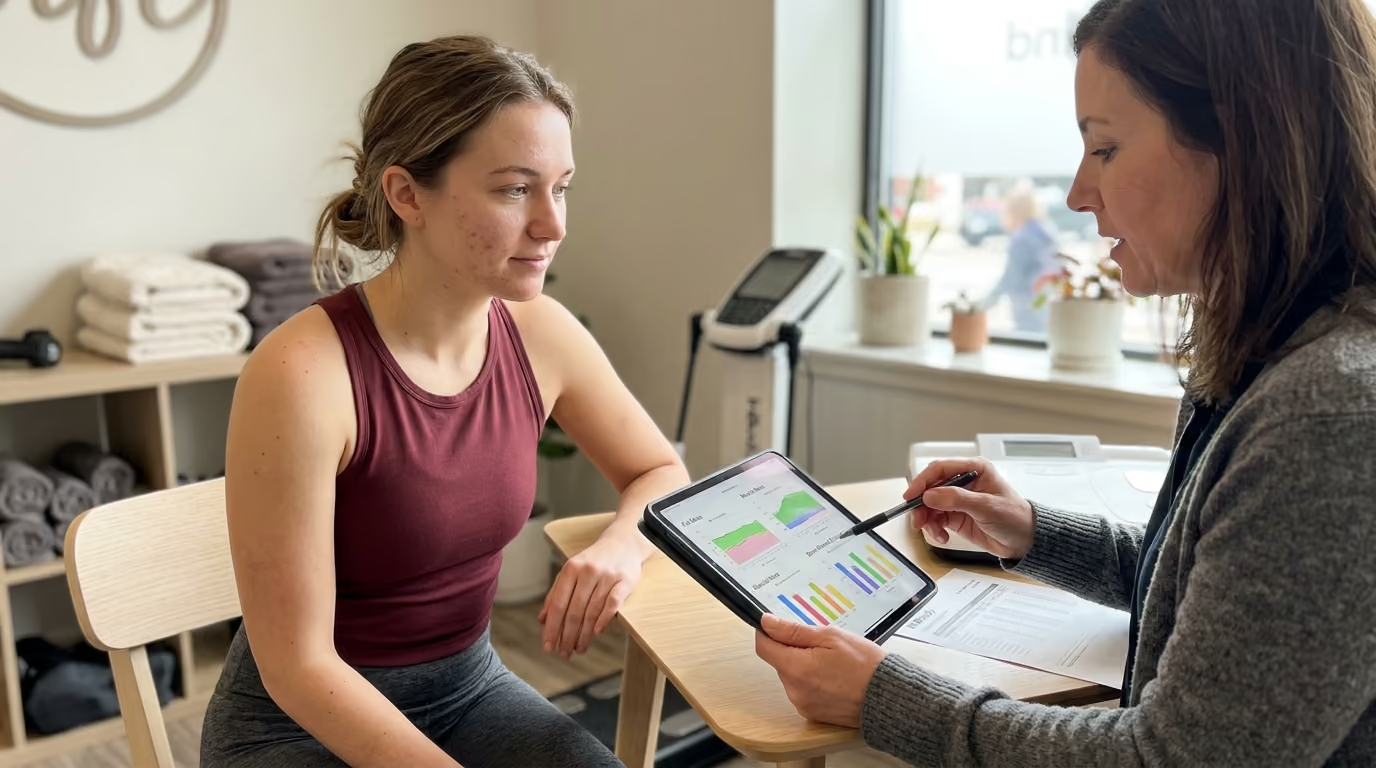
Commercial biological age tests analyze epigenetic markers or blood panels to produce a single biological age number. While this research is scientifically interesting, these scores have not been validated as clinical diagnostic tools. A changing biological age score does not prove that your actual risk of heart disease, dementia, or functional decline has decreased. Standard clinical markers like blood pressure, ApoB, fasting glucose, and cardiorespiratory fitness provide far more actionable guidance.
Attempting to eliminate every theoretical health risk produces a sterile, anxiety-driven existence. Avoiding all outdoor activities due to injury fears or avoiding all social dinners due to strict dietary rules damages psychological health. High-functioning longevity accepts minor, managed risks in exchange for rich life experiences.
No pill, powder, or peptide can undo the systemic damage of chronic sleep deprivation, heavy stress, and physical inactivity. Marketing campaigns often highlight isolated biochemical mechanisms while ignoring total lifestyle context. Investing money in basic fresh food, gym equipment, and comfortable bedding yields vastly superior returns.
Despite fierce public debates over specific diets and emerging molecules, the scientific consensus regarding healthy aging is clear. Major medical organizations, including the World Health Organization, the American Heart Association, and the U.S. Preventive Services Task Force, agree on the primary drivers of extended healthspan.
To establish a clear long-term strategy, follow this step-by-step goal-setting process:
True vitality is built on consistent execution of basic, unglamorous habits sustained over decades. When you align your health practices with your values, you build the physical and mental capacity to live a long, adventurous, and fulfilling life.
Training begins to compromise longevity when it causes chronic systemic fatigue, persistent joint inflammation, or repeated sleep disruption. If your resting heart rate stays elevated, your morning mood declines, or minor injuries linger for months, your training load exceeds your recovery capacity. Periodizing your training volume and including mandatory rest weeks will protect your long-term health while maintaining athletic performance.
Yes. Building physical reserve requires progressive resistance, which can be accomplished through bodyweight exercises, adjustable dumbbells, kettlebells, and resistance bands at home. The critical factor is applying sufficient mechanical tension to challenge your muscles and bones close to fatigue. As long as you progressively increase the difficulty of the movements over time, your body will adapt and build strength.
During periods of acute professional stress, your total biological recovery bandwidth is reduced. You should maintain your Tier 1 foundational habits but reduce training intensity and volume by 20 to 30 percent. Focus on restorative aerobic walks, sound sleep habits, and nutritious meals rather than attempting maximal strength or high-intensity interval sessions. Treat exercise as a stress-relief mechanism rather than an additional physiological burden.
For most active adults, commercial longevity clinics provide low return on investment compared to basic lifestyle optimization. Many clinics charge high fees for unproven biomarker panels, experimental infusions, and proprietary supplement lines. A comprehensive annual physical with an evidence-based physician, combined with standard blood panels, cardiorespiratory fitness testing, and clean lifestyle habits, provides virtually all the actionable health data you need.
Stay connected for research and practical guidance on longevity, strength, recovery, energy and active living. New ideas to help you stay capable, curious and ready for more.


Explore practical guidance on strength, recovery, energy, travel and longevity for a life that stays active.
explore the Blog