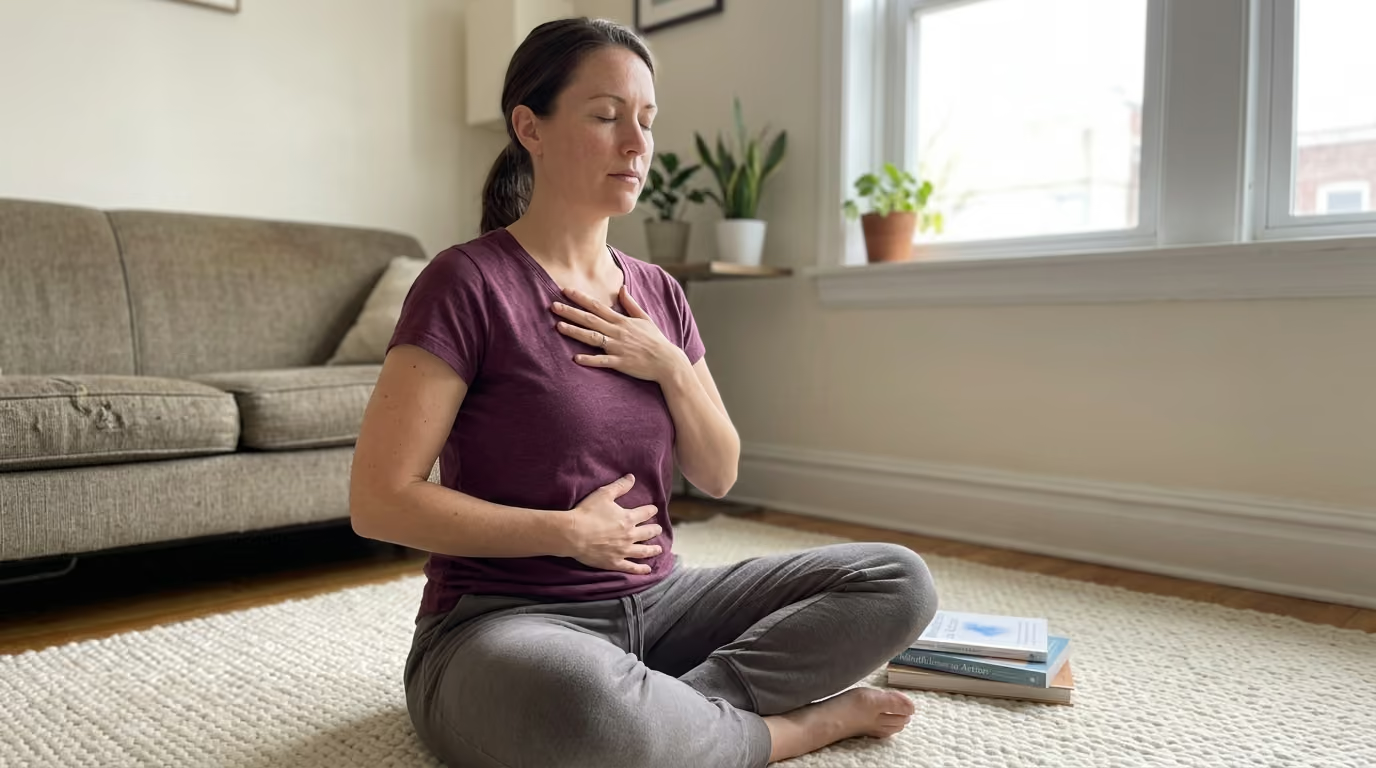

Four distinct physiological domains of breathwork optimize autonomic recovery, athletic mechanics, pre-sleep regulation, and respiratory muscle capacity.





You have likely searched for how to use breathwork for stress, better sleep, or athletic stamina, only to find conflicting claims. Some sources promise that specific breathing patterns will rewire your nervous system instantly. Other programs promote aggressive hyperventilation or rigid nasal breathing as essential tools for daily health.
This guide provides a definitive, research-grounded assessment of voluntary breathing manipulation. We examine what the physiological data actually confirms, where the boundaries lie, and how active adults over 40 can apply these techniques for measurable improvements in recovery, rest, and endurance.
Breathwork is defined narrowly as the conscious, voluntary manipulation of breathing depth, rate, rhythm, or pattern. This distinction separates structured breathing from incidental changes that happen during exercise, speech, or traditional meditation.
To evaluate these methods accurately, breathing practices are best divided into four distinct physiological categories.
First, down-regulation practices use slow-paced, diaphragmatic, or extended-exhalation patterns to reduce physiological arousal. Second, breathing-mechanics practices alter posture, rib cage expansion, airway resistance, and ventilatory efficiency.
Third, respiratory muscle training applies resistive or threshold loads to the inspiratory and expiratory muscles. Fourth, arousal practices use rapid breathing, voluntary hyperventilation, or breath holds to intentionally challenge autonomic tone and blood gas chemistry.
Understanding respiratory control requires distinguishing between breathing rate and total ventilation. A slower respiratory rate does not always mean calmer physiology.
Respiratory rate measures breaths per minute, while tidal volume measures the amount of air moved per breath. Minute ventilation represents total air moved every minute, calculated by multiplying rate by tidal volume.
Alveolar ventilation represents the volume of air reaching gas-exchanging regions, whereas dead-space ventilation remains in conducting airways. Slow breathing increases tidal volume, which can alter gas exchange efficiency and autonomic activity depending on how comfortably you breathe.
Diaphragmatic breathing occurs when the diaphragm descends during inhalation, allowing the lower rib cage and abdominal wall to expand. It should not be viewed as a mandatory posture for every minute of daily life.
Clinical research shows mixed responses to forced diaphragmatic breathing in individuals with respiratory limitations. It serves best as a relaxed coordination drill rather than a rigid physical requirement.
Nasal breathing increases airway resistance while filtering and humidifying incoming air. While useful during low-intensity movement and rest, it is not a universal performance solution.
Respiratory muscle training is fundamentally different from generic relaxation breathing. It uses calibrated mechanical resistance to build muscular capacity in the chest wall and diaphragm.
Slow breathing influences cardiovascular-autonomic coordination through measurable physical pathways. When you deliberately slow your respiratory cycle, you modify chemoreflex sensitivity and baroreflex function.
This shift alters respiratory sinus arrhythmia, a natural oscillation where heart rate accelerates during inhalation and decelerates during exhalation. Cardiorespiratory coupling strengthens when breathing synchronizes with natural blood pressure rhythms.
A landmark randomized controlled trial meta-analysis published in Scientific Reports evaluated the psychological impact of voluntary breathwork. The review examined 26 quantitative reports involving adult participants across stress, anxiety, and depression outcomes.
For perceived stress, analysis of 12 studies comprising 785 participants demonstrated a pooled effect size of minus 0.35. The 95 percent confidence interval ranged from minus 0.55 to minus 0.14.
This represents a statistically significant, small-to-medium reduction in subjective stress. Sensitivity analyses confirmed the stability of this finding, with effect sizes across leave-one-out models remaining between minus 0.27 and minus 0.39.
The same meta-analysis observed significant improvements in self-reported anxiety and depression. Anxiety outcomes across 20 trials yielded an effect size of minus 0.32.
Depression outcomes across 18 trials produced an effect size of minus 0.40. A separate systematic review of 19 breathing intervention studies showed that 12 reported significant reductions in anxiety, while nine reported reductions in perceived stress.
Despite these positive outcomes, asserting that slow breathing simply switches on the parasympathetic nervous system is an oversimplification. Heart rate variability reflects complex interactions between respiratory depth, baseline fitness, arterial baroreceptors, and mental state.
A temporary increase in heart rate variability during a breathing session indicates autonomic modulation. It does not provide standalone proof of permanent disease prevention or altered biological age.
Breathing near 0.1 Hertz, which equals five to six breaths per minute, amplifies cardiac oscillations and baroreflex sensitivity. For individuals managing demanding schedules, this pace offers a reliable method to stabilize acute physiological tension.
You can read more about balancing physical output with systematic recovery and sleep strategies to support your autonomic health.
Quality sleep requires a drop in core body temperature and a reduction in central nervous system arousal. When physical tension or rumination keeps sympathetic output high, falling asleep becomes difficult.
Breathing exercises provide a structured, non-pharmacological method to lower heart rate before sleep. A 2025 systematic review identified six key trials demonstrating positive effects of structured breathing exercises on self-reported sleep quality.
Controlled breathing functions as a physiological transition before rest. By lengthening the exhalation phase, you stimulate vagal afferent pathways that slow the cardiac pacemaker.
The American Lung Association highlights pursed-lip and diaphragmatic breathing as effective methods to slow ventilation and clear stale air. Inhaling smoothly through the nose and exhaling for roughly twice the duration through relaxed lips calms respiratory demand.
To incorporate this safely at night, practice while lying on your back with a small pillow under your knees. Keep your chest relaxed and avoid taking uncomfortably deep inhalations that create tension.
Focus on quiet, rhythmic cycles lasting five to eight minutes. If you experience lightheadedness or an urge to gasp, return to your natural breathing pattern immediately.
Breathing techniques have clear limits regarding primary sleep disorders. Breathwork cannot mechanically correct airway obstruction, treat obstructive sleep apnea, or fix severe circadian misalignment.
Loud snoring, waking with a gasping sensation, and persistent morning exhaustion require formal clinical evaluation. Use breathing practices as a tool for bedtime relaxation, not as a replacement for necessary medical diagnostics.
During exercise, your breathing must adapt rapidly to rising metabolic demand and muscular output. The way you breathe influences trunk stability, perceived exertion, and ventilatory efficiency during physical activity.
Nasal breathing during exercise has attracted considerable attention among endurance athletes and mountain travelers. Research indicates that nasal-only breathing is most sustainable during low to moderate aerobic efforts below your ventilatory threshold.
A comprehensive review noted that nasal breathing can alter minute ventilation and heart rate during submaximal work. However, acute laboratory testing shows no significant advantage for nasal-only breathing in muscular endurance, post-exercise oxygen saturation, or maximal output.
When hiking steep trails or skinning up mountain terrain, forcing strict nasal breathing can artificially limit oxygen intake. As workload climbs, switching to oral or combined breathing is a normal physiological adjustment.
Restricting airflow at high intensities increases respiratory muscle fatigue and raises perceived effort unnecessarily. Nasal breathing serves best as an internal pacing metric during recovery runs or easy aerobic base building.
For loaded carries and resistance work, breathing mechanics change entirely. Lifting heavy loads requires intra-abdominal pressure created by coordinated diaphragmatic descent and abdominal wall bracing.
Continuous, unforced breathing works best for light conditioning. In contrast, heavy resistance efforts demand deliberate breath control to protect spinal structures under load.
You can study these physical mechanics further within our strength and physical performance research.
Respiratory muscle training involves applying progressive resistance specifically to the diaphragm, intercostals, and accessory breathing muscles. Just like skeletal muscle, these respiratory tissues adapt to mechanical overload by increasing strength and fatigue resistance.
Generic slow breathing does not build respiratory muscle strength. True adaptation requires calibrated resistance devices that challenge inspiratory or expiratory flow.
A systematic meta-analysis evaluated the performance effects of structured respiratory muscle training across multiple athletic disciplines. The researchers confirmed significant positive improvements in endurance trial times, fixed-workload stamina, and repeated sprint tests.
When your breathing muscles fatigue during hard exertion, a phenomenon called the respiratory muscle metaboreflex triggers vasoconstriction in active limbs. Strengthening the respiratory musculature delays this reflex, preserving blood flow to working legs and arms.
An evidence synthesis examining breathing tools in running estimated that targeted breathing adaptations can yield roughly a 1% to 5% improvement in performance. These adaptations develop through weeks of consistent training rather than instant acute changes.
In clinical populations, targeted breathing exercises also show measurable benefits. In patients with chronic obstructive pulmonary disease, an eight-week protocol of pursed-lip breathing improved six-minute walking distance by an average of 50.1 meters.
For active adults, a standard training protocol involves using an inspiratory resistance device for 30 dynamic breaths twice daily. The resistance should feel challenging across the final ten repetitions of each set.
This approach provides a targeted physical stimulus without requiring changes to your primary athletic schedule.
International transit presents a unique combination of physiological stressors, including dry cabin air, long periods of sitting, disrupted circadian rhythms, and shifts in ambient pressure. Long-haul flights frequently leave travelers with elevated sympathetic tone, poor digestion, and fragmented sleep.
Controlled breathing practices offer an immediate, portable way to stabilize your nervous system in transit environments.
After a grueling thirty hour transit to Tokyo, I realized my old strategy of just powering through was no longer working. I felt foggy for three days.
I started digging into circadian biology and realized that timing my light exposure and fasting during the flight could completely shift my recovery. Now, I never board a long haul flight without a precise schedule for when to eat and when to put on an eye mask.
It is the difference between losing a week of your trip and hitting the ground running. Integrating structured breathing into that schedule accelerates physiological settling once you arrive at your destination.
When flying, cabin pressure is typically equivalent to an elevation of 6,000 to 8,000 feet above sea level. This mild hypoxia causes a slight increase in baseline respiratory rate and heart rate.
Practicing five minutes of unhurried, slow-paced breathing every few hours helps offset this background autonomic arousal.
Upon arrival, combining morning sunlight exposure with ten minutes of outdoor physical activity resets your central clock. In the evening, using slow exhalations helps signal safety to a nervous system thrown off balance by time-zone shifts.
You can read more about integrating these travel habits within our practical travel and adventure protocols.
For those looking to maintain vitality across frequent long-distance journeys, our resource on sustaining daytime energy and focus offers actionable steps.
The popularity of breathwork has created several widespread misconceptions that misinterpret human respiratory physiology. Correcting these myths helps you use breathing exercises safely and effectively.
Many people assume that taking the largest possible breath maximizes cellular oxygen delivery. In healthy individuals at rest, arterial blood is already 95% to 99% saturated with oxygen.
Taking rapid, huge breaths does not force more oxygen into your tissues. Instead, excessive ventilation blows off carbon dioxide, causing cerebral blood vessels to constrict and reducing blood flow to the brain.
Effective relaxation breathing is quiet, subtle, and unforced, rather than forceful and deep.
Carbon dioxide is often misunderstood as simply a harmful metabolic byproduct. In reality, carbon dioxide regulates your blood pH and serves as the primary trigger for the urge to breathe.
It also facilitates the Bohr effect, which allows oxygen to release smoothly from hemoglobin into working tissues.
However, forcing extreme breath holds to build carbon dioxide tolerance does not automatically improve physical fitness or cardiovascular health.
Slow breathing near six breaths per minute increases high-frequency heart rate variability during practice. While this reflects healthy autonomic responsiveness, it is an acute physiological reaction.
A temporary increase in heart rate variability during a five-minute session does not prove disease reversal or guaranteed longevity. Heart rate variability is a helpful reference metric, not a standalone clinical cure.
Cyclic hyperventilation protocols have become popular as energizing daily routines. While rapid breathing temporarily floods the body with adrenaline, it also increases acute cardiovascular stress.
For individuals with underlying vascular or autonomic vulnerabilities, unmonitored hyperventilation carries distinct physiological risks. It should never be treated as a gentle, risk-free wellness practice.
Controlled breathing provides excellent support for stress management and respiratory efficiency. However, it cannot replace psychotherapy for clinical anxiety, inhalers for acute asthma, or medical machines for sleep apnea.
Positioning breathing techniques as an alternative to primary medical care is biologically inaccurate and potentially dangerous. Learn more about balanced approaches within our framework for long-term health and living well.
While gentle down-regulation breathing is exceptionally safe for nearly everyone, advanced breathwork practices require clear boundaries. Techniques involving deliberate hyperventilation, rapid gas exchange, or extended breath holds alter blood chemistry and cardiovascular demand.
Deliberate hyperventilation rapidly lowers the partial pressure of carbon dioxide in the arterial blood, a state known as hypocapnia. Because carbon dioxide drives the brainstem's urge to breathe, purging it delays your body's natural breathing reflex.
If you hold your breath following hyperventilation, arterial oxygen can drop to dangerously low levels before you ever feel air hunger. This sequence causes hypoxic blackout, leading to sudden, unheralded loss of consciousness.
Research demonstrates that hyperventilating for even 30 seconds before repeated breath holds significantly increases the likelihood of sudden blackout. This risk escalates further when paired with fasting or physical exertion.
Never practice breath holds or rapid breathing near water, while driving, or in any environment where fainting could cause physical harm.
Specific clinical populations should approach intense breathing practices with caution:
If you ever experience chest discomfort, irregular heartbeats, severe dizziness, or lasting disorientation during breathing drills, stop immediately. Return to your natural breathing pattern and consult a qualified healthcare professional.
You do not need complicated routines or hours of daily practice to gain the physiological benefits of breathwork. Scientific research consistently shows that brief, focused sessions performed regularly create meaningful improvements in autonomic tone and stress recovery.
The baseline recommendation for down-regulation is five minutes of slow, comfortable breathing once or twice each day. Set an unhurried cadence of roughly four seconds on the inhalation and six seconds on the exhalation.
Perform this practice while seated upright at your desk or resting comfortably at home.
For physical training, use nasal breathing during two to three easy aerobic workouts each week to prevent overexertion and build breathing efficiency. If your goals include strengthening your respiratory muscles, incorporate 30 breaths with an inspiratory trainer five mornings per week.
To put these evidence-based techniques into practice, use this straightforward checklist:
Stay connected for research and practical guidance on longevity, strength, recovery, energy and active living. New ideas to help you stay capable, curious and ready for more.


Explore practical guidance on strength, recovery, energy, travel and longevity for a life that stays active.
explore the Blog