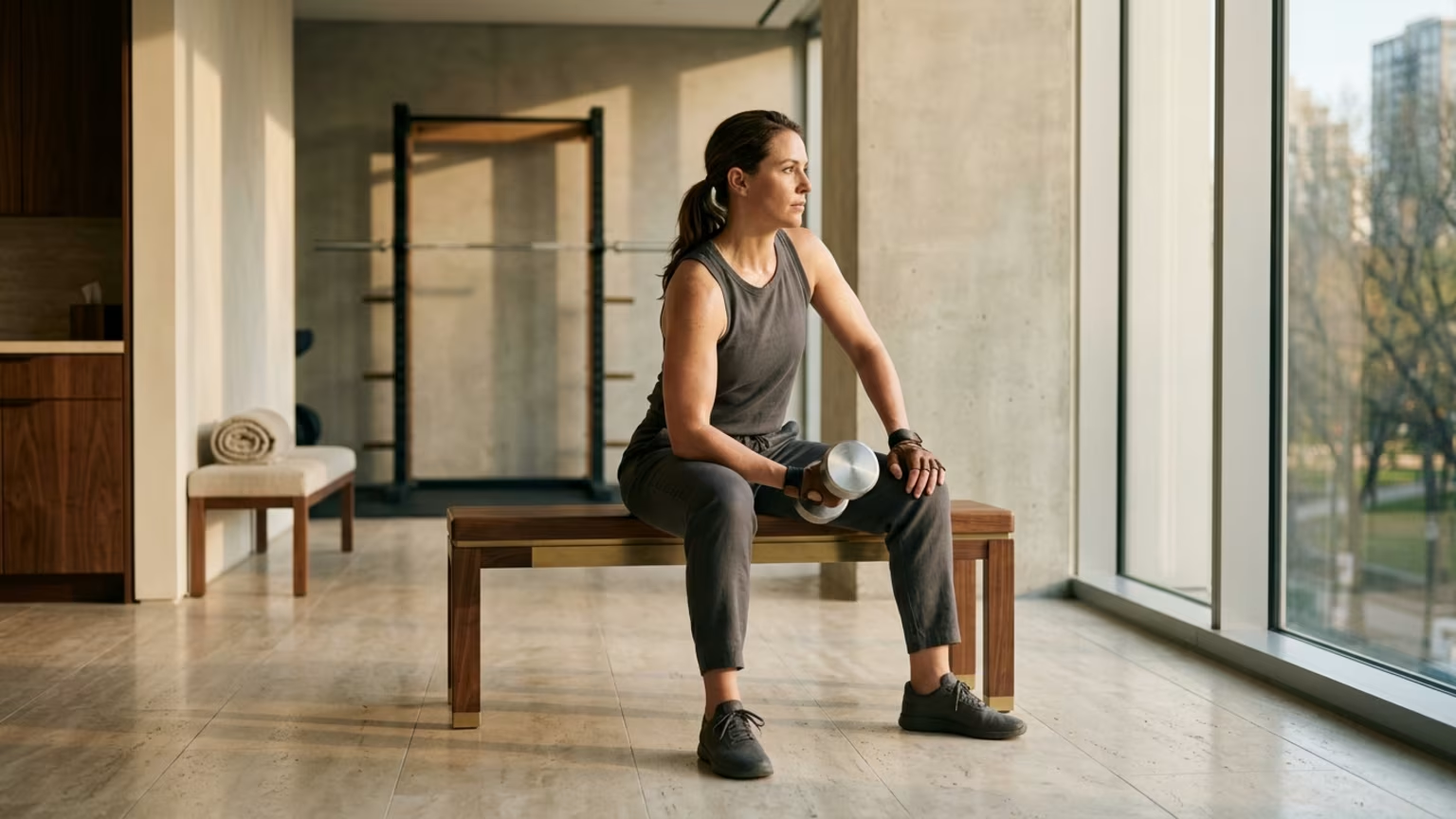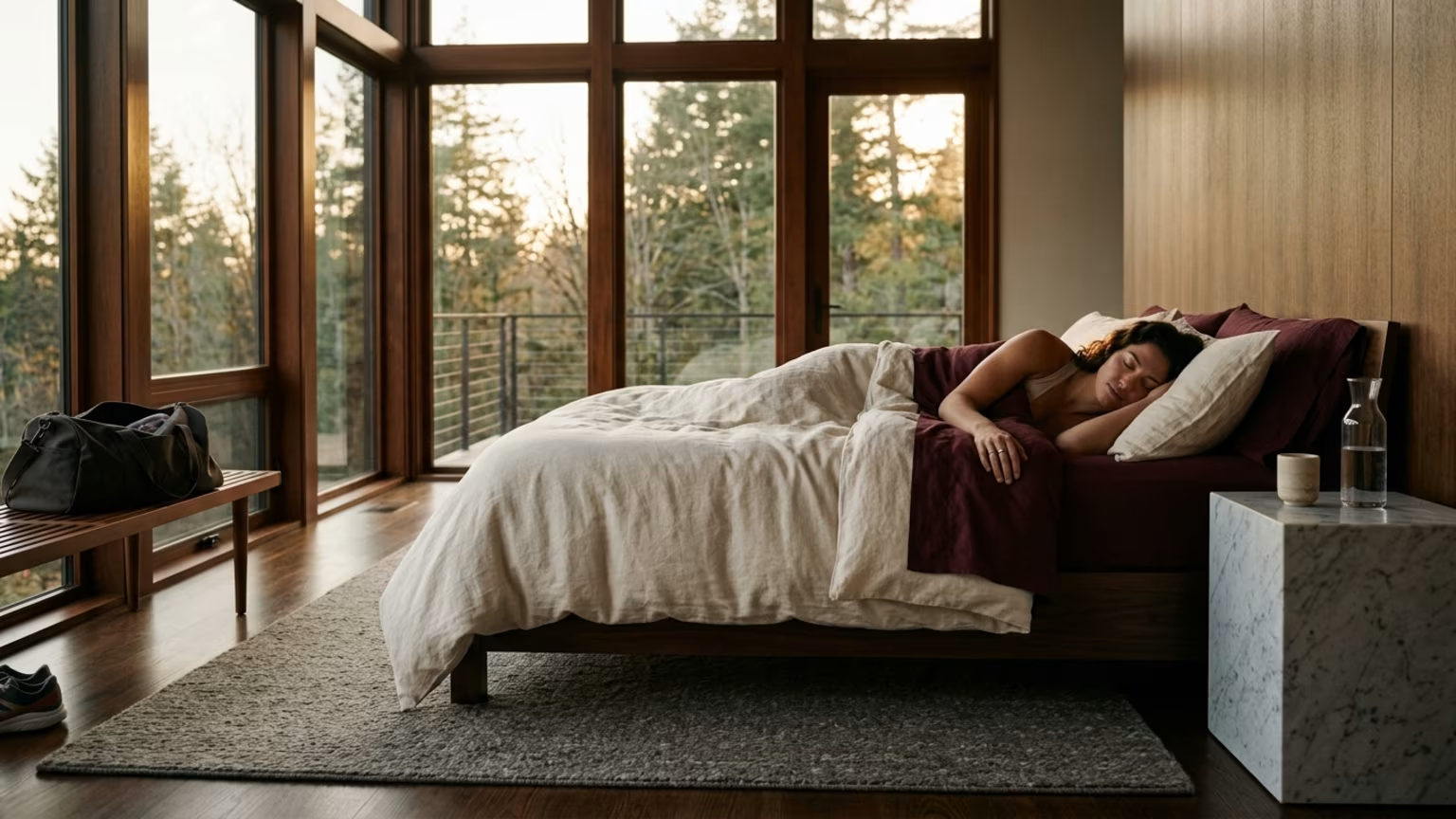

A 2026 study reveals that a single night of extended sleep cuts fatigue by 23% and sharpens cognitive focus. Learn how to use this tool for travel and sport.





In September 2026, new research published in the Journal of Sleep Research revealed that a single night of extended sleep can significantly cut fatigue and sharpen cognition. The study tested youth elite ice hockey players during their 2024 preseason training camp. For active adults who balance demanding careers with rigorous travel and outdoor sports, these findings offer a practical recovery strategy. It proves that a strategic window of extra rest can reset your system after demanding days.
The mechanics of this recovery intervention are straightforward and grounded in behavior rather than medication. Researchers from the Université de Montréal designed a randomized crossover trial to test acute sleep extension. The full paper is titled Acute Effects of Sleep Extension on Fatigue, Inhibitory Control, Short-Term Vigilance and Neuromuscular Function in Youth Elite Ice Hockey Players. They observed 22 Quebec Remparts players with an average age of 17.
Each participant completed two different sleep conditions separated by five days. One condition offered a normal night of about seven hours of sleep opportunity. The second condition gave the players 10 hours in bed. This extended opportunity increased their average measured sleep from 424 minutes to 491 minutes. That 16% increase in actual sleep yielded substantial changes in how the athletes felt and performed the next day.
The most immediate result was a shift in how tired the players felt. Perceived fatigue decreased by 23% after the extended night. Interestingly, the researchers found that sleep efficiency and the time required to fall asleep remained similar between the two conditions. Nighttime wakefulness was also comparable during both tests. This suggests the main driver of improvement was the additional sleep opportunity rather than a change in sleep quality.
The cognitive results provided the most interesting insight into mental endurance. After a two-hour hockey practice, players completed a demanding 30-minute cognitive task. This test required sustained attention while ignoring distracting information. It was specifically designed to simulate complex scenarios requiring high focus.
Following the extended sleep condition, reaction times on this challenging task improved by 8%. This improvement demonstrates how extra rest supports executive function. However, the benefits did not apply to every aspect of physical performance. The researchers measured no changes in jump height or grip strength.
Furthermore, performance on a shorter three-minute psychomotor vigilance task remained unchanged. This suggests the extra sleep specifically protected prolonged mental focus rather than general physical power. These precise distinctions matter for anyone trying to understand their own recovery. The American Academy of Sleep Medicine recommends that adults obtain seven or more hours of sleep regularly.
The hockey study does not argue that everyone needs 10 hours of sleep every night. Instead, it tests an occasional recovery tool used to clear fatigue.
Professor Guido Simonelli led the research team at the Université de Montréal. He highlighted the rapid appearance of these cognitive and fatigue benefits. This speed was notable because the athletes typically slept around seven hours during normal conditions. Simonelli described the intervention as simple, inexpensive, and non-pharmacological.
Translating adolescent elite athlete data to active adults requires looking at how we manage cognitive load. A 23% reduction in perceived fatigue is highly relevant when adjusting to altitude or recovering from a long trip. Managing exhaustion is a core part of staying capable and safe during complex activities. We see this firsthand when planning international trips or consecutive days of alpine sports.
Our team has learned the value of strategic rest through direct experience. After a grueling thirty hour transit to Tokyo, I realized my old strategy of just powering through was no longer working. I felt foggy for three days. I could not make quick decisions while navigating the busy city.
I started digging into circadian biology and realized that timing my light exposure and fasting during the flight could completely shift my recovery. Now, I never board a long haul flight without a precise schedule for when to eat and when to put on an eye mask. The Tokyo trip taught us that protecting a specific recovery window transforms how you function upon arrival. It is the difference between losing a week of your trip and hitting the ground running.
When you combine our flight protocol with the concept of a targeted sleep extension, you create a powerful defense against travel fatigue. You give your brain the time it needs to process the stress of crossing time zones. This approach directly impacts your performance in sports like skiing or technical hiking. The study showed an 8% improvement in reaction time during a prolonged 30-minute cognitive task.
Technical outdoor sports require exactly this kind of sustained attention and rapid decision making. You have to constantly process changing terrain, weather, and physical fatigue. Protecting an extended sleep window before a high consequence activity makes you sharper and safer. If you are planning a challenging alpine hike, schedule a 10 hour rest opportunity the night before.
You might not sleep the entire time, but you increase your total actual rest. This extra buffer helps you maintain concentration during a long descent when mistakes are costly. We frequently review how physical strain impacts mental clarity over time. You can learn more about this by reading our analysis of how prolonged endurance running shifts cognitive performance.
Understanding this connection helps you prioritize recovery interventions that actually work. It shifts your focus away from tracking every minor metric to implementing proven behavioral habits. Many wearable devices struggle to provide accurate context for this type of strain. You can see the limitations of these tools in our breakdown of why commercial wearable devices struggle to accurately track nightly rest and sleep cycles.
Relying on your own perceived fatigue and cognitive sharpness is often a better gauge of true readiness. It is also helpful to recognize why people often feel exhausted despite normal rest. We detail this dynamic in our guide on rethinking recovery and why persistent fatigue is more than just sleep debt. Sometimes, the cognitive demands of work and travel simply require an acute rest intervention.
The true value of this research is treating sleep as an active tool rather than a passive necessity. You do not need to overhaul your entire routine to see benefits. Planning one extended rest opportunity before a demanding event is an accessible and realistic step. Focusing on practical execution always yields better results than seeking absolute perfection.
By strategically planning an extended sleep opportunity before or after high consequence days, informed adults can effectively reset their perceived fatigue and protect their cognitive sharpness without relying on medications.
Stay connected for research and practical guidance on longevity, strength, recovery, energy and active living. New ideas to help you stay capable, curious and ready for more.



Explore practical guidance on strength, recovery, energy, travel and longevity for a life that stays active.
explore the Blog