

A 2026 JAMA Network Open study links cannabis use to fragmented sleep and prolonged wakefulness, even when active adults report feeling well-rested.





On October 9, 2026, new research published in JAMA Network Open revealed a surprising gap between perceived rest and actual physiological recovery. Affluent and active adults often seek reliable routines to maintain their physical independence. Many individuals turn to various aids to secure a restorative night of rest before a demanding day. However, this recent study suggests that relying on cannabis might not provide the high quality recovery necessary for an adventurous lifestyle.
The primary paper analyzed data from the long running CARDIA cohort. This comprehensive health project began in 1985 and followed participants through its year 35 examination between 2020 and 2022. The analysis included 1,266 participants to evaluate the relationship between cannabis use and sleep. In the objective sleep group, the mean age was 60.7 years.
The demographic breakdown of the objective group provided a relevant look at middle aged adults. The cohort was 63.3 percent female, 41.0 percent Black, and 59.0 percent White. To gather precise physiological data, these participants wore wrist actigraphy monitors for seven days. This method allowed the research team to track actual movement and rest periods rather than relying solely on memory.
Researchers assessed several key metrics during this seven day period. They measured total sleep percentage, sleep fragmentation, and wakefulness after sleep onset. The team also evaluated subjective sleep quality using the Pittsburgh Sleep Quality Index. The goal was to compare how people felt they slept against how their bodies actually rested.
The results highlighted a significant mismatch between perception and physical reality. Recent users actually had a longer average sleep duration, sleeping 0.33 hours more than never users. Because they spent more time asleep, these findings do not mean they simply slept fewer hours. In fact, compared with never users, recent users had higher odds of sleeping more than eight hours.
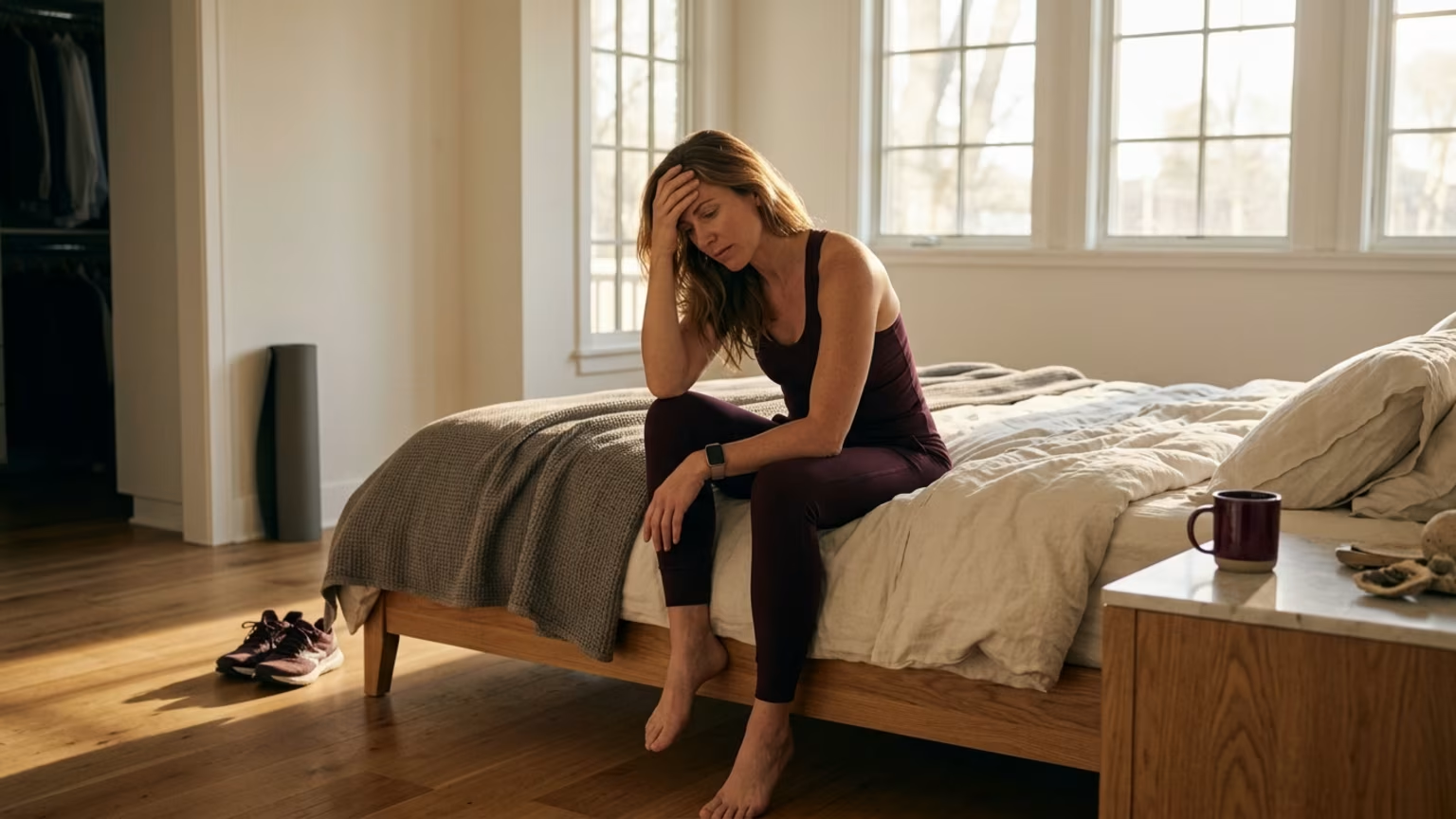
Despite this longer duration, the quality of their rest was noticeably poorer. Compared with never users, recent users had an average 11.09 minutes more wakefulness after sleep onset. They also experienced a 1.74 percentage point lower sleep percentage. Furthermore, their actigraphy data showed 2.14 percentage points more sleep fragmentation.
The research team found no association between cannabis use and self reported sleep quality. Participants did not indicate worse rest on the Pittsburgh Sleep Quality Index. The paper's authors concluded that this mismatch supports assessing both subjective and objective sleep outcomes. Relying purely on how you feel in the morning might mask underlying recovery deficits.
The study defined recent cannabis use as use in the past 30 days. To understand long term habits, the researchers estimated cumulative exposure over time in cannabis years. One cannabis year was defined as 365 days of use. This allowed the team to track how sustained habits impacted physiological recovery.
After multivariable adjustment, the long term trends became clear. Each additional cannabis year was associated with higher odds of low sleep percentage and high sleep fragmentation. It was also associated with higher odds of prolonged wakefulness after sleep onset lasting at least 30 minutes. The continuous measures showed that each additional cannabis year added 0.85 minutes more wakefulness after sleep onset.
These continuous measures also showed a steady decline in overall efficiency. Each additional cannabis year was associated with a 0.18 percentage point lower sleep percentage. It also correlated with a 0.20 percentage point higher fragmentation rate. Interestingly, cumulative exposure was not associated with total sleep duration.
The study was rigorous in its methodology and adjusted for numerous lifestyle factors. The team adjusted for demographic characteristics, education, cigarette and alcohol exposure, and body mass index. They also accounted for physical activity and other substance use. Furthermore, the analysis controlled for chronic disease, depressive symptoms, and sleep medication use.
Lead author Thanh-Huyen T. Vu addressed the disconnect between perception and reality directly. Vu said the findings challenge the common belief that cannabis helps people sleep better. She emphasized that the association may not be apparent to users themselves. This explains why many active adults might unknowingly compromise their own daily recovery.
Senior author Mercedes R. Carnethon echoed these concerns regarding common recovery strategies. Carnethon said the data do not support the belief that cannabis is helpful as a sleep aid. She also called for a better understanding of its long term associations with sleep. For adults tracking their health, these expert perspectives highlight the need for objective verification.
It is important to note that this was an observational cohort analysis. This research was not a controlled trial of cannabis as a medical treatment. Because of this design, the researchers said it could not establish that cannabis caused the sleep differences. The authors noted that residual confounding and selection bias remain possible.
Furthermore, the study relied on self reported cannabis exposure without detailed product specifics. The researchers lacked information about product potency, route of administration, or timing relative to sleep. Cannabis products and their legal status changed significantly during the decades covered by the cohort. The objective sleep assessment was only a seven day actigraphy period.
The cohort provides a relevant middle aged to older adult data point. However, it does not establish that the same associations apply to all older adults or younger people. It also does not account for users of modern higher potency products. Understanding how wearable devices track our nightly rest can help contextualize these types of observational findings.
For affluent adults who travel frequently, sleep efficiency is a vital physiological asset. Crossing multiple time zones places immense stress on your natural circadian rhythm. When you rely on a fragmented rest cycle, adapting to a new location takes significantly longer. This poor sleep quality directly hinders your ability to enjoy international trips and maintain your schedule.
Understanding the environmental factors supporting active recovery can help you manage travel fatigue effectively. If your rest is highly fragmented, your brain struggles to clear metabolic waste efficiently. This leads to the familiar sluggishness that ruins the first few days of a vacation. Objective data shows that relying on unverified sleep aids might prolong this jet lag rather than cure it.
If you use cannabis to fall asleep on a long flight, you might experience longer total rest. However, the increased wakefulness after sleep onset prevents you from reaching deep restorative stages. You might arrive at your destination feeling groggy despite logging eight hours of shut eye. Proper travel recovery requires continuous rest to reset your internal clock.
Business travelers also face unique challenges when managing their overnight recovery. Arriving sharp for a morning meeting requires cognitive clarity that only comes from consolidated rest. A fragmented sleep architecture leaves the prefrontal cortex struggling to maintain focus and process complex information. Therefore, optimizing your physical environment rather than relying on chemical aids is the superior strategy.
Active adults require continuous sleep stages to repair muscle tissue after demanding days. Whether you are skiing in the Alps or hiking challenging trails, physical recovery happens primarily during deep sleep. Fragmented rest interrupts these crucial cellular repair cycles. Even if you sleep an extra twenty minutes, frequent awakenings negate the physical benefits of that rest.
Many active individuals monitor their physiological readiness to gauge their capacity for exertion. Recognizing why obsessing over inaccurate wearable sleep scores triggers anxiety is important, but physiological disruption is a real concern. Prolonged wakefulness after sleep onset leaves your muscles underprepared for the next day of sport. This lack of physical readiness increases injury risk and reduces your overall stamina.
Consistent energy on the golf course or the tennis court requires reliable glycogen replenishment. This metabolic process peaks during uninterrupted sleep cycles. When your rest is highly fragmented, it directly disrupts this essential energy storage mechanism. Consequently, you may find your endurance fading during the back nine or the final set of a match.
Your cardiovascular system also relies on unbroken sleep to lower your resting heart rate. When your sleep is constantly fragmented, your heart rate variability often decreases. This indicates that your nervous system is trapped in a sympathetic stress state. To maintain high performance during your favorite sports, prioritize strategies that promote unbroken sleep continuity.
Spending time at high altitudes places unique demands on the human body. The lower oxygen levels naturally elevate your resting heart rate and make breathing more labored at night. Adding fragmented sleep to this harsh environment creates a compounding physical deficit. Your body cannot acclimate properly if it is constantly waking up throughout the night.
Travelers heading to mountain resorts need highly efficient sleep to oxygenate their tissues fully. Learning about practical sleep shifts and timed light strategies for preserving alertness on overseas trips is a much better approach to environmental changes. Using a sleep aid that increases fragmentation works against your body's natural physiological adaptation process. You might feel like you slept through the night, but your muscles will tell a different story on the slopes.
Your respiratory rate needs to stabilize during deep sleep at high altitudes. Wakefulness after sleep onset disrupts this stabilization and forces your body to constantly readjust. This biological friction leads to mountain sickness symptoms like headaches and lingering fatigue. A clear focus on objective sleep quality is the best way to conquer high altitude adventures.
If your sleep feels restorative but persistent fatigue or disrupted nights remain a concern, discuss your symptoms and any cannabis use with a health professional.
Stay connected for research and practical guidance on longevity, strength, recovery, energy and active living. New ideas to help you stay capable, curious and ready for more.



Explore practical guidance on strength, recovery, energy, travel and longevity for a life that stays active.
explore the Blog