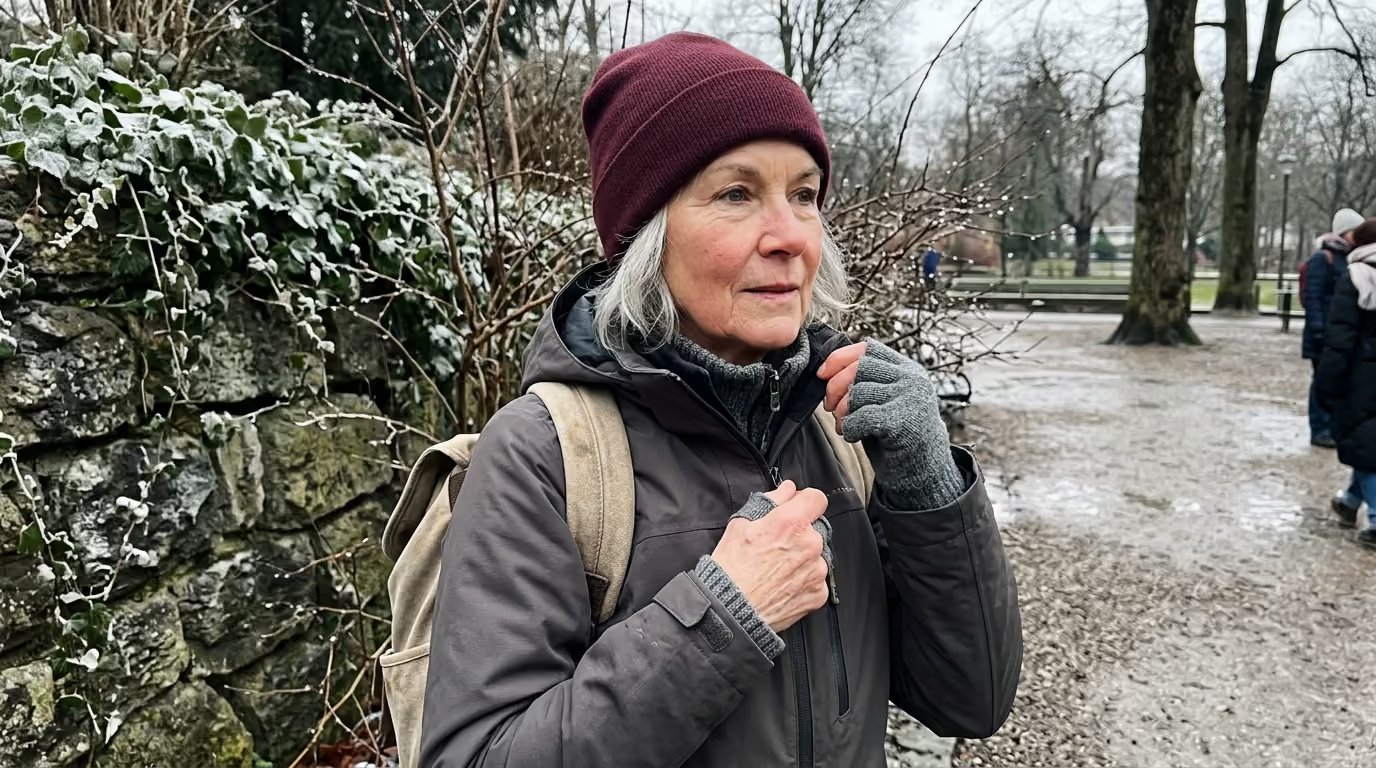

Improved physical resilience and cardiovascular fitness develop when older adults use controlled heat and cold exposures to strengthen natural temperature defenses.





You step out of an air-conditioned lodge into the dry, blazing heat of an afternoon in the high desert. Within minutes, your heart rate climbs, your skin flushes, and a simple uphill walk feels twice as demanding as it did the week before. Later that winter, wading into an unheated alpine plunge after a long day on the slopes triggers a sudden, involuntary gasp as icy water hits your chest.
These physical reactions are not signs of poor conditioning. They are ancient, built-in physiological survival programs responding to environmental stress.
Thermal stress forces the human body to work hard to preserve internal balance. When you expose yourself to heat or cold, your heart, blood vessels, nervous system, and cellular machinery immediately adjust to protect your core organs. The central insight from environmental physiology is that the stress itself does not build vitality. Rather, your body adapts to a carefully measured challenge followed by adequate recovery.
For active adults over forty, learning how to use these thermal triggers safely can improve exercise tolerance, sharpen recovery, and build physical resilience. This guide breaks down the biological mechanisms of heat and cold, separates proven physiological responses from modern wellness exaggerations, and outlines sensible routines you can apply at home or on your travels.
Environmental conditioning is targeted physiological training rather than a universal remedy for aging. It operates on the concept of allostatic load, which is the cumulative physical burden the body carries when adapting to external demands. A short, controlled thermal stress followed by rest encourages favorable adaptation. Excessive exposure without recovery leads to chronic fatigue, cardiovascular strain, or physical injury.
For mature adults, the goal of thermal conditioning is to maintain physical capability and cardiovascular flexibility. Research shows that while physiological responses change with age, your capacity to adapt remains remarkably preserved. You can learn to tolerate warmer climates, handle cool waters, and recover more smoothly from strenuous activity by understanding your body's regulatory limits.
To build an effective routine, you must understand the difference between heat acclimation, passive habituation, and cold exposure. Active heat training prepares the cardiovascular system for hard physical work in warm climates. Passive heat, such as traditional saunas, supports circulation and relaxation. Cold exposure alters vascular tone and reduces subjective muscle soreness, though it carries distinct cardiovascular risks that require careful management.
Applying these practices successfully requires a balanced perspective. Thermal exposure is an adjunct to foundational health practices, not a replacement for regular strength training, restorative sleep, sound nutrition, and preventive medical care. When used with intention and moderation, environmental adaptation provides a practical edge for lifelong outdoor performance.
To understand how the body responds to temperature shifts, you must first understand thermoregulation. Thermoregulation is the collection of physiological and behavioral actions that maintain core internal temperature within a narrow, safe range around 98.6 degrees Fahrenheit (37 degrees Celsius).
When you encounter high ambient temperatures or generate heat through exercise, you face heat stress. Heat stress is the external environmental condition combined with internal metabolic heat production. Heat strain is the resulting physiological toll on your body, including elevated heart rate, increased core temperature, and fluid loss through sweating.
During heat stress, your brain signals the cardiovascular system to redirect blood flow from the deep core to the surface of the skin. This cutaneous vasodilation allows excess heat to escape into the surrounding air. At the same time, your eccrine glands secrete sweat across the skin surface. As this sweat evaporates, it cools the blood circulating near the surface, which then returns to cool your core organs.
Cold exposure presents the inverse challenge. When ambient temperatures drop or you enter cold water, your body experiences cold stress. The resulting cold strain includes rapid peripheral vasoconstriction, shivering, and an immediate rise in vascular resistance. Vasoconstriction narrows blood vessels in your skin and extremities, shutting down peripheral blood flow to conserve warm blood around vital organs.
If vasoconstriction is insufficient to preserve core temperature, your nervous system triggers shivering. Shivering consists of involuntary, rapid muscle contractions designed to generate metabolic heat. While effective, shivering significantly increases metabolic demand and oxygen consumption. Water conducts heat away from the body roughly twenty-four times faster than air of the same temperature, making immersion far more taxing than cold air.
The body manages these environmental stressors through distinct physiological adjustments. Understanding whether your goal is cardiovascular conditioning or acute recovery dictates whether heat or cold is the appropriate tool.
Thermal exposures place substantial demands on the heart and blood vessels. Knowing how these demands work allows you to use environmental training effectively while avoiding unnecessary physical strain.
As core temperature rises, your body faces a circulatory competition. Your exercising muscles demand oxygenated blood, while your skin requires massive amounts of blood flow to dissipate heat. To meet this dual demand, cardiac output must increase substantially.
Your stroke volume, which is the amount of blood pumped with each heartbeat, often declines in the heat due to fluid loss and peripheral blood pooling. To compensate and maintain adequate blood pressure, your heart rate rises. This phenomenon, known as cardiovascular drift, means your heart works harder in the heat even when your physical pace remains unchanged.
Sweating causes the loss of both water and essential electrolytes, especially sodium. As blood plasma volume drops from dehydration, the heart must beat even faster to circulate a lower volume of blood. This strain explains why physical exertion in high temperatures can lead rapidly to fatigue, elevated perceived exertion, and reduced endurance.
Cold exposure creates the opposite cardiovascular challenge. When skin receptors detect cold, the sympathetic nervous system triggers instant peripheral vasoconstriction. By clamping down blood vessels in the extremities, the body keeps warm blood centered within the torso and brain.
This sudden narrowing of the vascular tree increases systemic vascular resistance. As a result, blood pressure rises immediately, forcing the heart to pump against greater resistance. Cold exposure can also cause constriction of coronary arteries, reducing oxygen delivery to the heart muscle precisely when its workload is elevated.
Sudden entry into cold water introduces the cold shock response. This reflex consists of an uncontrollable gasp, rapid hyperventilation, a surge in heart rate, and an abrupt spike in blood pressure. The primary immediate danger of cold water is not hypothermia, which takes time to develop, but this initial shock response that can cause panic or arrhythmias.
The cardiovascular demands of cold mean that cold plunges or strenuous winter activities require a measured approach, particularly for individuals with elevated resting blood pressure or arterial stiffness.
Aging naturally alters how the body senses and responds to extreme temperatures. However, research demonstrates that older adults maintain a strong capacity to adapt when exposed to progressive, well-structured environmental conditioning.
With advancing age, structural changes in the skin and blood vessels can reduce peak sweat rate and slow the speed of cutaneous vasodilation. The microvasculature becomes less responsive, meaning it takes slightly longer for peripheral vessels to dilate in the heat or constrict efficiently in the cold. Additionally, the thirst mechanism becomes less sensitive over time, increasing the risk of subtle dehydration during warm-weather pursuits.
Older adults also experience gradual reductions in subcutaneous fat, which provides natural thermal insulation against the cold. Combined with a slower metabolic shivering response, this makes mature adults more susceptible to hypothermia, even in wet, moderately cool weather above 40 degrees Fahrenheit. The neurological perception of thermal discomfort can also diminish, making it harder to recognize early signs of heat exhaustion or systemic chilling.
Despite these physiological shifts, the capacity for adaptation remains robust. Clinical studies demonstrate that active adults over sixty who undergo structured heat acclimation develop classic adaptive responses within eight to ten days. These adaptations include expanded plasma volume, lower resting heart rates, earlier onset of sweating, and lower core temperatures during exercise.
While the absolute speed or magnitude of adaptation may be slightly lower than in younger athletes, the functional benefit is significant. Consistent, sensible exposure trains the aging cardiovascular system to handle thermal demands with greater ease. Exploring dedicated healthy aging resources can help you design an active lifestyle that protects your physical autonomy over time.
Heat training takes two primary forms: active heat acclimation and passive heat habituation. Knowing how each method works helps you select the right protocol for your training goals.
Active heat acclimation involves exercising in warm or hot conditions to stimulate dual metabolic and thermal adaptations. This method is the gold standard for preparing for warm-weather adventures, hiking trips, or athletic events. Active training teaches the body to manage high cardiac output while redirecting blood flow to the skin and expanding plasma volume.
Passive heat habituation involves sitting in a sauna, steam room, or hot bath without muscular exertion. While passive heat cannot fully replicate the athletic conditioning of exercising in the heat, it provides a safe, low-impact stimulus for the vascular system. It elevates skin blood flow, promotes sweating, and induces deep muscular relaxation without placing high mechanical stress on joints.
A 2025 study examining mixed-method heat acclimation showed that seven consecutive days of structured heat exposure produced clear physiological adaptations, including plasma volume expansion and reduced cardiovascular strain. However, the study noted that these physiological improvements did not automatically produce faster self-paced race times. This finding illustrates that while heat adaptation lowers internal strain, it is not a direct replacement for foundational aerobic conditioning.
Sauna use has received widespread attention following long-term observational research from Finland. The Kuopio Ischaemic Heart Disease Risk Factor Study tracked 2,315 middle-aged Finnish men over a median period of nearly twenty-one years. The researchers documented that men who used the sauna four to seven times per week had a significantly lower risk of fatal cardiovascular events and all-cause mortality compared to those using it once weekly.
These observational findings are valuable, but they must be interpreted accurately. An association does not establish direct cause and effect. In Finland, frequent sauna bathing is deeply integrated into daily cultural life and often correlates with higher socioeconomic status, greater leisure time, lower occupational stress, and strong social connections.
Passive heat exposure acts as a mild cardiovascular workout, increasing heart rate and improving vascular endothelial function over time. However, claims that saunas detoxify the body by sweating out heavy metals or environmental toxins are biologically incorrect. The liver and kidneys handle internal detoxification, while sweat glands exist almost entirely to cool the skin surface through water and mineral loss.
Heat therapy can support recovery by increasing local blood flow to tissues, easing muscle tension, and encouraging autonomic nervous system relaxation. Taking a warm bath or relaxing in a sauna after training can facilitate the shift from sympathetic activation into a parasympathetic state. You can review specialized strategies within our recovery and regeneration guides to complement your active routine.
Heat should be avoided immediately after intense exertion if you are noticeably dehydrated, lightheaded, or exhausted. Sitting in a hot sauna while fluid-depleted can cause a dangerous drop in blood pressure upon standing, known as orthostatic hypotension. Rehydrate with water and electrolytes before introducing passive heat.
Cold-water immersion has become a popular post-exercise ritual, but the scientific literature shows that its benefits depend heavily on your specific training goals.
Cold-water immersion constricts peripheral blood vessels, reduces local tissue swelling, and dampens nerve conduction velocity. This dulls the sensation of delayed-onset muscle soreness (DOMS) after hard physical exertion. If you are participating in a multi-day hiking trek, a weekend tennis tournament, or a skiing holiday, a brief cool plunge can reduce perceived soreness and help you feel ready for the next day.
A comprehensive meta-analysis revealed that cold immersion can aid short-term subjective recovery and lower circulating creatine kinase, a common blood marker of muscle damage. For acute comfort and rapid turnaround between competitive events, cold application is an effective tool.
The trade-off arises when cold water is used routinely immediately after resistance training. Muscle hypertrophy and strength gains depend on an initial inflammatory signaling cascade that instructs muscle fibers to repair and grow stronger.
Research shows that regular cold-water immersion applied within two hours of strength training blunts anabolic signaling pathways, including the mTOR pathway, and reduces muscle protein synthesis. Over several months, trainees who consistently plunge into cold water immediately after lifting experience smaller gains in muscle mass and strength compared to those who recover passively.
If your primary objective is building or preserving skeletal muscle mass, avoid immersing yourself in cold water immediately after lifting. Save cold exposure for dedicated non-lifting days, or use it selectively when reducing acute muscular soreness is more important than long-term muscular adaptation. For structured training advice, explore our strength and physical performance resources.
Sleep is closely tied to the circadian rhythm of core body temperature. In a normal sleep cycle, your core temperature begins to drop in the evening, reaching its lowest point in the early morning hours. This internal cooling is a biological signal that facilitates sleep onset and deep restorative slow-wave sleep.
Thermal exposures can either support or disrupt this natural circadian rhythm depending entirely on timing and intensity.
A warm bath, hot shower, or brief sauna session taken sixty to ninety minutes before bed can enhance sleep onset through the warm-bath effect. When you step out of a warm environment, your peripheral blood vessels remain dilated, allowing internal heat to radiate quickly from your hands and feet. This accelerated heat dissipation causes your core body temperature to drop, signaling the brain that it is time to sleep.
Conversely, intense heat exposure immediately before bed can backfire. If you spend prolonged time in a hot sauna late at night, your core temperature remains elevated, your heart rate stays high, and your sympathetic nervous system remains stimulated. This delays sleep onset and reduces total deep sleep time.
The evidence regarding cold exposure and sleep is nuanced. Whole-body cryostimulation or cold immersion can increase parasympathetic tone in the hours following exposure once the initial cold shock subsides. However, immersing yourself in icy water right before bed causes a surge of epinephrine and norepinephrine, raising alertness and making it harder to fall asleep.
To support healthy sleep patterns, keep thermal practices comfortable and allow adequate time for your body to normalize before getting into bed. You can find comprehensive sleep advice in our recovery and sleep articles.
For active adults who love world travel, mountain sports, and outdoor challenges, understanding environmental conditioning is essential for safety and enjoyment.
Traveling from a cool or temperate home climate directly into high heat for an adventure trek places acute stress on the cardiovascular system. Without preparation, your walking pace will drop, your heart rate will run high, and the risk of heat exhaustion increases significantly.
Begin preparing two weeks before your trip by introducing low-intensity cardio sessions in a warm room or spending fifteen minutes in a sauna several times per week. Once you arrive at your destination, reduce your pace, shorten your daily mileage for the first three days, and hike during the cooler morning hours. Drink water steadily throughout the day rather than waiting for thirst, and consume adequate electrolytes to replace sodium lost through sweat.
Cold-weather activities such as downhill skiing, snowshoeing, or mountaineering combine physical exertion with cold, dry air and altitude. In cold conditions, your lungs work harder to warm and humidify the air you breathe, leading to unnoticed respiratory fluid loss.
Layer your clothing so you can manage your skin temperature without sweating excessively into your base layers. Wet clothing loses its insulating properties, dramatically accelerating heat loss when you stop moving. Always carry dry spare layers, protect your face and fingers from direct wind exposure, and stay hydrated with warm fluids throughout the day. You can review practical preparation strategies in our travel and adventure articles.
Snow shoveling represents a unique environmental challenge that frequently triggers adverse cardiovascular events in winter. The activity combines sudden, heavy isometric lifting with cold air inhalation, rapid peripheral vasoconstriction, and elevated blood pressure.
If you must clear snow in freezing temperatures, warm up indoors first with light calisthenics. Push the snow rather than lifting heavy loads, take frequent standing breaks, and cover your mouth and nose with a scarf or neck gaiter to warm the air entering your lungs. If you experience chest tightness, sudden shortness of breath, or dizziness, stop immediately and seek medical attention.
The rising popularity of thermal wellness practices has generated numerous misleading claims. Correcting these myths ensures your approach remains safe, grounded, and productive.
Sweating is a cooling mechanism, not an internal filtration system. Sweat is composed of ninety-nine percent water, along with trace amounts of sodium, potassium, chloride, and tiny concentrations of waste products. Your kidneys and liver perform virtually all metabolic detoxification. Using excessive heat to sweat out impurities leads only to dehydration and electrolyte imbalance.
While cold immersion temporarily reduces acute swelling and numbs pain receptors, it does not act as a permanent cure for chronic systemic inflammation. Chronic inflammation is driven primarily by metabolic health, diet, physical activity levels, stress, and sleep quality. Treating ice baths as a fix for poor lifestyle fundamentals is ineffective.
A sauna raises your heart rate primarily because of peripheral vasodilation and heat strain, not because your muscles are performing mechanical work. While passive heat supports endothelial health and arterial compliance, it does not build muscular endurance, stimulate bone density, or strengthen connective tissue like running, cycling, or rowing. Heat complements exercise; it cannot replace it.
While mature adults must exercise greater caution regarding hydration and blood pressure shifts, avoiding all temperature variation can lead to reduced adaptive capacity. Controlled, progressive exposure keeps the cardiovascular system resilient. Healthy aging benefits from sensible challenges rather than complete avoidance of environmental stimuli.
You do not need extreme routines or uncomfortably intense exposures to gain the physiological benefits of heat and cold. A measured approach provides the necessary stimulus while keeping physical strain well within safe limits.
If you are new to sauna use or returning after a break, follow these progressive steps:
For healthy adults interested in introducing cold exposure safely:
Thermal conditioning is powerful, which means it carries real contraindications that must be respected.
Certain medications significantly alter how the body manages temperature and fluid balance. Diuretics increase dehydration risk by promoting fluid loss. Beta-blockers limit the heart rate response, preventing the cardiovascular system from increasing cardiac output efficiently during heat stress. ACE inhibitors and angiotensin receptor blockers can blunt blood pressure compensation, increasing the risk of fainting when standing up in a sauna.
Consult your physician before starting heat or cold routines if you take cardiovascular medications or have a history of hypertension, coronary disease, peripheral neuropathy, or heart arrhythmias.
Medical researchers, exercise physiologists, and public health authorities share a clear consensus on environmental stress adaptation:
First, heat acclimation is a proven, reproducible physiological process. Structured, repeated exposure to warm environments improves thermoregulatory capacity, expands plasma volume, and reduces cardiovascular strain during physical work. This adaptation is especially valuable for outdoor recreation, travel preparation, and athletic performance.
Second, the long-term longevity benefits associated with sauna bathing in observational studies are encouraging, but they represent correlations rather than definitive proof of causation. Sauna use is best viewed as an enjoyable, health-supporting habit that complements a physically active lifestyle, rather than a standalone medical therapy.
Third, cold-water immersion is an effective tool for dampening acute muscle soreness and reducing perception of fatigue, but its routine use immediately after resistance training can impair muscle hypertrophy and strength adaptations. Cold should be applied strategically rather than habitually after every workout.
Finally, environmental conditioning should always be progressive, individualized, and comfortable. The most sustainable gains come from working with your body's adaptive systems over months and years, rather than pursuing extreme physical discomfort.
When to revisit this resource: Review these principles and protocols whenever you prepare for travel to an unfamiliar climate, plan a seasonal shift in your outdoor training, or adjust your weekly recovery routine.
Approached with patience and scientific understanding, learning to navigate the elements allows you to stay strong, capable, and ready for adventure in any environment.
Stay connected for research and practical guidance on longevity, strength, recovery, energy and active living. New ideas to help you stay capable, curious and ready for more.


Explore practical guidance on strength, recovery, energy, travel and longevity for a life that stays active.
explore the Blog