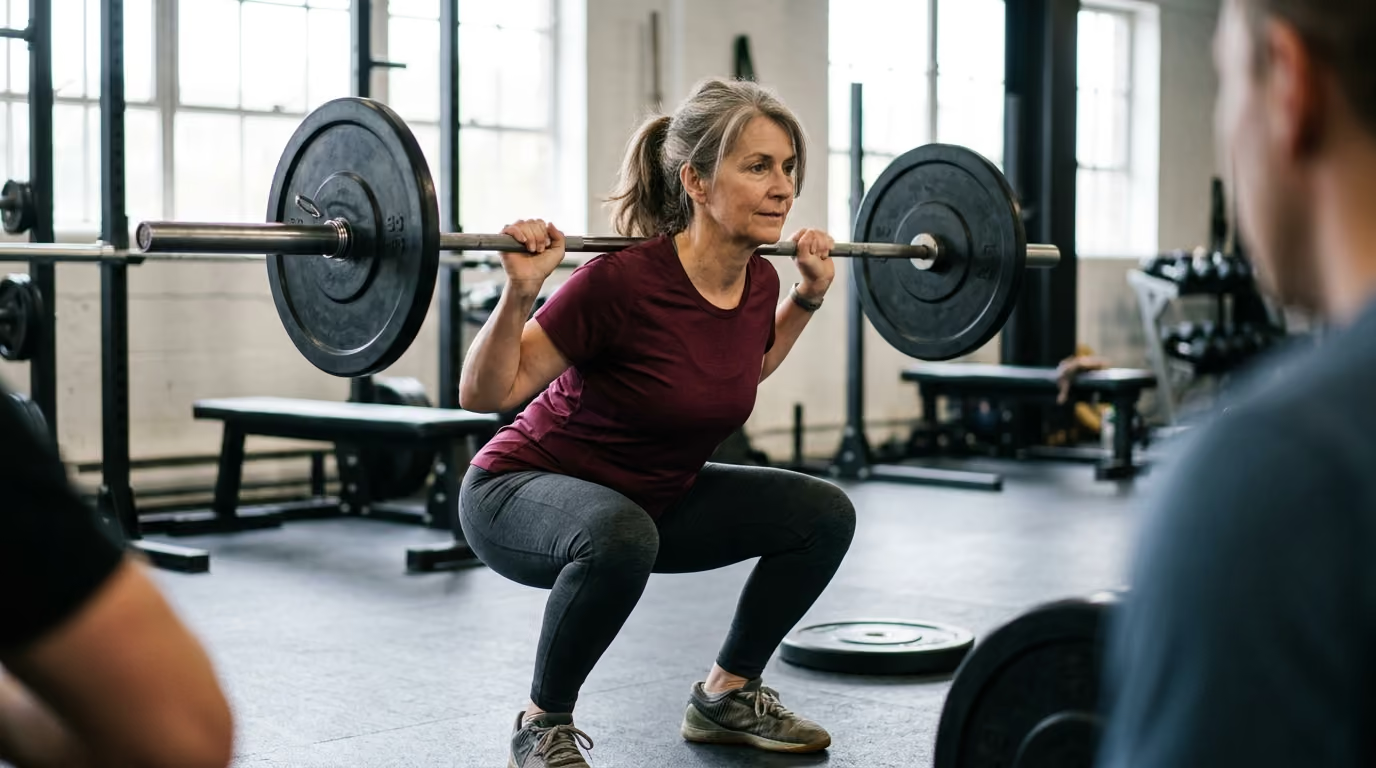

Five foundational training capacities help women build strength, protect bone density, and optimize metabolic health across every stage of menopause.





Menopause is a natural endocrine transition, not a medical condition of physical decline. It does not mark the end of athletic performance, nor does it require you to retreat into gentle stretching and light hand weights. It is also not a minor hormonal fluctuation that you can simply ignore with your previous routine.
During perimenopause, menopause, and postmenopause, your internal physiology shifts. Hormonal fluctuations change how your body builds muscle, handles impact, recovers from strenuous efforts, and regulates temperature. Navigating these changes requires a clear, evidence-based approach that prioritizes physical capability, bone density, metabolic vigor, and everyday independence.
Training during this life stage is not about chasing extreme fatigue or reversing the natural passage of time. It is about deliberately preserving and building the physical capacity you need for skiing, mountain trekking, long-haul travel, and daily vigor. You can read more about sustainable vitality in our collection on healthy aging and living well.
This guide provides a comprehensive framework for training through the menopausal transition. You will learn the exact biological changes affecting your muscles and bones, the five essential movement capacities to train, how to program strength and conditioning, and how to adapt your routine when sleep or symptoms fluctuate.
To design an effective training program, you must understand the hormonal and physiological shifts that occur during this transition. Menopause is formally diagnosed in retrospect, exactly twelve months after your final menstrual period. The years leading up to this point represent perimenopause, while the decades following it represent postmenopause.
During perimenopause, ovarian production of estrogen and progesterone does not simply drop in a smooth line. Instead, hormone levels fluctuate unpredictably. These wide swings often trigger vasomotor symptoms, such as hot flashes and night sweats, along with irregular cycles, brain fog, and disrupted sleep.
In postmenopause, estrogen levels settle at a permanently low baseline. Estrogen plays a vital role in satellite cell activation, tendon collagen synthesis, neuromuscular coordination, and bone turnover regulation. When circulating estrogen drops, the natural balance between bone breakdown and bone formation changes. The rate of bone resorption begins to exceed the rate of new bone matrix deposition.
Muscular tissue also experiences distinct structural changes. While sarcopenia refers to the general loss of muscle quantity and quality with age, dynapenia describes the loss of muscular strength and power. Dynapenia often progresses faster than the loss of muscle size alone. The nervous system becomes less efficient at recruiting fast-twitch motor units, which directly affects your ability to generate force rapidly.
At the same time, metabolic health faces new headwinds. Reduced estrogen sensitivity can alter visceral fat distribution, decrease insulin sensitivity, and change blood lipid profiles. Tendons and ligaments lose some of their natural elasticity and water content, which increases the risk of joint stiffness and tendinopathy. Recognizing these shifts allows you to adjust your training stimuli intelligently rather than training blindly.
For decades, fitness marketing directed at women focused almost entirely on burning calories, shrinking body size, and performing endless low-intensity cardiovascular exercise. This outdated mindset is counterproductive during the menopausal transition. Focusing solely on caloric expenditure accelerates muscle loss, increases joint wear, and does nothing to protect your skeleton.
A superior guiding principle is simple: train for the functions you want to retain. If you want to carry heavy luggage across international terminals, hike steep mountain trails, rise quickly from the floor, and remain resilient against falls, your workouts must directly target those physical abilities.
A comprehensive athletic framework during menopause relies on five distinct capacities:
Strength is the foundation of physical independence and metabolic health. When you lift challenging loads, you signal your nervous system to recruit more muscle fibers and stimulate myofibrillar protein synthesis. This helps preserve lean body mass and protects your joints by distributing mechanical stress across strong surrounding musculature.
Power is the ability to produce force quickly. It is distinct from maximal strength. You rely on power when you catch your balance after a trip on an uneven cobblestone street, step briskly onto a curb, or power up a flight of stairs. Power training targets type II fast-twitch muscle fibers, which are the first to atrophy when you perform only slow, endurance-based activities.
Bone is living tissue that responds directly to mechanical deformation. To stimulate osteogenic adaptations, your skeleton requires multi-directional forces, ground reaction impacts, and heavy compressive loading from muscular contraction. Swimming and cycling are excellent for heart health, but they do not provide the mechanical strain required to maintain bone mineral density.
Cardiovascular fitness supports day-to-day stamina, accelerates recovery between hard resistance sets, and maintains arterial compliance. Aerobic conditioning helps offset the increased cardiovascular risks associated with postmenopausal lipid and vascular changes. The goal is building a wide aerobic base combined with selective, controlled high-intensity work.
True physical capability requires full joint range of motion and motor control. Maintaining ankle dorsiflexion, hip extension, thoracic rotation, and shoulder mobility ensures you can execute loaded exercises safely. Mobility work also keeps you moving comfortably during everyday adventures without nagging aches.
Focusing on these five pillars transforms your training from an exhausting chore into a systematic investment in physical capability. To explore structured approaches for muscular development, review our guide to strength and physical performance.
Resistance training is the most critical physical intervention for women navigating perimenopause and postmenopause. A well-designed lifting routine maintains lean tissue, improves insulin sensitivity, supports bone mass, and keeps connective tissues robust.
To achieve these benefits without causing excessive systemic fatigue, you do not need to spend hours in the gym each day. The minimum effective dose for maintaining and building strength is two to three well-structured full-body sessions per week. Each workout should emphasize multi-joint compound movements that recruit large amounts of muscle mass.
A balanced session should include one exercise from each of the following fundamental movement patterns:
These exercises develop quadriceps strength, patellar tendon durability, and knee stability. Examples include goblet squats, barbell front squats, leg presses, and Bulgarian split squats. Choose a variation that allows you to achieve deep hip and knee flexion without joint pain.
These patterns train the posterior chain, including the gluteal muscles, hamstrings, and spinal extensors. Examples include Romanian deadlifts, conventional deadlifts, trap-bar pulls, and hip thrusts. The posterior chain is your primary engine for walking uphill, lifting objects from the ground, and protecting your lower back.
Pushing movements build strength in the chest, shoulders, and triceps while promoting bone density in the wrists and forearms. Use both horizontal pushing, like dumbbell bench presses or push-ups, and vertical pushing, such as standing overhead dumbbell presses.
Pulling exercises strengthen the lats, rhomboids, rear deltoids, and biceps. They are vital for maintaining upright posture and counteracting prolonged sitting. Incorporate chest-supported dumbbell rows, seated cable rows, lat pulldowns, and assisted pull-ups into your routine.
Loaded carries, such as suitcase carries and farmer walks, challenge full-body stability, grip strength, and core stiffness. Pair these with anti-rotational exercises, like Pallof presses and side planks, to build a resilient trunk.
To maximize neuromuscular adaptations, focus on lifting with progressive overload. This means gradually increasing the weight, improving your movement control, or adding repetitions over time. Aim for two to four working sets per exercise, keeping the weight heavy enough that you finish each set with two to three repetitions left in reserve.
Perimenopause is characterized by physiological unpredictability. One week you may feel energetic and well-rested, while the next week brings night sweats, fragmented sleep, and high perceived fatigue. Attempting to follow a rigid, inflexible training program during these swings often leads to burnout, joint irritation, or frustration.
Instead of abandoning your workouts or forcing yourself through exhaustion, use a flexible autoregulation system. Autoregulation allows you to adjust the volume and intensity of your session based on your real-time recovery status.
This three-tier autoregulation model helps maintain long-term consistency:
You slept well, your energy is steady, and joint discomfort is minimal. On these days, execute your workout as written. Push the loads on your main compound lifts, challenge your strength, and include dynamic power exercises or interval training if scheduled.
You experienced broken sleep, mild hot flashes, or elevated life stress. On Yellow Days, do not skip the workout entirely. Step into the gym, but reduce your total working sets by 25 to 30 percent, select slightly lighter weights, and take longer rest periods between sets. Focus on technical perfection rather than setting personal records.
You are facing severe sleep deprivation, acute illness, debilitating pain, or extreme exhaustion. On these days, intense resistance training or hard conditioning provides negative returns. Shift your session to light walking outdoors, restorative breathing work, and gentle joint mobility.
Using this structured framework removes guilt and protects your nervous system. Consistency over months and years builds capability, not single heroic workouts that leave you exhausted for days. If you want to refine your recovery habits on challenging days, review our practical strategies for recovery and sleep.
Osteopenia and osteoporosis represent serious health concerns for postmenopausal women. The rapid decline in circulating estrogen accelerates bone mineral loss, particularly in the femoral neck of the hip and the lumbar spine. While strength training creates tensile stress on bones through tendon attachments, preserving skeletal architecture also requires dynamic mechanical impact and rapid force production.
Bone remodeling occurs through mechanotransduction. When a bone experiences dynamic bending or compressive force, fluid flows through the lacunar-canalicular network. This fluid movement signals osteocytes to initiate new bone mineral deposition. However, bone cells quickly desensitize to repetitive, uniform loading. Walking at the same steady pace every day provides minimal osteogenic stimulus because the skeleton adapts quickly to the repeated pattern.
To stimulate bone density, you must introduce novel, multi-directional, and high-rate loading.
Power training and progressive impact exercises provide this exact stimulus:
Power training teaches your muscles to generate force rapidly. Start with rapid concentric sit-to-stands, where you rise from a bench as quickly as possible under control. Progress to medicine ball chest passes, overhead slams, and kettlebell swings. Performing resistance exercises with explosive intent on the upward phase recruits fast-twitch muscle units and delivers a potent stimulus to your skeleton.
Impact training must be introduced gradually based on your current joint health, pelvic floor status, and baseline fitness. Begin with low-tier impacts, such as brisk marching with deliberate foot strikes, heel drops, or side-to-side shuffle steps. If your joints and pelvic floor tolerate these movements without pain or leakage, advance to skipping, low box step-downs, and multidirectional hopping drills.
Bone density is only half of the fracture prevention equation. The other half is ensuring you never fall in the first place. Incorporate dynamic balance exercises into every warm-up. Practice single-leg balances on unstable surfaces, tandem stances with head turns, and multidirectional lunges. Strong foot intrinsics and rapid reaction times keep you stable on slick sidewalks and rocky hiking trails.
If you have a clinical diagnosis of osteoporosis or a history of fragility fractures, avoid aggressive spinal flexion under load or uncontrolled high-impact landings. Work alongside an informed physical therapist to select safe, bone-building movements that respect your current skeletal capacity.
Cardiovascular health requires dedicated attention during and after the menopausal transition. As estrogen levels drop, arterial stiffness can increase, resting blood pressure often rises, and the autonomic nervous system shifts toward higher sympathetic tone. A well-designed aerobic conditioning program counteracts these vascular changes, improves mitochondrial density, and supports deep sleep.
However, more conditioning is not always better. Excessive high-intensity interval training can elevate systemic cortisol levels and worsen sleep fragmentation when recovery is already compromised. The most effective approach balances low-intensity aerobic base building with targeted, controlled conditioning bouts.
Structure your cardiovascular conditioning using these two complementary methods:
Zone 2 training refers to steady-state cardiovascular work performed at a conversational pace. At this intensity, you can speak in full sentences without gasping, though you could not comfortably sing. This low-intensity work trains your slow-twitch muscle fibers, improves capillary density in working muscles, and optimizes your body's ability to oxidize fat for fuel.
Aim for 120 to 150 minutes of Zone 2 activity each week. This does not have to occur in continuous gym sessions. You can accumulate this volume through brisk outdoor walking, light trail hiking, easy cycling, or steady rowing. If you want to increase the metabolic demand of your daily walks without pounding your joints, wear a weighted backpack or vest carrying five to ten percent of your body weight.
Once or twice per week, introduce short, controlled high-intensity intervals to challenge your maximal aerobic capacity (VO2 max) and cardiac output. Keep these sessions brief and purposeful. For example, perform four to six rounds of thirty-second hard efforts on a stationary bicycle, rower, or ski ergometer, followed by ninety seconds of complete active recovery.
Low-impact machines are ideal for intervals because they allow you to reach high cardiovascular outputs without creating excessive orthopedic trauma. If you experience exercise-induced hot flashes, keep a cold water bottle nearby, train in a well-ventilated space with a fan, and avoid training in high heat and humidity.
Exercise provides the mechanical stimulus for improvement, but your nutritional habits and recovery practices determine whether your tissues actually adapt and grow stronger. During the menopausal transition, muscle protein synthesis becomes less sensitive to circulating amino acids, a phenomenon known as anabolic resistance.
To overcome anabolic resistance and preserve lean tissue, your dietary strategy must prioritize quality protein, sufficient total energy, and essential micronutrients.
Focus on these key nutritional priorities:
Active women in perimenopause and postmenopause generally thrive on an intake of 1.2 to 1.8 grams of protein per kilogram of body weight each day. Rather than consuming all your protein in a single large evening meal, distribute your intake across three to four meals throughout the day. Aim for twenty-five to forty grams of high-quality protein per meal, ensuring an adequate dose of the essential amino acid leucine to trigger muscle protein synthesis. Excellent sources include wild-caught fish, poultry, lean red meat, eggs, Greek yogurt, tofu, and high-grade protein powders.
Chronic, aggressive calorie restriction combined with hard exercise elevates systemic stress, accelerates bone mineral loss, and worsens hot flashes. Ensure you consume enough total calories to support your daily energy expenditure. Include complex carbohydrates, such as sweet potatoes, oats, quinoa, legumes, and berries, to fuel challenging workouts and replenish glycogen stores. Learn more about balanced fueling in our resource hub for nutrition and metabolism.
Bone health requires more than just calcium supplements. Focus on a food-first approach to reach roughly 1,200 milligrams of daily calcium through dairy products, fortified plant milks, calcium-set tofu, dark leafy greens, and canned sardines with bones. Pair this with adequate vitamin D and magnesium to support calcium absorption and muscular function. Always discuss high-dose supplementation with your physician to prevent vascular calcification risks.
The menopausal transition alters body fluid regulation and thermoregulation. You may sweat more heavily during night sweats and training sessions, leading to rapid electrolyte depletion. Drink water consistently throughout the day and consider adding sodium, potassium, and magnesium electrolytes to your water during intense training sessions or outdoor excursions in warm weather.
Physical fitness is not an end in itself. Its true value lies in giving you the freedom to move through the world with ease and confidence. Whether you are navigating airports, trekking high mountain paths, or taking multi-day cycling excursions, training preserves your capacity for adventure.
When you maintain your strength, power, and aerobic capacity, demanding travel transitions from an exhausting ordeal into an enjoyable pursuit. You can read more about maintaining high performance on the road in our section on travel and adventure.
After a grueling thirty hour transit to Tokyo, I realized my old strategy of just powering through was no longer working. I felt foggy for three days. I started digging into circadian biology and realized that timing my light exposure and fasting during the flight could completely shift my recovery. Now, I never board a long haul flight without a precise schedule for when to eat and when to put on an eye mask. It is the difference between losing a week of your trip and hitting the ground running.
To prepare your body for international travel and demanding terrain, incorporate these specific functional adaptations into your training:
Lifting heavy bags into overhead airplane bins requires shoulder stability, thoracic extension, and core bracing. Integrate standing dumbbell presses, overhead carries, and chest-supported rows into your routine to ensure you can manage heavy luggage independently.
Walking downhill for miles on steep trails places immense eccentric stress on your quadriceps and patellar tendons. Prepare for mountain trekking by performing slow, controlled eccentric step-downs, reverse lunges, and tempo squats. This builds tissue tolerance and prevents severe knee discomfort on alpine descents.
Long flights cause spinal compression, hip flexor tightness, and sluggish circulation. Use brief mobility breaks during long layovers or in your hotel room. Perform deep bodyweight squats, hip flexor openers, and thoracic spine rotations to restore joint lubrication and alleviate transit stiffness.
Misinformation regarding fitness during menopause is widespread. Clearing away these common myths will help you direct your energy toward strategies that deliver proven results.
Many women believe that metabolic rate plummets during menopause, making weight gain inevitable. While hormonal shifts alter fat distribution and sleep disruption affects hunger hormones, your metabolic engine is not broken. The reduction in daily energy expenditure is largely driven by age-related loss of muscle mass and a subtle decline in non-exercise activity, such as daily walking and moving. Building muscle through resistance training and maintaining a high daily step count keeps your metabolic rate strong.
A persistent misconception claims that women over fifty should only use light hand weights or resistance bands to avoid joint injury. In reality, light weights performed for dozens of repetitions do not provide enough mechanical tension to stimulate bone growth or preserve fast-twitch muscle fibers. When performed with proper technique, heavy compound lifting is safe, highly effective, and essential for long-term functional independence.
While aggressive, uncontrolled impact is unwise for individuals with severe osteoporosis or joint degeneration, complete avoidance of impact weakens your skeletal framework over time. Progressive, controlled impact, such as skipping, stomping, and low box jumps, signals your bones to lay down new mineral matrix. The key is gradual progression tailored to your individual capacity.
Turning to long, exhausting cardiovascular sessions to control body composition often backfires during menopause. Excessive steady-state cardio without adequate resistance training burns away precious lean muscle tissue, elevates systemic stress hormones, and increases joint wear. Prioritize heavy lifting and Zone 2 walking, using high-intensity intervals sparingly as a supplementary tool.
Discipline is valuable, but ignoring severe joint pain, chronic exhaustion, or pelvic floor dysfunction is counterproductive. Exercise is a powerful health practice, but it is not a complete cure for every menopausal symptom. If night sweats, severe fatigue, or mood disturbances are derailing your quality of life, partner with a qualified medical professional to explore evidence-based therapies alongside your training program.
Pelvic floor symptoms, such as stress incontinence or feelings of pelvic heaviness during lifting or jumping, are common but should not be accepted as normal. Avoid holding your breath and bracing with excessive downward pressure during lifts. Instead, practice exhaling through the sticking point of the movement while gently drawing your pelvic floor upward. Consult a specialized pelvic floor physical therapist to assess your coordination and pressure management before abandoning strength training.
Joint discomfort often increases during menopause due to fluctuating estrogen levels and changes in tendon hydration. If conventional barbell exercises cause joint irritation, switch to joint-friendly alternatives. Use dumbbells, kettlebells, trap bars, and cable machines, which allow your joints to move through natural, comfortable paths of motion. Focus on thorough warm-ups, controlled eccentric tempos, and full ranges of motion to lubricate joint capsules.
Yes, you can safely begin resistance training at any age, even if you have been completely inactive for decades. The neuromuscular system retains its ability to adapt and grow stronger throughout your entire life. Start with foundational bodyweight movements, such as box squats, assisted lunges, and elevated push-ups, focusing entirely on movement quality. Gradually introduce external resistance under the guidance of a qualified strength coach.
Hormone replacement therapy, or menopausal hormone therapy, can improve sleep quality, reduce vasomotor symptoms, and help maintain connective tissue health. By restoring a more stable hormonal environment, hormone therapy often supports better recovery from demanding workouts and helps maintain lean muscle mass. However, hormone therapy is an individual medical decision that you should discuss thoroughly with your physician based on your personal health profile.
Stay connected for research and practical guidance on longevity, strength, recovery, energy and active living. New ideas to help you stay capable, curious and ready for more.


Explore practical guidance on strength, recovery, energy, travel and longevity for a life that stays active.
explore the Blog