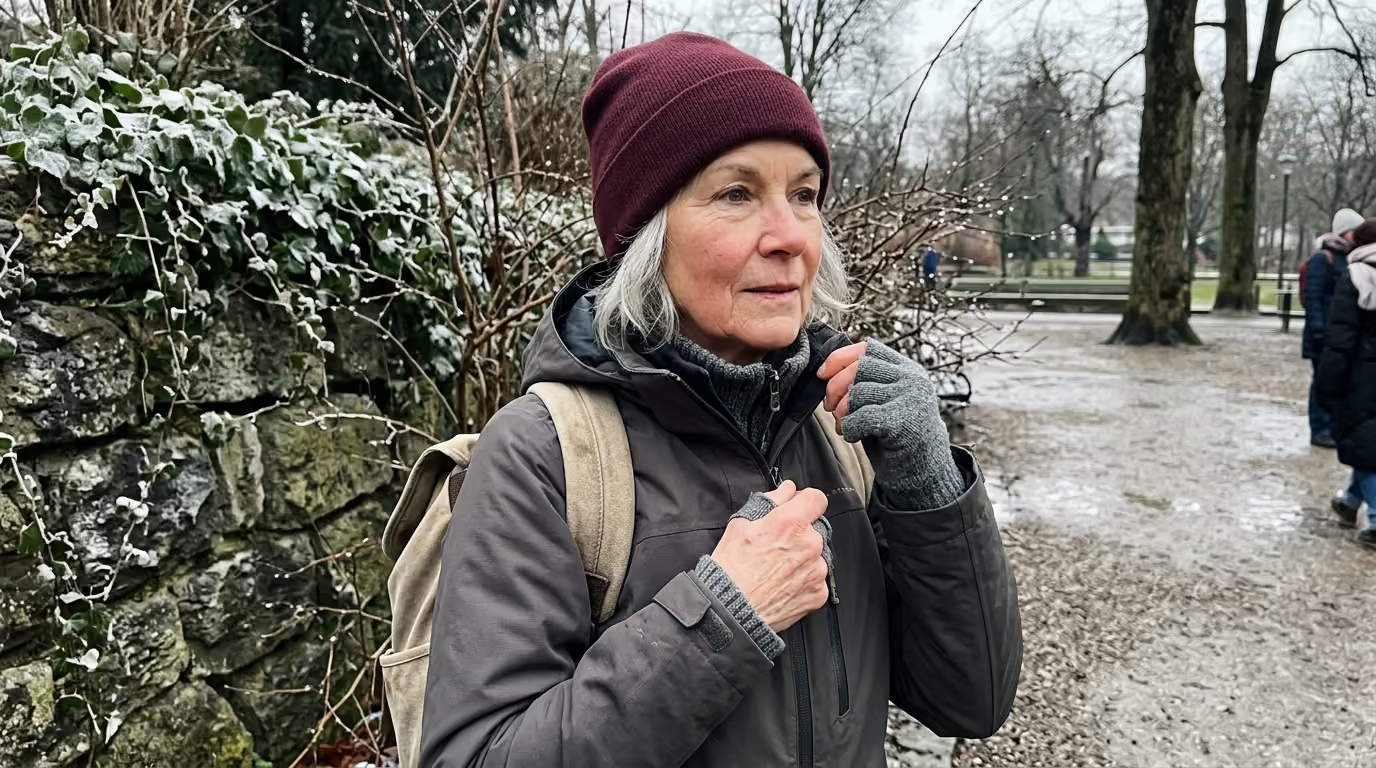

Active adults navigating long-term health can build lasting vitality using structured clinical testing, movement tracking, nutrition.





Imagine standing at the baggage carousel in Zurich after an overnight flight. You effortlessly hoist a fifty-pound duffel bag off the belt, sling it over your shoulder, and walk briskly toward the train station without a second thought. You are seventy-two years old. Your joints feel smooth, your mind is alert, and you are anticipating five days of alpine hiking.
This outcome is rarely an accident of genetics alone. It is the tangible result of a proactive, coordinated long-term health strategy.
Too many active adults leave their future health to chance, reaction, or fragmented advice. They visit a specialist for a knee issue, see a primary care physician for five minutes of blood work, and read conflicting fitness headlines online.
A personal longevity plan unifies these separate elements into a single coherent system. It connects physical training, nutritional patterns, preventative screening, and lifestyle habits directly to your real-world ambitions.
A personal longevity plan is a structured framework that helps you maintain physical strength, cognitive clarity, and total independence as you grow older. Rather than reacting to illnesses as they arise, this approach treats your health like a well-managed enterprise. You establish objective baselines, identify specific vulnerabilities, set measurable functional targets, and conduct an annual review to adjust your course.
The primary objective of this framework is expanding your healthspan. Healthspan represents the period of life spent free from chronic disability and debilitating disease. By focusing on intrinsic capacity, which includes your mobility, balance, mental acuity, and physiological resilience, you ensure that your body can support the adventures, sports, and professional pursuits you value.
Creating this strategy does not require radical lifestyle overhauls or obsessive self-tracking. Instead, it relies on high-yield fundamentals executed with consistency. By coordinating regular medical screenings, progressive physical training, restorative sleep, and nutritional support, you build lasting biological reserves.
This guide provides the complete blueprint for establishing your baseline, interpreting your personal risk factors, and building an annual review cycle. Whether your goal is backcountry trekking or remaining fully capable in your daily life, this strategy keeps you moving forward with confidence.
To construct an effective plan, you must first understand the biological difference between lifespan and healthspan. Lifespan is simply the total number of years you live. Healthspan is the duration of your life spent in robust functional health. Modern medicine has become remarkably effective at extending lifespan, but extending healthspan requires deliberate personal initiative.
The World Health Organization defines healthy aging as the process of developing and maintaining functional ability. Functional ability enables well-being in older age and allows you to do what you value. This ability is determined by your intrinsic capacity, your physical and social environment, and the interaction between them.
Intrinsic capacity comprises five core domains:
When you focus exclusively on disease prevention, you overlook the gradual decline in intrinsic capacity. A person may have normal resting blood work yet lack the leg power required to recover from a trip on an uneven trail. By managing intrinsic capacity directly, you protect your body against frailty and unexpected injury.
Longevity research shows that aging is not a single, fixed process. It is driven by cellular damage, mitochondrial decline, chronic low-grade inflammation, and loss of structural tissue. Fortunately, targeted lifestyle behaviors directly influence these biological pathways.
For instance, muscle tissue is an active endocrine organ. When you contract skeletal muscle against resistance, it releases signaling molecules called myokines that reduce systemic inflammation and support brain health.
You can read more about these mechanisms in our guide to healthy aging and living well.
Understanding this science shifts your perspective from passive aging to active capacity management. Genetics and chance certainly play a role in your health trajectory. However, your daily behaviors, medical decisions, and physical training significantly modify your absolute risk.
You cannot manage what you do not measure. A successful personal longevity plan begins with a comprehensive, multidimensional baseline assessment. This snapshot captures where your physiology, functional capability, and lifestyle habits stand today.
Many people make the mistake of relying solely on standard annual blood work. While laboratory panels are essential, they provide only one piece of the picture. A robust baseline assessment must balance clinical data with physical performance testing and everyday functional markers.
Your clinical baseline should be established in partnership with a qualified physician. This review goes beyond basic disease detection to evaluate long-term metabolic and cardiovascular trends.
Key clinical baseline measures include:
Functional testing evaluates your real-world physical capability. These measurements tell you whether your muscles, joints, and nervous system can handle demanding physical tasks.
You can assess your functional baseline using several straightforward tests:
Functional markers provide clear, objective indicators of physical decline long before clinical symptoms appear. For detailed movement protocols, explore our resource on strength and physical performance.
The third component of your baseline tracks the daily behaviors that fuel your biology. These metrics should be recorded over a typical two-week period to establish an accurate average.
Review your weekly physical activity volume, noting the exact minutes spent in moderate and vigorous movement. Document your average nightly sleep duration, sleep regularity, and daytime energy levels. Track your typical weekly alcohol intake, daily protein consumption, and total sedentary hours spent sitting at a desk.
Collectively, these three baseline categories establish your true physiological starting line.
Your family history serves as a personalized genetic blueprint. It highlights specific health vulnerabilities that warrant closer attention and earlier screening. However, many people misunderstand the role of heredity in long-term health.
A family history of cardiovascular disease, type 2 diabetes, osteoporosis, or specific cancers increases your statistical risk for those conditions. Yet family history does not represent a predetermined destiny. Families share environments, culinary traditions, activity habits, and stress responses alongside their genetic code.
Using tools like the CDC My Family Health Portrait, you should catalog health data across three generations:
The most critical signal in family history is the early onset of disease. A father who suffered a myocardial infarction at age forty-two presents a very different clinical signal than a grandfather who had one at eighty-five. Early onset in multiple close relatives indicates a potential inherited risk that requires proactive clinical intervention.
Share this detailed family map directly with your physician. It should directly inform when you begin specific cancer screenings, how aggressively you manage blood lipids, and which lifestyle habits you prioritize.
For instance, a strong family history of osteoporosis should prompt earlier bone mineral density scans and a focused resistance training program. A family tendency toward metabolic dysfunction emphasizes the need to monitor postprandial glucose and prioritize daily physical movement.
Treat your family history as actionable intelligence. It shows you exactly where to build your strongest biological defenses.
Once you have gathered your baseline data and mapped your family history, you can build your everyday health strategy. A sustainable longevity plan rests on three primary physiological pillars: structured movement, nutrient-dense nutrition, and restorative sleep.
Physical activity is the single most potent intervention available for healthy aging. The U.S. Physical Activity Guidelines highlight that adults achieving 150 to 300 minutes of moderate aerobic activity weekly experience up to a 33% lower risk of all-cause mortality. However, your exercise program must be balanced across four distinct training modalities.
The four movement components include:
Your nutritional framework should focus on supporting metabolic health, preserving lean muscle mass, and maintaining stable daily energy. Extreme elimination diets are rarely sustainable and often lead to muscle loss in older adults.
Adopt a dietary pattern centered on whole, minimally processed foods. Prioritize high-quality protein across your meals to stimulate muscle protein synthesis and counteract age-related muscle loss. Include a wide variety of fibrous vegetables, whole fruits, legumes, nuts, seeds, and healthy unsaturated fats to support gut microbiome diversity.
Simultaneously, moderate your consumption of ultra-processed foods, refined carbohydrates, and added sugars that promote insulin resistance. Keep alcohol intake within sensible limits, as excess alcohol disrupts sleep architecture, impairs liver function, and increases fall risks.
Learn more about optimizing your fuel sources in our section on nutrition and metabolism.
Sleep is the biological foundation upon which all recovery occurs. The Centers for Disease Control and Prevention report that over one-third of adults experience insufficient sleep. Chronic short sleep is linked to elevated risks of hypertension, obesity, cognitive decline, and metabolic dysfunction.
Aim for seven to eight hours of high-quality, uninterrupted sleep every night. Maintain consistent wake and sleep times across all seven days of the week to stabilize your internal circadian clock. Get bright sunlight in your eyes within thirty minutes of waking, and eliminate screen exposure and heavy meals two hours before bed.
If you struggle with chronic fatigue or loud snoring, seek clinical evaluation for sleep apnea. Treating disordered breathing restores oxygen saturation during sleep and immediately protects your cardiovascular system.
For a deeper look into sleep architecture, read our guide on recovery and sleep.
The true test of a longevity plan does not take place in a doctor's office. It happens on a steep mountain path in Patagonia, during an eighteen-hole round of golf, or while navigating a bustling overseas train station. Your health strategy must translate into real-world capability.
Consider how these physiological pillars support an avid skier in their late fifties. Downhill skiing requires powerful quadriceps contractions, rapid vestibular balance adjustments, core rotational stability, and robust cardiovascular endurance.
Without targeted training, skiing for four consecutive days at high altitude leads to extreme fatigue, poor muscle recruitment, and elevated injury risk.
By adhering to a personal longevity plan, that skier trains specifically for their sport:
The same practical benefits apply to frequent business and leisure travel. International transit exposes your body to prolonged sitting, disrupted circadian rhythms, dehydration, and irregular nutrition.
A planned approach treats travel as a manageable physical event. You pack resistance bands for hotel workouts, prioritize hydration during flights, and schedule morning outdoor walks upon arrival to rapidly reset your internal clock.
You can find more travel-specific protocols in our collection on travel and adventure.
By aligning your health plan with the physical activities you love, maintaining your regimen stops feeling like a chore. It becomes the exact vehicle that keeps your life adventurous, engaging, and fulfilling.
As public interest in healthy aging has surged, so has the volume of misinformation, unproven trends, and overcomplicated advice. Navigating this space requires a discerning, evidence-based mindset.
A reader recently asked me if they needed to start a complicated, three-hour morning routine they saw online. I told them absolutely not.
When our team looked at the research they referenced, the actual benefits were marginal compared to simply getting eight hours of sleep and lifting heavy things twice a week. In our experience, it is incredibly easy to get distracted by the top one percent of optimization and forget that the foundation is where all the real longevity gains are made.
Here are the most pervasive misconceptions you should avoid:
Cold plunges, infrared saunas, hyperbaric chambers, and complex peptide stacks generate immense social media attention. However, these tools offer minimal value if you are sleep-deprived, physically inactive, and consuming an ultra-processed diet. Master the basic habits of sleep, resistance exercise, daily walking, and whole-food nutrition before investing in niche technologies.
Direct-to-consumer testing companies frequently promote total-body scans, extensive genetic screens, and massive blood biomarker panels. While early detection is valuable, indiscriminate testing often leads to false positives, clinical anxiety, and unnecessary invasive procedures. Every medical test should be chosen based on your personal risk profile, family history, and whether the results will meaningfully change your clinical management.
No combination of vitamins, antioxidants, or longevity supplements can undo the systemic damage caused by smoking, sedentary living, or chronic sleep restriction. High-dose supplements can also carry risks of organ toxicity or adverse drug interactions. Treat supplements as targeted additions to address specific, clinically verified deficiencies rather than magic formulas.
Discovering a family history of early heart disease or cancer can feel discouraging. However, genetic predisposition is rarely an absolute guarantee. In most cases, family history reflects an elevated statistical probability that can be substantially lowered through early screening, medical therapy, and consistent lifestyle interventions.
Longevity strategies fail when they become so rigid, time-consuming, and exhausting that they collapse under the weight of everyday life. You do not need to spend twenty hours a week training or turn your kitchen into a chemistry lab to see profound health benefits.
The minimal effective dose represents the smallest investment of time and effort required to produce the vast majority of health benefits. By focusing on high-yield actions, you can build an exceptionally resilient body with a manageable weekly commitment.
Here is the minimal effective dose for an active, sustainable longevity strategy:
This streamlined protocol requires less than four hours of dedicated physical training per week. It fits seamlessly into a demanding executive schedule, accommodates frequent travel, and leaves plenty of energy for leisure, sport, and family life. Consistency over decades matters far more than short-lived bursts of extreme discipline.
The medical and scientific community strongly agrees on the foundational steps required to prevent premature mortality and maintain long-term physical function. Authoritative guidelines from organizations like the U.S. Preventive Services Task Force (USPSTF) and the Centers for Disease Control and Prevention emphasize evidence-based prevention.
Evidence-based preventive care is structured around age, sex, personal history, and established statistical risk. Rather than relying on speculative diagnostic tools, leading clinical organizations emphasize regular screenings that have been proven to save lives in large clinical trials.
Key evidence-based preventive priorities include:
These preventive measures provide immense health protection. Always discuss your specific screening schedule with your physician to ensure it aligns with your unique clinical risk profile.
The engine of a successful personal longevity plan is the annual health review. Just as an executive reviews a company's financial performance at the end of every fiscal year, you must review your physiological progress, re-evaluate your risks, and set your health priorities for the coming twelve months.
Schedule your annual longevity review during a quiet, predictable time of the year, such as early January or your birth month. Use the following step-by-step structure to conduct a comprehensive assessment.
Before stepping into your physician's office, compile your complete personal health record from the past year. Do not expect your doctor to piece together data from multiple disparate portals.
Organize the following information:
Use your annual physical examination as a collaborative strategic session rather than a passive checkup. Bring your organized records and lead with your specific long-term goals.
Key questions to ask your physician:
After completing your medical appointment, conduct your annual physical performance tests. Record your numbers in a dedicated health journal so you can track multi-year trends.
Review your performance across these benchmarks:
Information without clear action creates clutter. Review your clinical findings, lifestyle habits, and functional test results, then select exactly three primary health initiatives for the upcoming year.
A focused priority list might look like this:
By narrowing your focus to three high-impact targets, you dramatically increase your likelihood of success. Revisit these three goals every quarter to ensure you stay on track.
When to revisit this resource: Review this framework every twelve months before scheduling your annual medical physical, or whenever you experience a significant life transition, major injury, or change in your personal health status.
Maintaining your health, vitality, and physical independence across decades is entirely within your reach when you replace guesswork with a clear, systematic plan.
Stay connected for research and practical guidance on longevity, strength, recovery, energy and active living. New ideas to help you stay capable, curious and ready for more.


Explore practical guidance on strength, recovery, energy, travel and longevity for a life that stays active.
explore the Blog