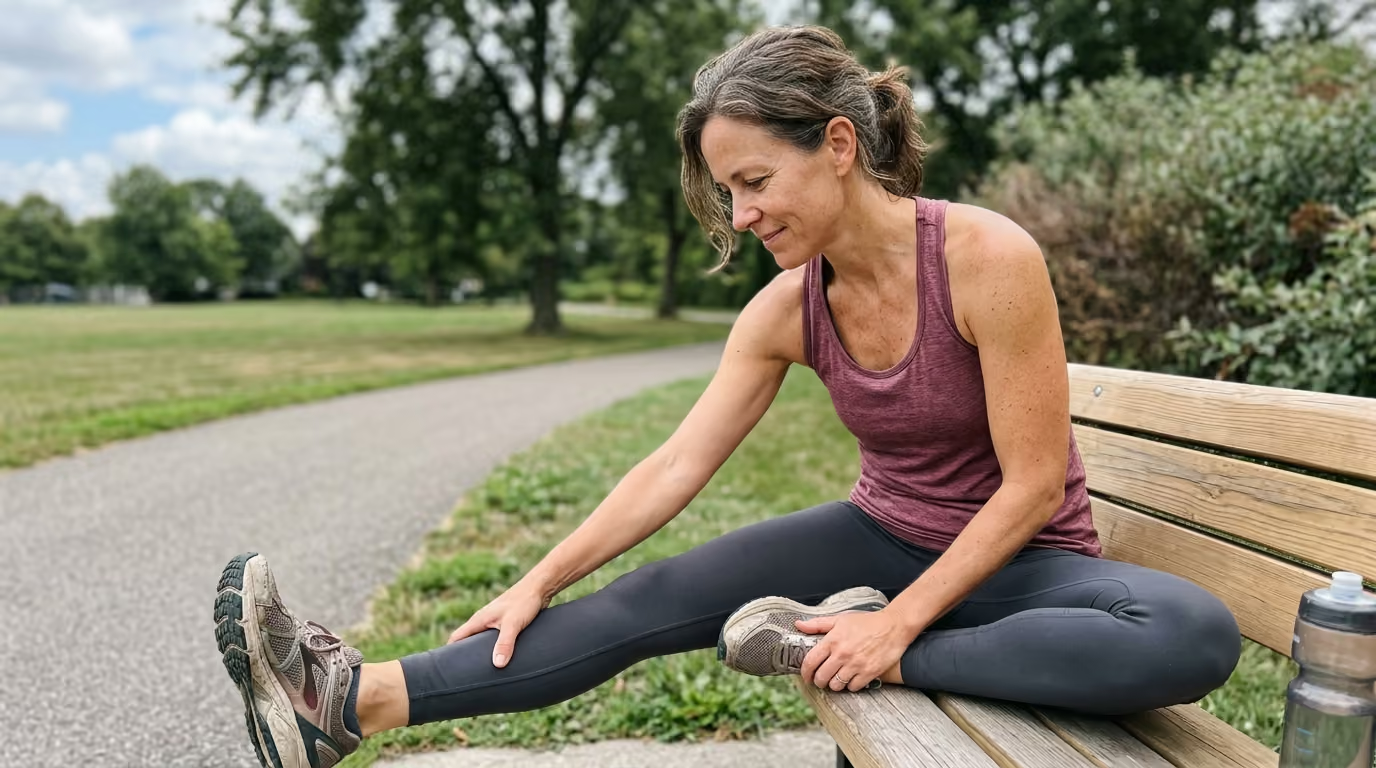

Joint stiffness after a morning run is a sign to build stronger connective tissue through smart load management and regular strength training.





The conventional advice given to adults over 40 is almost always to slow down, play it safe, and avoid heavy physical strain. This well-meaning caution is one of the most reliable ways to invite physical decline. Protecting your joints, tendons, and spine does not happen by shielding them from mechanical work. It happens by methodically exposing them to forces that stimulate cellular repair and structural adaptation.
Staying physically capable across midlife and beyond requires a clear understanding of biological load management. When you know how connective tissue adapts, you can participate in demanding sports, lift challenging weights, and travel without fear of chronic setbacks.
Injury is rarely an unavoidable consequence of chronological age. More often, an injury is a basic mathematical failure between current physical capacity and applied load. Physical capacity represents the total mechanical stress your muscles, tendons, ligaments, bones, and nervous system can absorb before sustaining damage. Load is the sum of every demand placed on that system, including training volume, running speed, joint impact, daily movement, and emotional stress.
When physical load exceeds tissue capacity, the risk margin narrows and symptoms appear. If you maintain high tissue tolerance through progressive training, your risk of injury decreases significantly.
Chronological age does not dictate physical capacity. A sedentary 42-year-old often has lower tissue tolerance and reduced tendon stiffness compared to a well-conditioned 60-year-old. Training history, previous joint trauma, daily sleep quality, systemic inflammation, and current activity levels determine your capacity.
ACSM screening recommendations emphasize your current physical activity, your symptoms, and your intended training intensity rather than your birth year. The goal after 40 is not to eliminate physical stress. The goal is to build a massive capacity reserve so that everyday life, adventurous travel, and vigorous sport never push your tissues to their breaking point. Maintaining high functional capacity is the foundation of healthy aging and living well.
Four distinct components define your total physical capacity:
This is the mechanical tolerance of your muscles, tendons, joint capsules, cartilage, and bones. Resistance training stimulates collagen synthesis in tendons and increases bone mineral density. Without regular exposure to high-load tension, connective tissues gradually lose stiffness and load-bearing tolerance.
This is the ability of the brain and central nervous system to coordinate muscle firing, balance, and rapid force production. You might possess adequate muscle size, but if your nervous system cannot recruit those motor units quickly enough, you cannot stabilize a sudden misstep on a rocky trail.
This is the ability of your cardiovascular and metabolic pathways to deliver oxygen and clear metabolic byproducts. When you become aerobically fatigued, movement mechanics break down. Technique breakdown under fatigue is one of the most common precursors to acute soft-tissue injuries.
This is your ability to regulate your lifestyle choices. It includes sleep consistency, sufficient protein intake, stress management, and the emotional discipline to adjust your workout when your body exhibits warning signs. High behavioral capacity prevents overenthusiastic training errors.
Aging modifies the biological environment of your tissues, but it does not stop adaptation. Understanding how your anatomical structures respond to mechanical loading helps you make smarter training decisions.
Sarcopenia is the age-related loss of muscle mass, quality, and physical performance. This decline predominantly affects fast-twitch Type II muscle fibers, which are responsible for generating rapid, explosive power. Losing fast-twitch fibers reduces your rate of force development, making it harder to catch your balance during a slip or produce high power during athletic movements.
Resistance training provides a powerful stimulus that preserves muscle mass and maintains neuromuscular pathways in mature adults. Systematic review evidence shows that progressive resistance training produces some of the largest improvements in strength, balance, and functional capacity among older adults. Muscle tissue remains remarkably responsive to mechanical tension throughout life. Muscles receive a rich blood supply, allowing them to recover and adapt to exercise faster than connective tissues.
Tendons connect muscle to bone and act as biological springs that store and return elastic energy. Tendons adapt to mechanical load much more slowly than muscle tissue because of lower vascularity and slower collagen turnover. A review of tendon aging in the Journal of Applied Physiology demonstrates that regular exercise counteracts age-related loss of tendon stiffness and structural integrity.
Research examining master sprinters shows that older high-performance athletes maintain healthy tendon architecture despite demanding athletic training. When older adults maintain consistent loading, their muscle-tendon units remain robust. Problems arise when muscular strength improves rapidly, but the tendon has not had enough time to build collagen density. Sudden increases in plyometrics, sprinting, or jumping can provoke reactive tendinopathy in an unprepared Achilles or patellar tendon.
Cartilage has no direct blood supply and relies on cyclical compression to diffuse nutrients through synovial fluid. Sedentary behavior starves joint cartilage of this fluid exchange, leading to stiffness and reduced load tolerance. Moderate, progressive joint loading stimulates cartilage health and supports joint comfort.
Bone tissue also responds directly to axial loading and muscular pull. According to the World Health Organization guidelines on physical activity, weight-bearing exercise and progressive strength training are essential for preserving bone mineral density. Without adequate mechanical stress, bones become less dense and more prone to stress reactions or fractures.
The central nervous system dictates how muscles fire to stabilize joints and produce movement. As we age, proprioception, the internal awareness of joint position in space, can decline if it is not routinely challenged. Reduced proprioceptive sensitivity leads to slower protective reflexes around vulnerable joints like the ankles and knees.
When pain or extreme fatigue occurs, the nervous system uses protective inhibition to shut down force output from prime movers. This compensation pattern shifts mechanical stress onto secondary stabilizing muscles and connective tissues, increasing injury risk. Training for longevity requires technical precision, balance challenges, and movement quality rather than mindless physical exhaustion. Building durable movement patterns is a primary focus of strength and physical performance.
Before increasing your training volume or intensity, you must evaluate your baseline readiness. Jumping into a rigorous program without assessing your starting point invites unnecessary setbacks.
The American College of Sports Medicine recommends preparticipation screening based on current activity levels, known metabolic or cardiovascular disease, and existing symptoms. Inactive individuals with symptoms or known health conditions should seek medical clearance before starting vigorous exercise. Active adults without symptoms can usually progress their training gradually without complicated clinical evaluations.
Medical red flags require immediate clinical attention and temporary cessation of exercise. These include unexplained chest pressure, sudden dizziness, fainting, irregular heart palpitations, or unusual shortness of breath. Localized joint swelling, deep night pain, or progressive neurological weakness also warrant a professional evaluation before you continue loading that area.
Once medical red flags are ruled out, use simple functional tests to establish your movement baseline:
Stand barefoot on a hard surface with your eyes open and lift one foot off the ground. You should be able to balance comfortably for at least thirty seconds without excessive hip swaying or foot shifting. If you struggle to maintain balance, your ankle stabilizers and hip abductors require targeted balance work before you add dynamic sport loads.
Sit on a standard chair with your arms crossed over your chest. Stand up fully and sit down five times as quickly as possible with good control. Completing this test in under ten seconds demonstrates adequate lower-body power and knee extensor capacity.
Stand on a low step and lower one foot toward the floor in a slow, controlled descent. Your stance knee should track smoothly over your second toe without collapsing inward, and your pelvis should remain level. Inability to control this motion indicates quadriceps or gluteal weaknesses that could lead to patellofemoral pain under higher running or hiking volumes.
Translating training principles into dynamic real-world environments requires disciplined progression. Whether you are preparing for mountain trekking, skiing, or competitive tennis, sudden spikes in volume or intensity are the primary driver of overuse injuries.
A common rule of thumb suggests increasing training volume by no more than ten percent per week. While helpful as a loose concept, a rigid ten-percent rule fails to account for movement complexity, speed, joint impact, and personal recovery capacity. Increasing easy flat walking by ten percent places very different demands on your connective tissues than increasing downhill trail running by ten percent.
To protect your tissues, alter only one major training variable at a time:
Managing exercise load requires honest day-to-day self-monitoring. A simple traffic-light system helps you decide whether to push forward, adjust your workout, or stop and assess.
Your joints and muscles feel comfortable, or you have mild, diffuse muscle soreness that improves as you warm up. Your movement technique remains clean, and you feel stable throughout the session. Symptoms resolve completely within twenty-four hours. You are clear to proceed with your planned training progression.
You experience localized tendon stiffness, joint discomfort, or lingering muscular soreness that changes your movement mechanics. You find yourself altering your gait or compensating during lifts. Poor sleep, travel fatigue, or high professional stress may also be present. The correct response is to reduce training intensity, decrease impact, or replace a high-demand session with low-impact mobility work until symptoms return to green.
You experience sudden sharp pain, a feeling of a pop in a joint or muscle, visible swelling, bruising, or an inability to bear weight. Red light conditions require you to stop the provoking activity immediately. Rest the affected area from provocative loads and seek an assessment from a qualified physical therapist or physician.
Misunderstandings about aging and physical recovery cause many active adults to adopt counterproductive habits. Addressing these myths helps you approach your training with confidence and clarity.
Pain is an alarm system generated by the central nervous system when it perceives potential threat. It is influenced by prior injuries, sleep deprivation, mental stress, and tissue sensitivity. Mild joint or tendon discomfort during exercise does not automatically mean that structures are tearing or breaking down. You must interpret pain alongside joint swelling, range of motion, and next-day symptom behavior rather than relying on pain sensation alone.
Lifting challenging weights is one of the most effective ways to stimulate bone density, maintain tendon stiffness, and prevent sarcopenia. Avoiding heavy resistance accelerates the loss of functional muscle mass and reduces tissue resilience. Heavy lifting is safe and beneficial when you prioritize pristine technique, progress weights gradually, and allow adequate recovery between sessions.
Holding static stretches before intense activity does not meaningfully lower your risk of muscle tears or tendon injuries. Real injury prevention comes from building strength through full joint ranges of motion, improving multi-directional balance, and managing training volume. Dynamic warm-ups that raise body temperature and prime neuromuscular pathways are far more protective than passive stretching.
Immobilizing an injured joint or resting completely for weeks at a time causes rapid muscle atrophy and reduces tendon capacity. Aside from acute bone fractures or complete ligament ruptures, most musculoskeletal issues recover faster with relative rest and active loading. Modifying the range, speed, and resistance of movement allows tissues to repair while maintaining essential physical conditioning.
Magnetic resonance imaging and X-rays frequently show structural changes like disc bulges, meniscus tears, or mild osteoarthritis in adults who experience zero pain. A scan reveals tissue structure, not functional capacity or pain sensitivity. Structural findings on an imaging report should never be used in isolation to limit your athletic aspirations.
A 2023 scoping review of recovery from resistance exercise in older adults found significant variability in muscle damage and recovery timelines across individuals. Sleep quality, nutritional status, training background, and genetics all influence how quickly you recover. Programming should be adapted to your individual response rather than dictated by a rigid, arbitrary timeline.
Having an off day where weights feel heavier or your pace feels sluggish is a normal part of training. A single poor session usually reflects short-term fatigue, poor sleep, or emotional stress rather than a true loss of physical fitness. Focus on the long-term trend of your training across weeks and months instead of reacting emotionally to an isolated tough workout.
Recovering from an injury is a criteria-based process, not a calendar-based one. Just because four weeks have passed since an ankle sprain does not mean your ligaments and neuromuscular stabilizers are ready for fast pivoting sports. You should clear specific functional milestones before progressing to higher-risk activities.
Building a resilient body does not require hours of exhausting daily workouts. The minimal effective dose focuses on targeted, high-yield movements that stimulate adaptation without producing excessive systemic fatigue. Incorporating dedicated recovery and regeneration protocols into your weekly schedule ensures that your tissues adapt effectively to these training inputs.
The World Health Organization recommends that older adults engage in varied multicomponent physical activity at moderate or greater intensity on three or more days per week. This multicomponent approach should prioritize functional balance and muscle-strengthening exercises to enhance physical capacity and prevent falls.
Structure your weekly physical preparation around four core pillars:
Perform compound strength exercises twice each week. Emphasize multi-joint movements such as goblet squats, Romanian deadlifts, chest presses, and horizontal rows. Keep repetitions in the six to twelve range with two to three repetitions left in reserve on each set. This produces high mechanical tension on muscles and bones while minimizing joint strain.
Falls represent a major health hazard as adults age. CDC data shows that more than fourteen million adults aged sixty-five and older report falling each year, resulting in approximately nine million injuries. Clinical evidence synthesized by the WHO demonstrates that targeted exercise interventions reduce fall rates by approximately twenty-three percent.
Incorporate dynamic balance work into your daily routine:
Perform two to three weekly sessions of low-impact aerobic work like cycling, rowing, swimming, or brisk incline walking. Keeping your heart rate in a moderate zone builds mitochondrial density and cardiovascular output without placing repetitive impact on your lower-body joints. An efficient aerobic system clears metabolic fatigue quickly, accelerating recovery between demanding resistance sets.
Maintain fast-twitch motor units by including low-volume, controlled power work in your routine. Medicine ball chest passes, kettlebell swings, and gentle box step-ups develop explosive intent safely. Always prioritize deceleration mechanics, learning to absorb force smoothly before attempting high-velocity movements.
Long journeys, time zone shifts, and unfamiliar terrain introduce unique physical stressors that can compromise your tissue tolerance. Active adventure requires resilient joints and reliable energy systems. Prioritizing targeted strategies for travel and adventure allows you to stay capable across demanding environments.
Sitting in cramped airplane seats or vehicles for extended hours leads to postural stiffness, hip flexor shortening, and temporary reductions in spinal fluid exchange. Dehydration from dry cabin air alters blood viscosity and impairs soft-tissue hydration, making muscles and tendons more susceptible to irritation upon arrival.
After a grueling thirty hour transit to Tokyo, I realized my old strategy of just powering through was no longer working. I felt foggy for three days. I started digging into circadian biology and realized that timing my light exposure and fasting during the flight could completely shift my recovery. Now, I never board a long haul flight without a precise schedule for when to eat and when to put on an eye mask. It is the difference between losing a week of your trip and hitting the ground running.
When you land after long-haul travel, resist the urge to immediately jump into maximum-effort training or strenuous mountain hikes. Your central nervous system is fatigued, your balance reflexes are blunted, and your connective tissues are stiff from prolonged sitting.
Use this systematic arrival protocol to prepare your musculoskeletal system:
Get thirty minutes of direct morning sunlight in your new destination to anchor your central biological clock. Circadian alignment directly regulates nighttime growth hormone secretion, cellular repair, and autonomic nervous system recovery.
Drink plenty of water with added electrolytes upon landing. Hydrating your systemic tissues improves cellular fluid exchange in joint cartilage and restores normal elasticity to muscular fascia.
Avoid heavy spinal loading immediately after long-haul transit. Spend fifteen minutes performing bodyweight hip openers, cat-cow spinal articulations, ankle circles, and light walking. This restores joint synovial fluid flow and reactivates dormant gluteal and core stabilizers.
On your first day in a new location, perform an easy thirty-minute session consisting of brisk walking, light bodyweight squats, and balance drills. This stimulates tissue perfusion and re-establishes neuromuscular coordination without producing deep muscular damage.
Occasional training setbacks and minor flare-ups are a natural part of an active lifestyle. Navigating a flare-up successfully requires an objective, step-by-step approach rather than complete inactivity or anxious over-testing.
When acute soreness or tendon irritation occurs, your primary objective during the first 24 to 48 hours is relative activity and symptom stabilization. Do not test your maximum strength or perform high-impact movements simply to check if the pain has vanished. Engage in gentle walking, light mobility drills, and active movement that does not provoke sharp symptoms.
Tendons require a measured loading approach. The return-to-sport literature for conditions like Achilles tendinopathy emphasizes monitoring your pain response during the exercise and over the subsequent 24 to 48 hours. Tendons often feel fine during an actual training session, only to react with severe morning stiffness the following day.
Follow these tendon loading guidelines:
A deload is a planned temporary reduction in mechanical stress designed to allow systemic recovery. When you notice persistent yellow-light symptoms across multiple workouts, implement a structured deload week:
When recovering from an injury or joint flare-up, progress through functional milestones rather than relying on elapsed calendar days:
Settle acute inflammation and pain using relative rest and supported, pain-free movement.
Regain normal walking mechanics, full resting range of motion, and pain-free execution of ordinary household tasks.
Introduce progressive resistance training targeting the affected muscles and surrounding joint structures through controlled, stable movements.
Practice fundamental movement patterns like lunging, rotating, hinging, and light jogging at low velocities.
Integrate plyometric hops, change-of-direction drills, and rapid force production once base strength is fully restored.
Return to modified sports drills, shortened running intervals, or partial tennis hitting sessions with planned rest intervals.
Complete full team practices, standard training runs, or complete athletic matches without competitive pressure.
Participate in full competitive sports, demanding mountain trekking, or heavy training cycles without self-imposed restrictions.
Continue performing targeted balance, mobility, and accessory strength work to prevent future capacity deficits.
Real-world training scenarios illustrate how to apply the capacity-load framework across different sports and fitness goals.
A 47-year-old runner with solid aerobic endurance suddenly adds weekly track intervals and hill sprints. Within two weeks, Achilles tendon stiffness appears each morning.
The issue is not chronological age. The issue is a mismatch between the tendon's prior exposure to steady-state running and the sudden introduction of high elastic spring demands.
The adjustment is to temporarily remove high-velocity sprinting while maintaining easy aerobic mileage. The runner introduces heavy, slow calf raises to rebuild tendon collagen density. Hills and speed intervals are then reintroduced as separate variables weeks apart, while carefully monitoring morning tendon stiffness over the subsequent 48 hours.
A 55-year-old adult can deadlift heavy weights with excellent form but struggles to stand on one leg and feels unsteady walking on uneven cobblestones. This individual has developed muscular strength in fixed, bilateral planes while neglecting single-leg stability and proprioceptive control.
The adjustment is to retain compound lifting while dedicating ten minutes per session to single-leg balance drills, tandem-stance stability, and multi-directional lunges. WHO guidelines specifically recommend multicomponent balance work alongside strength to prevent unexpected falls and improve functional control.
A 52-year-old professional sits at a desk all week and plays two intense hours of competitive tennis on Saturday morning. The athlete repeatedly suffers calf strains and elbow irritation.
The issue stems from a major load spike concentrated into a single day following five days of complete physical inactivity. The adjustment is to distribute physical stress evenly across the week. The athlete adds two twenty-minute conditioning and resistance sessions during the workweek, shortens the Saturday match slightly, and performs a thorough dynamic warm-up before stepping onto the court.
The broader scientific community shares a clear consensus regarding exercise, injury prevention, and healthy aging:
Developing physical capability after 40 is a matter of intelligent capacity management. By respecting tissue remodeling timelines, screening for baseline deficits, and progressing loads systematically, you can build a resilient, high-performing body that supports lifelong adventure.
Sustainable physical longevity is not built by avoiding exertion, but by methodically expanding your capacity to meet every demand you choose to pursue.
Stay connected for research and practical guidance on longevity, strength, recovery, energy and active living. New ideas to help you stay capable, curious and ready for more.


Explore practical guidance on strength, recovery, energy, travel and longevity for a life that stays active.
explore the Blog