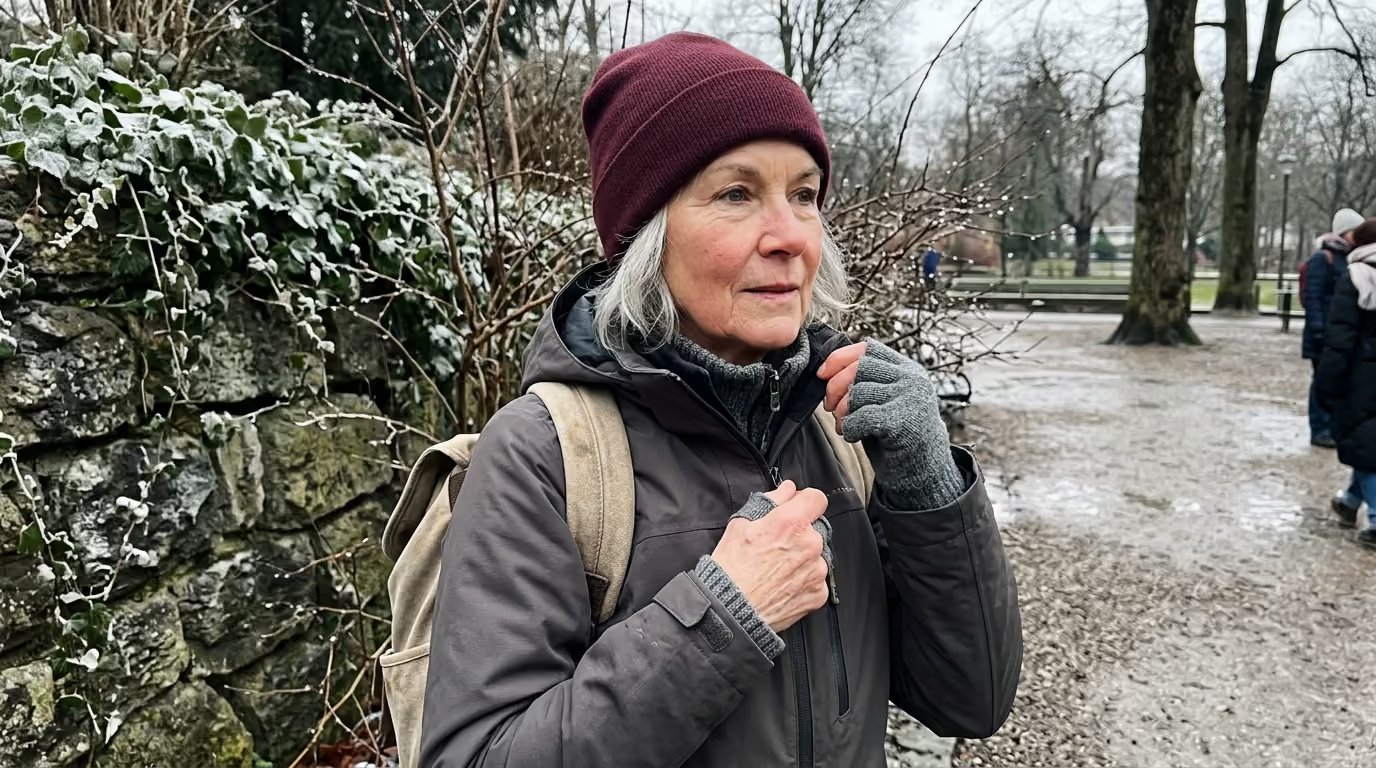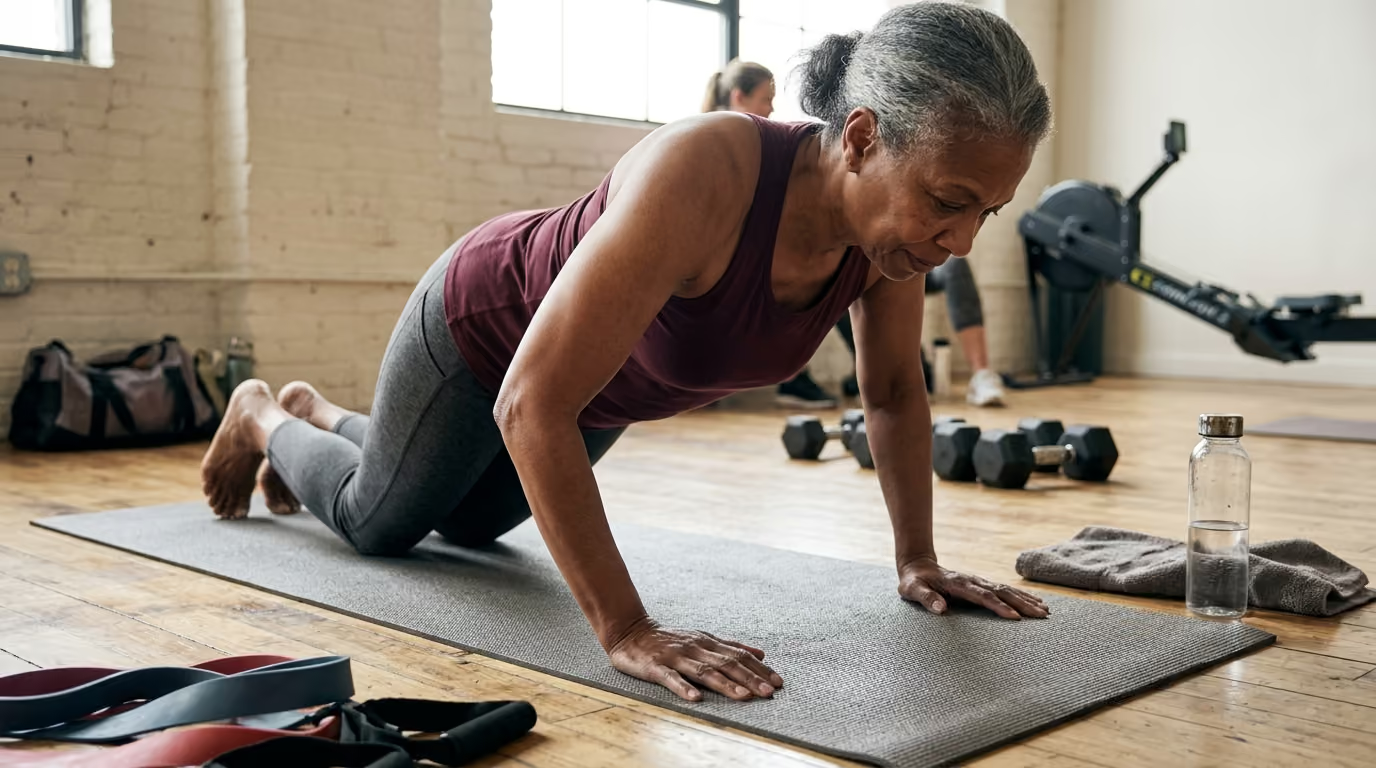

Five critical physical qualities provide the foundation for older adults to build functional reserve capacity and preserve long-term independence.





Imagine standing in a bustling train station in Milan with two heavy bags. Your train is announced on a platform across three flights of stairs, and departure is in five minutes. You lift your bags, take the stairs two at a time without losing balance, and reach your carriage with a calm pulse and steady hands.
This scenario illustrates what fitness in later decades truly means. It is not about bench press records, extreme marathon times, or gym aesthetics. True physical fitness as we age is the ability to navigate the world with confidence, autonomy, and reserve capacity.
The practical application of healthy aging research comes down to one clear priority: building physical capability that exceeds the demands of daily life. When you train your cardiovascular system, muscular strength, power, mobility, and balance in unison, everyday tasks become effortless. Traveling internationally, playing recreational sports, and maintaining your household remain pleasures rather than sources of physical anxiety.
To help active adults achieve this, our team has built this comprehensive guide to functional longevity. You will learn how to evaluate your baseline, target the five critical physical qualities, and build a sustainable weekly routine that fits your lifestyle. For broader insights on longevity, see our healthy aging and living well guides.
Chronological age records how many birthdays you have celebrated. Functional age measures what your body can safely and effectively accomplish in the real world. Two individuals aged sixty-five can present completely different physical profiles. One may walk briskly up mountain trails, carry their own luggage, and recover quickly from long flights. Another may struggle to rise from a low chair, feel unsteady on uneven ground, and experience exhaustion after a short walk.
These disparities do not happen by chance. Functional capacity is shaped by training history, habitual movement, nutrition, sleep quality, joint health, and injury management. Biological decline is real, but its rate is highly responsive to regular physical training.
Physical activity is any bodily movement that uses energy, such as gardening, walking through the grocery store, or taking the stairs. Exercise represents structured, repetitive activity designed to maintain or improve physical fitness. Training takes exercise a step further by using deliberate progressions in volume, intensity, and movement complexity.
To build lasting independence, simple daily activity is rarely enough. A person can walk ten thousand steps daily and still lack the leg strength to catch themselves during a stumble. True physical resilience requires a structured training plan that targets specific physical qualities.
This brings us to the concept of reserve capacity. Reserve capacity is the safety buffer between your maximum physical ability and the energy required for routine tasks. If climbing a single flight of stairs demands ninety percent of your maximum cardiovascular effort, any disruption will leave you exhausted. If that same flight of stairs requires only thirty percent of your capacity, you will handle it with ease. Building reserve capacity protects your autonomy during illness, injury, travel fatigue, or demanding adventures.
Before starting any new exercise routine, you should establish a clear baseline. Testing gives you objective feedback on your current strengths and highlights areas that need attention. It also allows you to track progress accurately over months and years.
Before performing physical tests, perform a simple health screening. If you experience chest discomfort, unexplained dizziness, sudden shortness of breath, joint pain, or unsteadiness, consult a medical professional first.
Once cleared, run through an interview-based self-assessment. Ask yourself what activities you currently avoid due to fatigue, pain, or lack of confidence. Consider what physical feats you want to perform over the next ten years. Note how your body responds to long travel days, and reflect on what led to past training setbacks. Your training program should be designed around your real-world goals rather than generic fitness trends.
The thirty-second chair stand test is a validated tool for measuring lower body functional capacity. Sit in the middle of a standard armless chair with your feet flat on the floor and your arms crossed over your chest. On the word go, rise to a full standing position and sit back down as many times as possible in thirty seconds.
Count only fully completed repetitions with proper posture. Completing fewer than twelve repetitions indicates a need for progressive lower-body strength and power training. Healthy, active adults should aim for fifteen to twenty clean repetitions.
Balance is your nervous system's ability to control your center of mass over your base of support. Test your static balance using the tandem stance. Place one foot directly in front of the other, heel to toe, with your hands on your hips and eyes open.
Hold this position for thirty seconds without moving your feet or reaching for support, then repeat with the other foot forward. If you master this easily, try the single-leg stance. Stand on one leg with your eyes open and hands on your hips, aiming for a steady thirty-second hold on each side.
Joint mobility ensures you can move freely without compensating through other muscle groups. Test your active ankle dorsiflexion by facing a wall with one foot four inches away. Keep your heel flat on the floor and bend your knee forward toward the wall. If your knee touches the wall without your heel lifting, your ankle mobility is sufficient for standard squatting and stair climbing.
To assess shoulder and thoracic mobility, stand with your back flat against a wall. Raise both arms overhead with straight elbows, attempting to touch the wall with your thumbs without arching your lower back. Inability to reach the wall suggests tightness in the thoracic spine and shoulder girdle that should be addressed before adding overhead loads.
A simple six-minute walk test offers clear insight into your cardiovascular fitness. Find a flat, measured walking path, such as an indoor track or quiet outdoor street. Walk as briskly as possible for six minutes, maintaining a steady, sustainable pace.
Record the total distance covered and notice how quickly your breathing settles afterward. Active, conditioned adults typically cover five hundred to seven hundred meters. If you finish short of this mark or take more than five minutes to catch your breath, your aerobic base needs dedicated development. You can review our human performance library for additional testing protocols.
A complete fitness program for healthy aging must address five core physical qualities: strength, power, cardiovascular fitness, mobility, and balance. Training only one or two of these leaves critical gaps in your physical resilience.
Muscular strength is your ability to generate force against external resistance. Aging naturally leads to a gradual loss of muscle mass, known as sarcopenia, along with a reduction in muscle quality. Progressive resistance training stimulates muscle protein synthesis, strengthens connective tissue, and improves bone density.
Your strength routine should focus on fundamental human movement patterns:
Train with loads that challenge your muscles within an eight to twelve repetition range. Ensure the last two repetitions feel demanding while maintaining clean technique. You can explore more structured approaches in our guide to building physical performance and strength.
Power is the rate at which you produce force, combining strength with speed. In daily life, power is what allows you to step forward quickly to catch yourself when you trip. Research shows that muscle power declines earlier and faster than maximal strength as we age.
According to the American College of Sports Medicine, power training should use moderate loads, roughly thirty to seventy percent of your one-repetition maximum, moved with explosive intent during the lifting phase. You can safely build power using:
Focus on moving the weight with speed and control. Keep repetitions low, typically three to six per set, so fatigue does not compromise your movement speed.
Your aerobic system powers sustained physical activity and supports cardiovascular and metabolic health. The World Health Organization recommends that adults accumulate 150 to 300 minutes of moderate-intensity aerobic exercise, or 75 to 150 minutes of vigorous-intensity exercise, each week.
Moderate-intensity exercise corresponds to a pace where you can talk in short sentences but cannot sing. Brisk walking, easy cycling, swimming, and rowing fit into this category. This work builds your capillary network, improves mitochondrial density, and supports cardiac output.
Vigorous-intensity training, such as high-intensity interval training or hill sprints, raises your heart rate near its maximum. While valuable for boosting VO2 max, vigorous exercise requires more recovery time. For most adults over forty, spending eighty percent of aerobic time in moderate zones and twenty percent in vigorous zones provides the best balance of benefits and recovery.
Mobility is the ability to actively control your joints through their full range of motion. Unlike passive flexibility, mobility requires strength and neuromuscular control at end ranges. Adequate mobility protects your joints from strain and makes complex movements feel smooth and natural.
Prioritize three key areas in your weekly routine:
Integrate dynamic mobility drills into your warm-ups. Exercises such as world's greatest stretches, quadruped thoracic rotations, and deep goblet squat holds keep joints healthy and ready for demanding work.
Balance is a complex skill that integrates visual, vestibular, and proprioceptive inputs. Static balance on a flat, predictable floor is only the beginning. True real-world balance is dynamic, multi-directional, and responsive to unexpected disruptions.
To improve your balance, vary your training conditions:
Progress these drills gradually to keep them challenging yet safe. Always keep a sturdy wall, railing, or support surface within arm's reach when practicing challenging balance positions.
Several persistent myths prevent active adults from training effectively as they age. Clarifying these misconceptions helps you focus your energy on what actually works.
Walking is a fantastic foundation for cardiovascular health and daily energy expenditure. However, walking alone does not provide sufficient resistance to build muscle, stimulate bone density, or develop fast-twitch muscle fibers. A well-rounded routine must combine daily walking with progressive resistance training and dynamic balance work.
Many people believe that lifting weights becomes hazardous after middle age. In reality, avoiding strength training is far more dangerous, as it accelerates muscle loss, joint instability, and bone thinning. When performed with proper form and sensible load progression, resistance training protects your joints and lowers your risk of injury in everyday life.
Standing on one foot in a quiet gym is a helpful starting point, but it does not reflect the dynamic balance needed for daily life. Real-world balance challenges involve movement, carrying loads, turning your head, and reacting to uneven ground. Effective balance training must include movement, direction changes, and varied sensory environments.
When you feel sore or fatigued, resting on the couch all day is rarely the best response. Gentle, active recovery promotes blood flow, clears metabolic waste, and lubricates stiff joints. Light walking, gentle mobility drills, and spending time in nature are far more effective for recovery than complete sedentary rest. To dive deeper into optimizing your downtime, read our guide on rest and physical recovery.
Finishing every workout completely drained is counterproductive. Consistent, moderate efforts that leave you feeling energized drive better long-term adaptations than occasional workouts that leave you exhausted. Sustainable training builds capacity over decades without causing burnout or overuse injuries.
To see how these principles apply to real life, let us examine how different active adults can structure their training to overcome specific physical hurdles.
Consider an individual in their early sixties who walks five miles every morning. Despite their aerobic fitness, they notice difficulty carrying heavy luggage up a flight of stairs and feel stiff when getting up from the floor.
Their gap is a lack of progressive resistance and power training. Walking provides steady cardiovascular input but does not challenge their upper body or build leg strength through deep ranges of motion.
Their updated plan should keep daily walking for health and enjoyment, while adding two 35-minute full-body strength sessions each week. These workouts should include goblet squats, dumbbell deadlifts, push-ups, cable rows, and suitcase carries. Within eight weeks, their stair-climbing power and luggage-carrying capacity will improve significantly.
Consider a fifty-year-old who played competitive basketball in college and wants to take up pickleball and downhill skiing. If they jump straight into high-intensity matches, their joints and tendons will likely struggle to keep up.
Their gap is sport-specific tissue conditioning. While their muscle memory and competitive drive remain, their tendons, ligaments, and lateral movement mechanics need time to adapt.
Their training should begin with general strength and deceleration work. They should introduce lateral band walks, rotational medicine ball throws, eccentric single-leg squats, and short agility drills on grass. Building this foundation over six to eight weeks ensures their joints can handle sudden stops and pivots on the court or ski slope.
A business executive or avid traveler in their late fifties spends long hours on airplanes and trains. They often arrive at their destination with lower back tightness, stiff hips, and sluggish energy, which limits their enjoyment of walking tours.
Their gap is a lack of rotational strength, hip mobility, and endurance under load. Long periods of sitting shorten hip flexors and reduce glute activation, making walking with luggage uncomfortable.
Their plan should emphasize loaded carries, single-leg Romanian deadlifts, glute bridges, and thoracic spine openers. During travel days, they should use short mobility routines in hotel rooms and schedule regular walking breaks. These simple habits keep their body mobile and ready for adventure.
Consider someone in their early seventies who recently had a near-fall on a wet sidewalk. The experience left them feeling hesitant, leading them to reduce their daily walking and avoid uneven paths.
Their gap is nervous system confidence and dynamic balance. Restricting movement only accelerates physical decline and increases future fall risks.
Their path forward involves structured, progressive balance training. They should start with supported tandem stands and multi-directional stepping drills next to a counter. As confidence returns, they can progress to unassisted drills, walking on varied terrain, and fast sit-to-stands to rebuild reaction speed. This approach restores physical stability and peace of mind.
An adult in their late fifties with mild knee osteoarthritis may believe they should avoid leg exercises altogether. Avoiding movement, however, weakens supporting muscles and worsens joint pain over time.
Their gap is joint-friendly strength training. The solution is finding pain-free ranges of motion and building strength around the affected joint.
Their routine should swap high-impact jumping for smooth, controlled exercises such as box squats, leg presses, Romanian deadlifts, and stationary cycling. Strengthening the quadriceps, hamstrings, and glutes offloads pressure from the knee joint, reducing pain and improving daily function.
Real-world travel demands physical capability. Navigating foreign train stations, lifting bags into overhead bins, and walking across uneven cobblestones all require functional strength and balance.
Last winter in Chamonix, I noticed something striking. It was not the altitude that forced my peers into the lodge by noon, it was a lack of rotational strength and poor recovery from the flight. We spend so much time debating the perfect supplement stack, yet we neglect the basic foundational strength required to actually enjoy our travels. That trip changed how I approach fitness. I stopped training for aesthetics and started training exclusively for capability.
Travel-ready fitness requires three specific physical qualities:
To prepare for demanding trips, incorporate specific functional movements into your training. Farmer carries, suitcase carries, step-ups with a weighted backpack, and rotational cable chops simulate real-world travel challenges. For more travel-specific physical preparation, explore our travel performance strategies.
You do not need to spend hours in the gym every day to maintain functional fitness. When work, travel, or family commitments limit your time, focus on the minimal effective dose. This represents the smallest amount of exercise needed to preserve your hard-earned strength, endurance, and mobility.
According to a 2024 report from the CDC National Center for Health Statistics, only 13.9% of adults aged 65 and older meet federal guidelines for both aerobic and muscle-strengthening activity. This gap occurs because people often attempt overly ambitious routines, burn out, and stop entirely. A simpler, sustainable routine performed consistently delivers far better results than an extreme program you cannot maintain.
For a balanced, highly effective routine, aim for this weekly rhythm:
During hectic weeks or hotel stays, use this streamlined 20-minute bodyweight routine three times per week to maintain your baseline:
Pair this brief workout with a daily 20-minute brisk walk. This simple combination preserves your aerobic capacity, muscular strength, and balance until your regular schedule resumes.
To keep progressing without risking injury, follow the rule of single-variable progression. Adjust only one training variable at a time:
Never increase load and volume in the same week. Allow your joints, tendons, and nervous system to adapt smoothly to each small challenge.
The global scientific and clinical community agrees on the core principles of exercise for healthy aging. Public health organizations, including the World Health Organization and the Centers for Disease Control and Prevention, emphasize that regular multicomponent physical activity is the most reliable tool for preserving functional independence.
A landmark systematic review of 64 clinical studies published in the British Journal of Sports Medicine found that structured exercise programs reduced fall rates among older adults by approximately 23 percent. Programs combining balance training, functional exercise, and resistance work produced the largest reductions in fall-related injuries.
Health authorities agree on these fundamental guidelines:
Focusing on these evidence-based priorities allows you to ignore fitness fads and invest your energy in habits that truly build lasting capability.
Bookmark and return to this guide whenever you experience a major change in your physical routine:
Building physical capacity for healthy aging is not a temporary challenge. It is an ongoing investment in your freedom, resilience, and lifelong adventure.
Stay connected for research and practical guidance on longevity, strength, recovery, energy and active living. New ideas to help you stay capable, curious and ready for more.


Explore practical guidance on strength, recovery, energy, travel and longevity for a life that stays active.
explore the Blog