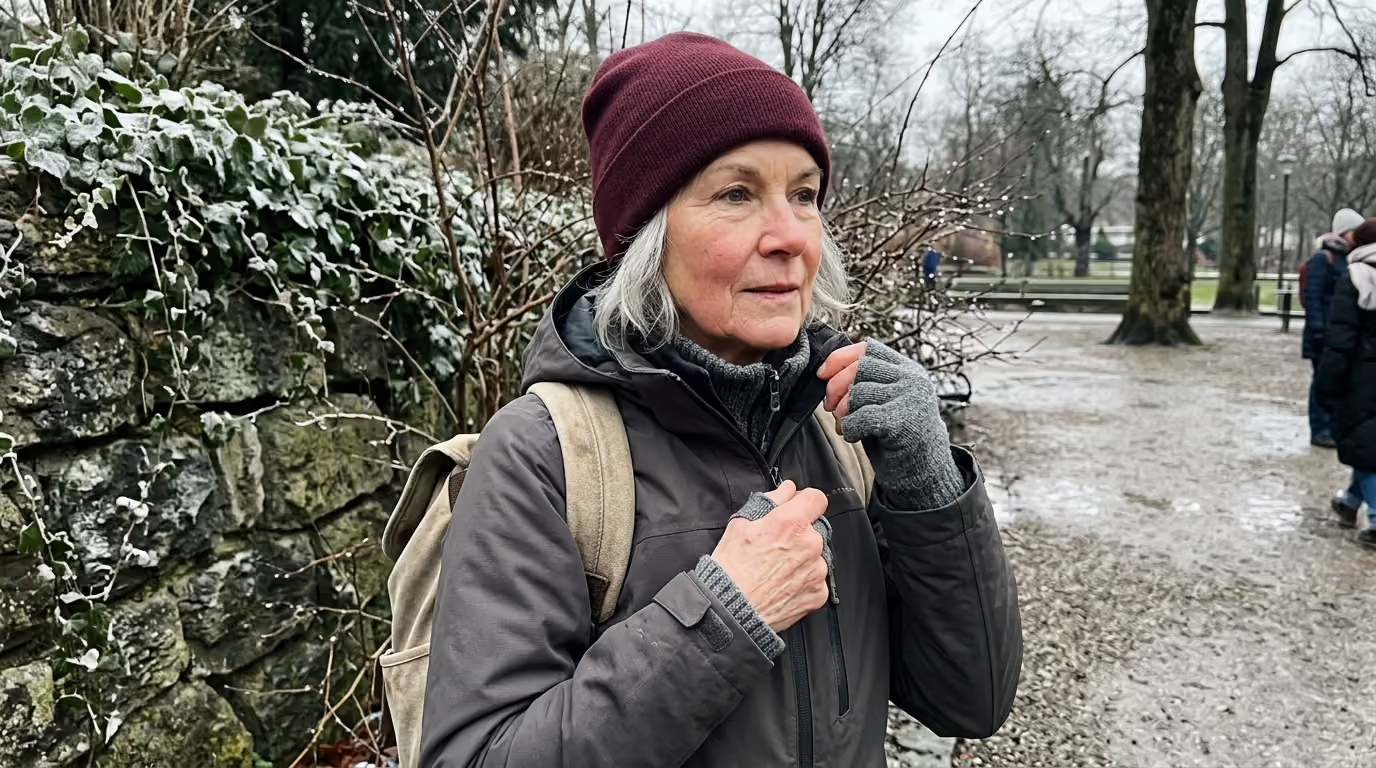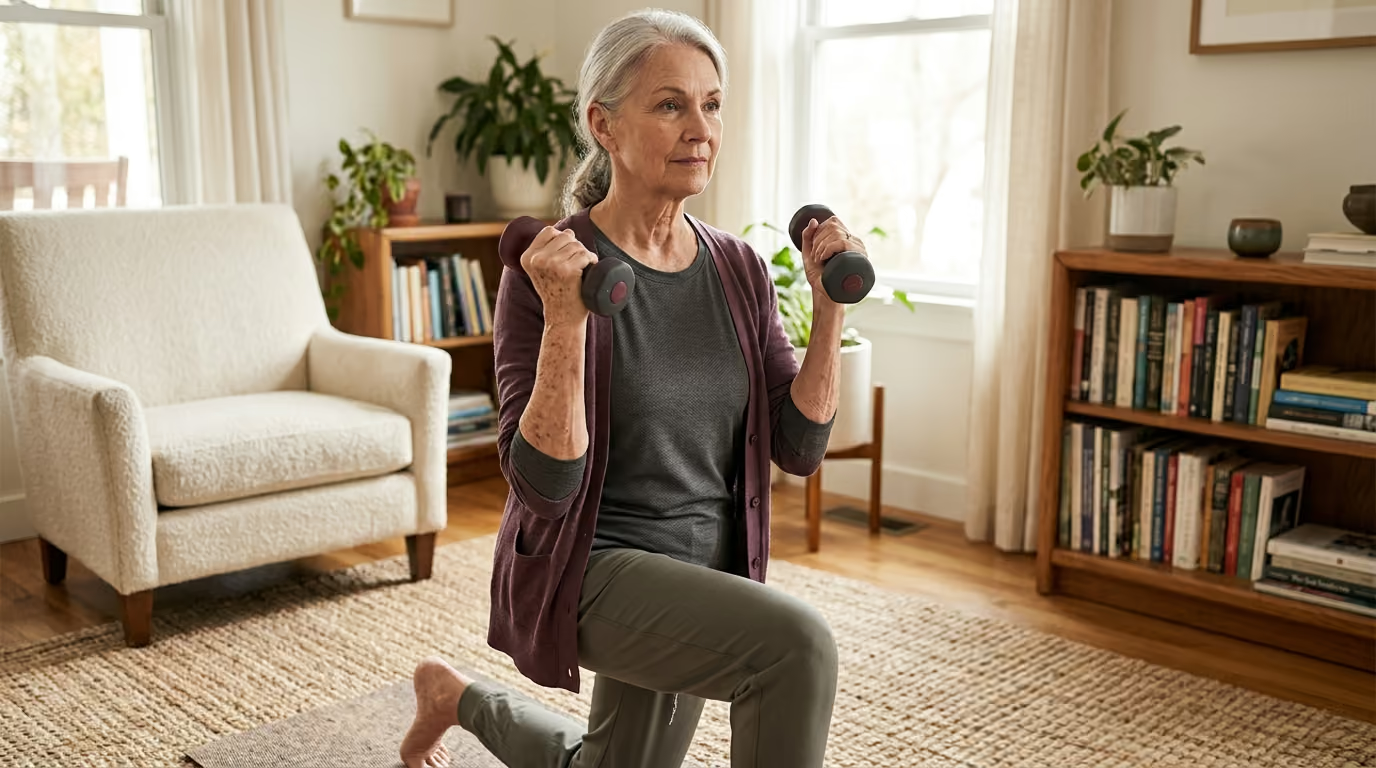

Functional aging is shaped less by chronological years than by physical reserve capacity across strength, aerobic energy, balance, and tissue recovery.





Most conversations about growing older focus on avoiding chronic disease or tracking microscopic biomarkers. Yet independence later in life is rarely decided by a single laboratory reading. Your freedom of movement depends on physical capacity, specifically the margin between what your daily routine requires and the maximum force, endurance, and balance you can generate.
When this margin shrinks, ordinary tasks begin to feel demanding. A flight of stairs requires full exertion, carrying a bag strains your back, and a simple misstep risks a serious fall. Preserving your physical autonomy requires a deliberate strategy built around physical reserves rather than chasing complicated wellness trends.
This resource breaks down the physiology of functional aging into practical, actionable principles. By focusing on the structural drivers of physical decline, you can make targeted investments in your strength, aerobic capacity, mobility, and recovery.
Chronological age records how many years you have lived, but functional age measures what you can do safely and repeatedly. Two adults of the same chronological age can experience vastly different physical realities. One may navigate mountain trails and long international flights with ease, while another struggles to rise from an armchair.
Aging is highly modifiable in degree. Training cannot eliminate the passage of time, but it systematically alters how your physiology handles it. Targeted physical training builds functional reserve, which is the buffer between your daily output and your maximum physical ceiling.
Independence requires enough capacity for normal tasks, plus surplus reserve to withstand difficult conditions. If rising from a chair requires eighty percent of your leg strength, you are operating near your physical limit. At that threshold, a minor infection, a period of travel fatigue, or several days of bed rest can reduce your strength enough to compromise your daily independence.
Maintaining a broad physical buffer keeps everyday activities effortless. When walking uphill or climbing stairs demands only a fraction of your aerobic and muscular capacity, you maintain the freedom to move through the world on your own terms. Developing this reserve is the cornerstone of practical guides for healthy aging.
Physical independence functions across three distinct layers:
Many adults maintain basic activities while quietly losing their capacity for reserve-demanding tasks. When an unexpected physical stressor occurs, their lack of reserve suddenly becomes apparent. Building capability across all three layers ensures you remain resilient under stress.
Your physical autonomy rests on several interconnected physical pillars:
A deficit in one pillar places greater strain on the others. For instance, when lower body strength declines, your nervous system must work harder to preserve balance. Conversely, building strength provides immediate structural support to your joints, balance systems, and cardiovascular health.
Functional aging is the cumulative result of specific, measurable changes across multiple organ systems. Understanding these mechanisms allows you to address the root causes of physical decline rather than merely reacting to symptoms.
Sarcopenia is the age-related loss of skeletal muscle mass, strength, and physical performance. Research published in clinical reviews indicates that sarcopenia affects between 2% and 37% of community-dwelling older adults, depending on the diagnostic criteria used. The primary concern is not just muscle volume, but how effectively that muscle produces force.
Muscle aging degrades three distinct characteristics:
Muscular power declines earlier and faster than absolute strength. The National Institute on Aging notes that power and physical performance decline gradually at first, with accelerated losses occurring after age 65 in women and age 70 in men.
Power is critical for real-world function because balance corrections and obstacle avoidance are time-sensitive. If you catch your foot on a curb, you do not simply need strong legs. You must contract your hip flexors and quadriceps rapidly enough to swing your foot forward and catch your weight before you fall.
Muscles require progressive mechanical loading to maintain their structural integrity and neural activation. Light, passive movement is insufficient to stimulate high-threshold motor units. You must expose your muscular system to progressive resistance that challenges its capacity to produce force safely.
Aerobic capacity, measured by VO2 max or VO2 peak, reflects the ability of your heart, lungs, and blood vessels to deliver oxygen to working muscles. It also reflects how effectively those muscles extract and use that oxygen during sustained movement.
A 10-year longitudinal study of independently living older adults found that body-mass-adjusted VO2 max declined by 14.7% per decade in men and 7.0% per decade in women. This decline is not driven solely by cardiac output. Research demonstrates that age-related reductions in peripheral oxygen utilization within the muscle cells play a major role in declining stamina.
When your aerobic ceiling drops, everyday tasks consume a much higher percentage of your total energy budget. Carrying luggage or walking up a moderate incline shifts from an easy background activity to a demanding physical event. Building your aerobic base expands your daily energy supply, keeping ordinary activities well below your maximum heart rate.
Balance is not an isolated attribute. It is a complex neurological process that depends on three distinct sensory systems working together:
As we age, sensory input from these pathways can become less precise. If proprioceptive signals from your feet become muted, your brain must rely more heavily on vision to stay upright. If you then walk in a dimly lit hallway or across uneven ground, your fall risk increases substantially.
According to data from the Centers for Disease Control and Prevention, more than 14 million older adults in the United States report falling each year. This represents approximately one in four adults aged 65 and older. Furthermore, roughly 37% of those who fall experience an injury requiring medical treatment or restricting activity, translating to an estimated nine million fall injuries annually.
Fall prevention requires direct training of balance, sensory processing, and reaction speed alongside traditional strength work. Training these systems together prepares your brain and body to handle unexpected disturbances in real time.
Mobility is often confused with passive flexibility. Flexibility is the passive length of a muscle tissue, while mobility is the usable, active control of a joint through its complete range of motion.
Key mobility zones that dictate functional capability include:
Passive stretching alone will not restore physical capability. You need active mobility drills that combine range of motion with muscular control, ensuring your joints can support load at every angle of movement.
Recovery capacity describes how efficiently your physiological systems return to baseline following physical exertion, illness, or travel. With advancing age, connective tissues take longer to remodel, inflammation resolves more slowly, and cellular repair processes require more time.
This reduced recovery buffer creates a risk for the classic deconditioning spiral:
Protecting recovery requires disciplined sleep, adequate protein nutrition, and what we call minimum viable movement. When a full training session is impossible, performing small amounts of structured movement maintains neuromuscular connections and prevents rapid deconditioning.
To understand how physical reserves protect your independence, consider how functional capacity translates into practical scenarios. The demands of daily life, mountain recreation, and active travel test your physical systems in different ways.
Consider the physical demands of navigating an active day in the city:
When your functional reserves are high, these movements occur automatically without conscious mental effort or physical fatigue. When reserves decline, every step requires focus, and each elevation change presents a potential hazard.
Hiking across varied mountain terrain illustrates the integration of your physical capacity stack. Navigating rocky ascents requires hip mobility, unilateral leg strength, and continuous aerobic output. Descending demanding trails tests eccentric muscle control in your quadriceps and calves, as well as rapid ankle stabilization.
A strong walker with poor balance will struggle on loose gravel, while a flexible individual without adequate leg power will tire quickly on sustained climbs. Maintaining high capability in rugged outdoor environments requires a balanced combination of strength, stamina, and balance.
Navigating modern international travel places significant demands on your physical reserve:
Adults who maintain substantial physical reserves can manage these travel demands with energy to spare. Those operating at the edge of their capacity find travel exhausting, which often leads them to limit their adventures over time. You can learn more about managing these demands in our guide to demanding travel and adventure.
Misunderstandings about the aging body often lead to passive acceptance of physical decline, or to chasing ineffective interventions. Correcting these myths is essential for establishing a practical training strategy.
While biological changes do occur over time, much of the physical decline observed in older adults stems from chronic disuse rather than biology alone. Research shows that older skeletal muscle retains the capacity to synthesize protein, build strength, and increase functional output in response to progressive resistance training. You cannot stop the calendar, but you can dramatically alter your functional trajectory.
Muscle volume provides metabolic storage and structural support, but raw mass does not tell the whole story. Muscular power, motor unit recruitment speed, and tissue quality are often more important for daily tasks than muscle circumference alone. Training must emphasize movement quality, force development speed, and multi-joint coordination rather than isolated hypertrophy.
Walking is an outstanding baseline activity for metabolic health and baseline endurance, but it does not provide all the stimuli your body requires. It does not challenge your upper body, build significant bone density, provide high-threshold power development, or push your balance systems. A comprehensive approach must combine walking with structured resistance training and dynamic balance work.
When an individual experiences balance issues or joint pain, the intuitive reaction is often to reduce physical activity to avoid injury. However, excessive rest accelerates muscle atrophy, degrades joint mechanics, and weakens balance reflexes. Controlled, progressive movement within safe ranges of motion is almost always the most effective path to restoring physical stability.
No dietary supplement, peptide, or recovery gadget can replace the physical signals created by lifting weights and moving your body through space. Nutrition and recovery tools can support your adaptations, but mechanical loading is the primary trigger that tells your bones, muscles, and nervous system to remain robust.
Discomfort during movement does not automatically mean tissue is tearing or breaking down. In older joints, pain signals often reflect local inflammation, movement sensitivity, or deconditioning rather than acute damage. Working with movement professionals helps you navigate training comfortably while continuing to build physical reserve.
An effective longevity strategy avoids unnecessary complexity and focuses on the high-return habits that preserve physical capacity. Structure your daily and weekly habits around five core priorities.
Your legs and hips form the foundation of physical independence. They power your ability to walk, climb stairs, rise from the ground, and catch your balance during a stumble.
Progressive resistance training should form the center of your routine. You can implement these fundamental movement patterns using progressive strength training programs:
To develop muscular power, perform the lifting phase of these exercises with intent and controlled speed, followed by a slower, controlled lowering phase. This recruits fast-twitch muscle fibers, which are the first to atrophy when you stop training.
World Health Organization physical activity guidelines recommend that older adults complete 150 to 300 minutes of moderate-intensity aerobic activity per week, or 75 to 150 minutes of vigorous-intensity activity, or an equivalent combination.
To build an efficient aerobic engine:
Use your breathing and recovery rate to gauge intensity. Moderate exercise makes your breathing deeper and faster while still allowing conversation. Vigorous exercise makes speaking more than a few words difficult.
Balance requires progressive challenge just like muscular strength. Standing on flat ground does not provide enough stimulus if you can already do it easily. You must challenge your sensory systems systematically in a secure environment.
Incorporate these balance drills into your weekly routine:
Evidence reviews published in medical journals indicate that balance and functional exercise reduce fall rates by approximately 24%, while multicomponent exercise programs reduce fall rates by roughly 28%. Programs that deliver at least three hours of functional balance and strength work per week are particularly effective, cutting fall rates by up to 42%.
Adequate nutrition provides the raw materials required to repair tissue and sustain your physical capacity. Skeletal muscle becomes less responsive to dietary amino acids as we age, a phenomenon known as anabolic resistance. Overcoming this requires higher protein targets than those established for younger adults.
A clinical review on protein intake and aging indicates that healthy older adults require 1.0 to 1.2 grams of protein per kilogram of body weight each day. Individuals managing acute or chronic conditions may require 1.2 to 1.5 grams per kilogram, depending on their health profile.
To optimize your daily nutrition:
Discover more ways to align your food intake with your physical goals by reading about daily nutritional support.
Physical reserves protect your body, but modifying your living environment removes unnecessary hazards. The CDC STEADI (Stopping Elderly Accidents, Deaths, and Injuries) initiative emphasizes regular medication reviews and home hazard assessments as critical components of fall prevention.
Address these practical environmental factors:
Rather than obsessing over complex health tracking metrics, focus on functional indicators that directly reflect your real-world reserve. These straightforward performance measures allow you to track your trajectory over time.
Sit in a sturdy, armless chair with your feet flat on the floor and your arms crossed over your chest. Stand up fully and sit back down as many times as possible in 30 seconds.
A decline in your repetitions over several months signals a drop in lower body strength and power that warrants training attention.
Gait speed is widely recognized in geriatric medicine as a reliable indicator of overall vitality and physical reserve. Measure a straight 10-meter course in a quiet hallway or flat outdoor path.
Maintaining a brisk walking speed indicates healthy neuromuscular coordination, aerobic fitness, and postural confidence.
Climbing stairs provides an immediate test of lower body strength, single-leg stability, and cardiovascular endurance.
The ability to get down to the floor and return to standing is an invaluable skill for long-term independence.
You do not need an extreme training regimen to build and maintain functional independence. A simple, consistent routine that fits your lifestyle produces lasting adaptations without causing chronic fatigue.
The World Health Organization recommends that older adults engage in varied multicomponent physical activity emphasizing functional balance and strength training on three or more days per week. Pair this with moderate aerobic work distributed across your week.
Use this balanced weekly template:
Building reserve requires consistent progression without triggering joint pain or extreme fatigue. Follow these sensible rules:
To learn more about restorative strategies that keep your joints and muscles resilient, explore our guide to restorative recovery protocols.
Physical disruptions are an inevitable part of life. Whether navigating a demanding multi-week trip, recovering from a seasonal virus, or managing a minor injury, having a plan protects your baseline reserve.
Travel places unique demands on your physical system through prolonged sitting, irregular meals, and disrupted sleep schedules.
Use these practical strategies during travel:
When illness, injury, or severe fatigue makes your regular workouts impossible, shifting to a minimum viable movement routine prevents rapid physical deconditioning.
Focus on these gentle, high-value movements:
Major medical and health organizations agree on the fundamental principles of healthy aging. The World Health Organization, the National Institute on Aging, and the Centers for Disease Control and Prevention share a unified vision for maintaining physical autonomy.
These leading institutions emphasize that:
Physical aging is not a fixed outcome that you must passively accept. By understanding how your physical reserves operate and investing consistently in strength, aerobic stamina, dynamic balance, and restorative recovery, you can preserve your capability, explore the world with confidence, and maintain your independence for years to come.
Building and protecting your physical reserves today ensures you remain capable, mobile, and fully independent for all the adventures ahead.
Stay connected for research and practical guidance on longevity, strength, recovery, energy and active living. New ideas to help you stay capable, curious and ready for more.


Explore practical guidance on strength, recovery, energy, travel and longevity for a life that stays active.
explore the Blog