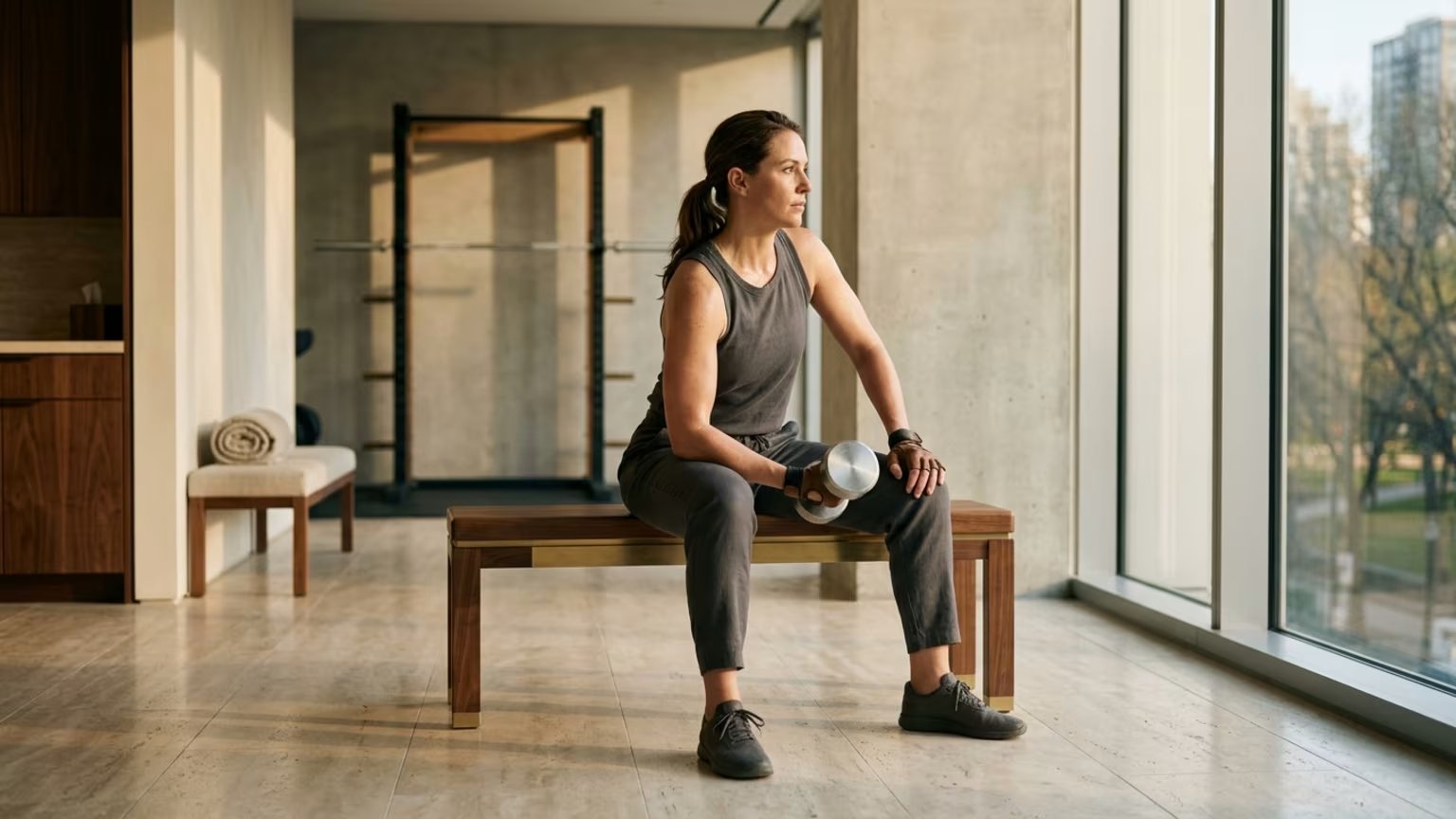
A 12-week trial reveals that 10g of daily creatine improves lean mass and cognitive markers in adults aged 45 to 65, especially when combined with exercise.





A recent 12 week trial published in August 2026 found that 10 grams of daily creatine helped 64 adults aged 45 to 65 retain lean mass and improve strength. This data highlights a clear choice for individuals seeking to maintain their physical prime. When comparing passive creatine supplementation to an active integration approach with structured exercise, the active protocol definitively wins out for preserving capability. While taking the supplement alone offers small baseline benefits, pairing it with resistance training is the true requirement for physical independence.
The conversation around healthy aging has shifted significantly in recent years. Researchers now view muscle preservation and cognitive function as essential pillars of a capable life. A new randomized controlled trial from Texas A&M University’s Exercise & Sport Nutrition Lab brings this exact focus into view. The study evaluated healthy adults with an average age of 54.5 years to see how supplementation impacts the body.
Researchers employed rigorous testing methods including DXA body composition scans, fasting blood samples, cognitive tests and detailed questionnaires. The team measured these variables at baseline, six weeks and twelve weeks to track progress accurately. They initially enrolled 73 healthy sedentary adults for the comprehensive twelve week intervention. Ultimately, 64 individuals successfully completed the protocol and were included in the final analysis.
Let us define the two distinct approaches observed in this clinical research. The first approach is the passive supplementation protocol. This method involves consuming the compound without starting a new exercise or diet program. The researchers studied 40 women and 24 men in their final analysis of both pathways.
Participants in the passive group still experienced positive results over the twelve week testing period. They increased lean tissue mass and muscular endurance relative to a placebo. Favorable changes also appeared in selected blood lipids and specific markers of cognitive function. The authors noted these cognitive results as exploratory rather than definitive proof of improved intelligence.
The second approach is the active integration protocol. This method combines the supplement with a structured exercise and weight loss diet intervention. According to the Journal of the International Society of Sports Nutrition, this active group achieved superior overall outcomes. They retained or gained more lean tissue and achieved a greater reduction in body fat percentage.
Their muscular strength improvements were also significantly more pronounced than those in the passive group. This group proved that combining proper nutrition with training yields the best possible physiological results. Understanding the compound itself helps clarify why these diverse results occur. The Independent recently covered this exact topic with expert insights from sports science professionals.
The publication distinguishes the compound from anabolic steroids immediately. It is a naturally occurring substance made from arginine, glycine and methionine. The human body produces this compound naturally for everyday energy demands. We also obtain it through common foods like meat and fish.
However, dietary intake alone rarely saturates the muscle tissues completely. This biological reality explains why external supplementation can provide measurable physical benefits for older individuals. Dosing strategies also separate these two operational approaches. The trial utilized 10 grams of creatine monohydrate daily.
Participants divided this amount into two equal doses of 5 grams. Dr Eric Helms is an applied sports science expert at the Sports Performance Institute New Zealand. Helms told The Independent that approximately 3 grams per day is typically sufficient to saturate muscle stores over several weeks. Some people prefer a short loading phase using 20 to 25 grams per day to saturate muscles in roughly one week.
However, Helms noted that surplus amounts are simply excreted once the muscles are full. More is not inherently better once your physical storage capacity is reached. The cognitive aspect introduces a fascinating new variable to the aging discussion. Dr Crionna Tobin is the head of science and education at Optimum Nutrition.
She indicated that research into brain health applications remains in early stages. A 2026 review focused specifically on cognition in older adults found the current evidence to be predominantly preclinical. That review identified one pilot study where 20 participants took 20 grams of creatine daily for eight weeks. This high dose intervention increased brain total creatine by 11 percent and was associated with improved fluid cognition.
However, the authors emphasized that larger trials are needed to establish definitive causality. Helms cautioned that more research is required before recommending a specific cognitive dose for everyday use. The current trial noted that individual cognitive and memory findings are strictly exploratory rather than definitive clinical outcomes. Affluent adults who travel frequently need practical strategies that survive demanding itineraries.
The active integration protocol requires consistent physical effort to maintain. Fortunately, carrying a simple powder in your luggage presents very few logistical hurdles. You can consume it consistently without needing to time it immediately before or after a specific hotel workout. This level of flexibility is highly valuable for maintaining routines across different time zones.
Applying this active approach requires an understanding of how the body responds initially. Taking the supplement often causes a small increase in body weight during the first few weeks. Experts emphasize that this initial shift reflects increased water content within the muscle rather than new body fat. This cellular hydration is generally desirable for strength and physical performance.
However, endurance athletes or travelers monitoring their scale weight closely should anticipate this minor fluctuation. The scale might move slightly, but physical capability improves simultaneously. A practical protocol showdown always prioritizes realistic maintenance over extreme optimization. Relying entirely on a passive protocol might seem appealing during busy travel months.
The trial did show that participants without an exercise program still improved their muscular endurance. Yet, treating a powder as a substitute for movement overlooks the fundamental mechanics of healthy aging. A comprehensive review published in 2026 analyzed 41 randomized trials regarding older adults. The researchers concluded that resistance exercise remains the absolute most effective intervention for improving muscle strength.
The cognitive benefits also require a highly grounded perspective. Frequent flyers often face periods of sleep deprivation and demanding mental tasks. The preliminary evidence suggests that supplementation might support mental performance during these specific stressful conditions. Still, it does not function as an instant stimulant or a substitute for proper rest.
The expected benefits are gradual and cumulative over time. You cannot expect a sudden surge in focus right before a major meeting simply by taking a larger dose. Medical monitoring remains an important component of any capability protocol. Consumers should understand how supplements interact with routine laboratory diagnostics.
The compound can raise blood creatinine levels in regular bloodwork. This specific laboratory marker is commonly used in kidney assessments during annual physicals. An elevated creatinine result does not automatically prove kidney damage. However, anyone with unexpected laboratory results should discuss their supplementation with a healthcare professional before making independent assumptions.
Safety and product quality are paramount for active adults navigating international markets. Tobin advised consumers to select products from trusted manufacturers that utilize third party testing. The trial registered as ISRCTN83081058 found that the 10 gram daily protocol was well tolerated by healthy participants. Nevertheless, individuals with complex medical conditions should consult a clinician before adding new variables to their routine.
The goal is to build resilience safely while actively working to preserve muscle and physical capacity for the long haul. When evaluating these two approaches for middle aged adults, the active integration protocol claims a decisive victory. Passive supplementation is undeniably convenient for a busy professional. The August 2026 study confirms that taking the compound alone yields favorable changes in selected cognitive markers and lean tissue.
However, minimal baseline improvements do not fully protect against the physical demands of an adventurous lifestyle. True capability requires a structural stimulus that only actual physical training can provide. The combination of supplementation and a structured exercise program delivers compounding returns. The trial demonstrated that participants using this active approach achieved superior lean tissue retention while simultaneously dropping body fat.
Maintaining high capability during calorie restriction presents a unique challenge for aging adults. When attempting to reduce body fat, the body often breaks down lean tissue alongside stored fat reserves. The exercise and weight loss diet group in this study managed to counter that common deterioration effectively. By incorporating the supplement, they successfully triggered a contrarian response to muscle loss and protected their strength.
This combination is especially relevant for individuals working on reframing physical decline proactively. The supplement acts as a powerful amplifier for the hard work you already perform in the gym. Furthermore, the cognitive possibilities are intriguing but remain secondary to the established physical benefits. Current science supports a modest daily dose to saturate muscle stores for longevity and performance.
Pushing toward 20 grams per day for theoretical brain health remains an investigational strategy rather than a standard recommendation. A highly practical program pairs resistance exercise with sufficient protein, adequate recovery and consistent daily movement. The 64 healthy adults who completed this 12 week trial have provided a clear roadmap for healthy aging. Ten grams of daily creatine helped them retain lean mass and improve their physical strength significantly.
For active adults looking to preserve their physical independence, pairing this supplement with structured exercise definitively beats relying on a powder alone. As the 64 adults in that 12 week trial proved, maintaining your physical prime requires more than just passive chemistry. The true advantage lies in actively combining targeted nutrition with the physical work required to keep navigating the globe.
Stay connected for research and practical guidance on longevity, strength, recovery, energy and active living. New ideas to help you stay capable, curious and ready for more.




Explore practical guidance on strength, recovery, energy, travel and longevity for a life that stays active.
explore the Blog