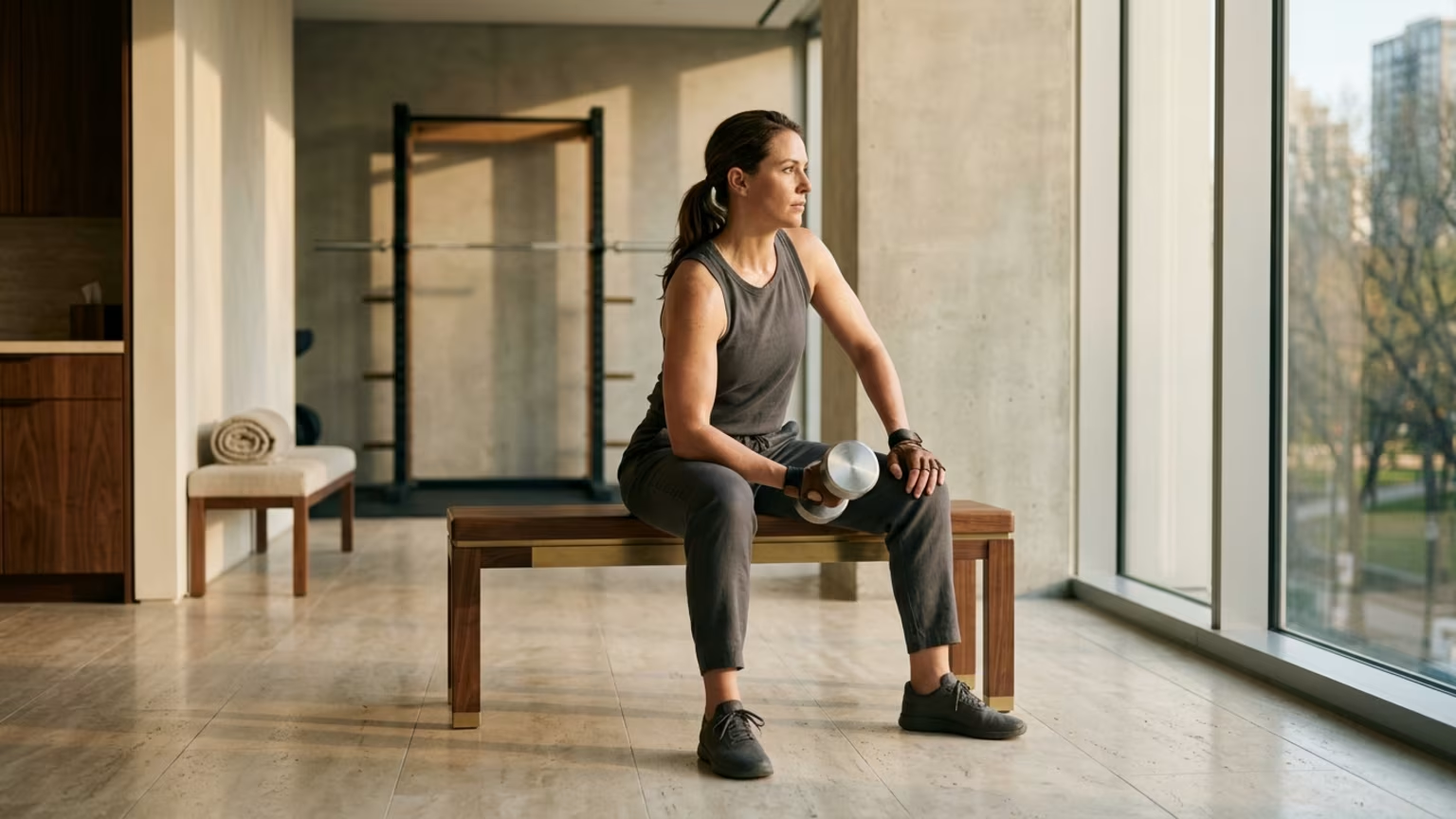
A September 2026 report reveals that obsessing over sleep scores causes anxiety. Active adults should prioritize daytime function over daily wearable grades.





In September 2026, a new feature produced by Sleeping.com and distributed by Stacker highlighted a growing problem for active adults. The report warned that the trend of sleepmaxxing often converts a complex biological process into a stressful performance grade. The American Academy of Sleep Medicine surveyed adults in 2026 and found that 48 percent of respondents used a sleep-tracking device. This marks a sharp increase from 35 percent in 2023.
While gathering data seems smart, the results show a different reality. The survey revealed that 51 percent of sleep-tracker users felt anxious or stressed about achieving a good sleep score. This anxiety can quietly sabotage the very rest required to stay strong, mobile, and capable over time. Sleepmaxxing is a social-media-driven effort to maximize sleep quality through routines, supplements, and nightly scores.
The science behind consumer sleep tracking relies on estimation rather than direct measurement. Clinical polysomnography measures brain activity directly to determine exact sleep stages. In contrast, consumer wearables estimate sleep duration, timing, and recovery from physiological and behavioral signals. These devices track movement, heart rate, and temperature to guess when you enter deep or REM sleep.
The feature warns that a score of 82 versus 92 can appear highly precise. However, the underlying estimate does not possess equivalent measurement precision. The American Academy of Sleep Medicine considers consumer sleep-stage estimates to have limited validation outside laboratory settings. Performance varies significantly by device, manufacturer, and software version.
This false precision fuels a negative feedback loop. The recent survey found that 55 percent of tracker users changed their behavior based on device information. Concern about a low score can lead to more checking, aggressive behavior changes, or more time spent in bed. This preoccupation increases anxiety rather than improving restorative sleep.
Recent BBC reporting similarly found that excessive fixation on achieving perfect sleep can itself make sleep worse. Medical professionals have observed the negative impact of this fixation firsthand. The term orthosomnia entered the clinical literature in 2017 after researchers described three patients preoccupied with improving wearable-reported sleep data. This 2017 case report supports the existence of tracker-related sleep preoccupation but does not establish a population prevalence estimate.
The BBC reported that doctors have seen patients bring tracker data to appointments while incorrectly convinced they had a sleep disorder. The American Academy of Sleep Medicine states that consumer technologies cannot diagnose or treat sleep disorders without appropriate validation. Persistent problems like obstructive sleep apnea require professional evaluation rather than a better app. A high score does not rule out a sleep disorder, and a low score does not guarantee one exists.
The growth of sleepmaxxing sits at the intersection of consumer wearables, longevity culture, and human performance optimization. These movements encourage people to turn physiological signals into actionable metrics. The trend reflects the broader quantified self movement. Consumers increasingly use technology to monitor steps, heart rate, workouts, and recovery.
The central concern in the feature is not that sleep tracking is always useless. Its survey figures and clinical framing should be attributed to the article and the AASM rather than treated as independent findings. The most defensible expert message is to avoid treating an app output as a nightly pass or fail grade. Instead, the feature warns that turning a biological process into a grade often causes unnecessary stress.
For active adults over 40, sleep data increasingly appears alongside training load, heart-rate variability, and recovery metrics. This presentation makes it tempting to use one score to decide whether to train, travel, compete, or rest. However, normal variability matters immensely for those who value physical independence. An occasional poor night may simply reflect time-zone changes, heat, alcohol, or an unusual training load.
When adjusting to altitude during a mountain trek, your natural sleep architecture changes. A wearable might interpret this normal physiological adjustment as a terrible night of sleep. Reacting to a single bad score in this environment can ruin a travel experience or stall your momentum. Instead, consumer tracking has a legitimate observational role when used to identify broad patterns over time.
Sustained energy during sports like skiing requires balancing intense physical output with adequate rest. When you check your app after a hard day on the slopes, the resulting score might look concerning. Your body is actively repairing muscle tissue and adjusting to the physical stress. This necessary recovery process can lower your readiness grade even when your body is responding perfectly well.
Repeated data may help reveal a late bedtime, irregular wake time, or a consistently short sleep opportunity. Our team has learned to balance wearable data with practical reality during demanding trips. After a grueling thirty hour transit to Tokyo, I realized my old strategy of just powering through was no longer working. I felt foggy for three days.
I started digging into circadian biology and realized that timing my light exposure and fasting during the flight could completely shift my recovery. Now, I never board a long haul flight without a precise schedule for when to eat and when to put on an eye mask. It is the difference between losing a week of your trip and hitting the ground running. We use data to ask better questions rather than letting it dictate our daily choices.
If a device indicates a poor night but you feel energized, you should trust your physical capability. Daytime function is an essential counterweight to reassuring or alarming app scores. Feeling persistently unrefreshed, excessively sleepy, or cognitively impaired deserves more weight than a digital metric. You should not let a poor digital grade prevent you from enjoying sustained energy during sports like skiing or hiking.
It is easy to become stressed when obsessing over inaccurate wearable sleep scores, but true capability relies on real world feelings. The goal is to stay strong, sharp, and mobile for longer. Wearables should support that mission by revealing long term habits rather than creating daily hurdles. Let your energy, concentration, and coordination guide your daily decisions.
Maintaining reasonably consistent sleep times and creating a comfortable environment are highly sustainable practices. The Centers for Disease Control and Prevention recommends that adults ages 18 to 60 should obtain at least seven hours of sleep per day. They also emphasize the importance of sleep quality alongside total duration. Rather than letting a nightly grade dictate your confidence, look for patterns that inform your recovery and sleep routines over weeks.
If poor sleep or impaired daytime function persists, bring the tracker history to a healthcare professional. Persistent or unexplained problems may involve insomnia, sleep-related breathing disorders, or circadian rhythm disorders. None of these conditions should be diagnosed or ruled out by a consumer score alone. The AASM recognizes that consumer data may contribute to a patient clinician conversation when used properly.
When planning your next demanding adventure, use wearable data to look for broad trends instead of nightly validation. If you notice your sleep duration dropping consistently over a week, you can make informed adjustments. You might implement practical sleep shifts and timed light strategies to protect your alertness across time zones. Do not change supplements or abandon training plans solely because an app claims you missed out on REM sleep.
Use the data as background information rather than treating it as a definitive clinical verdict. If tracker data conflicts with your lived experience, do not automatically assume the tracker is correct. A readiness score may inform a decision, but it should not automatically overrule your symptoms, performance, or professional medical advice.
Worldly, informed adults should use consumer sleep data to identify broad lifestyle patterns rather than letting an estimated nightly score dictate their daily capability, training, or travel decisions.
Stay connected for research and practical guidance on longevity, strength, recovery, energy and active living. New ideas to help you stay capable, curious and ready for more.


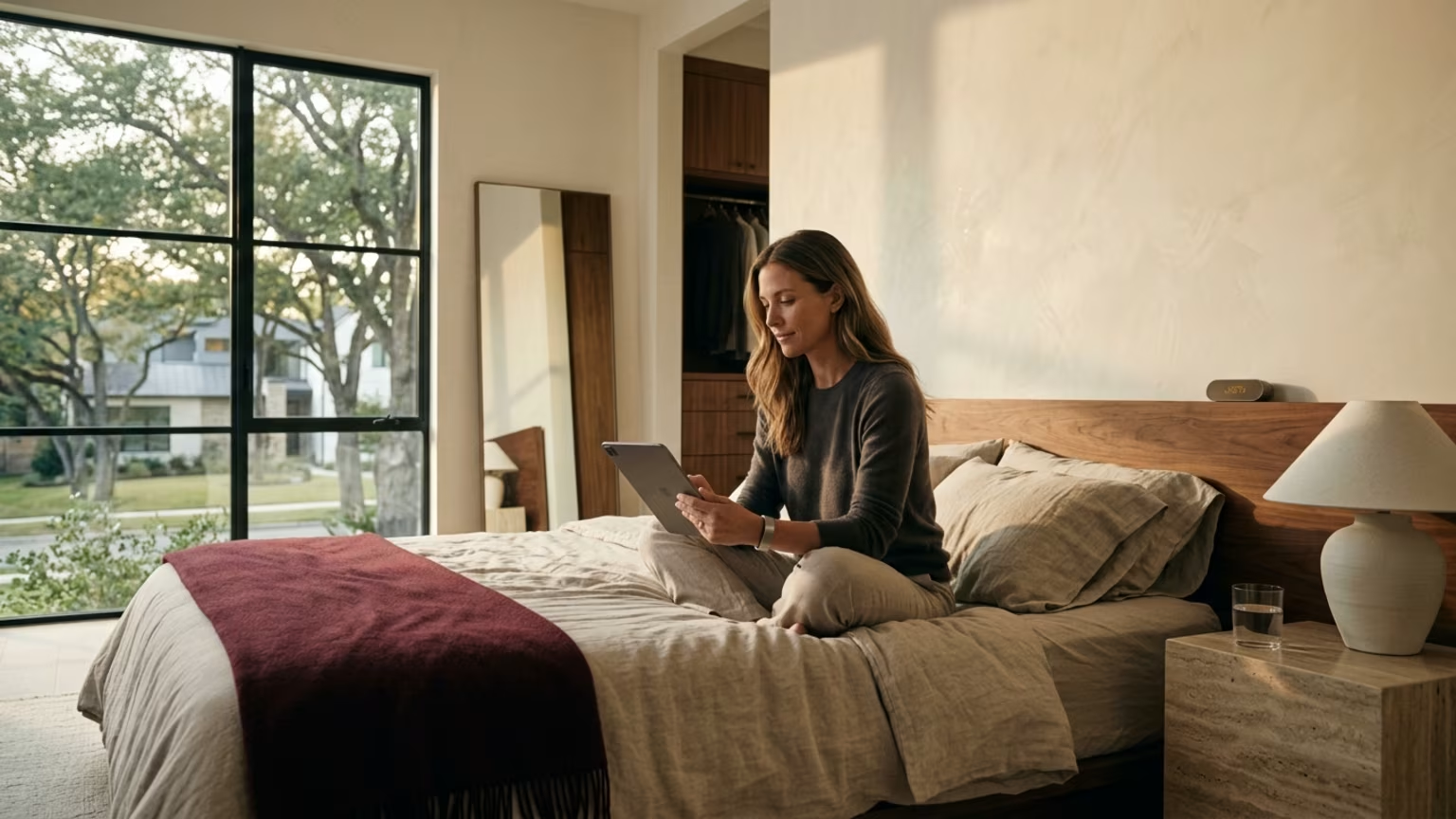
Explore practical guidance on strength, recovery, energy, travel and longevity for a life that stays active.
explore the Blog