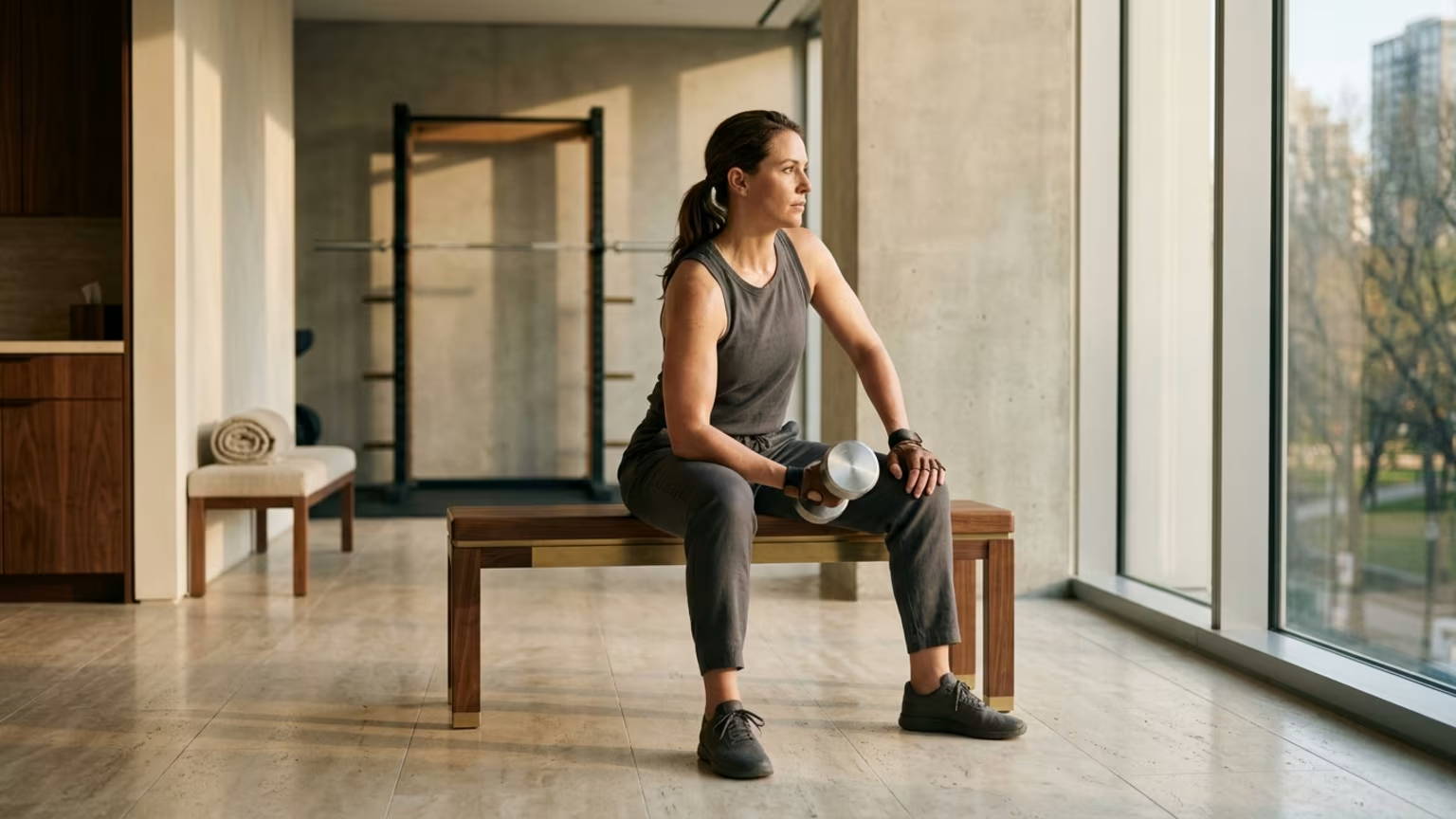
Spain’s recent menopause nutrition guidance drew criticism for relying on male-only data. Learn why active women over 40 need individualized health strategies.





In March 2026 Spain’s Spanish Agency for Food Safety and Nutrition published comprehensive nutrition guidance for women navigating perimenopause, menopause, and post-menopause. The detailed guidelines were intended to address critical risks associated with this life stage, including the loss of bone density and declining muscle mass. However, a significant scientific controversy quickly emerged regarding the underlying methodology used to create these national recommendations. According to reports from the New York Post, the evidence supporting this new framework came from European Food Safety Authority research conducted exclusively on men.
For active adults who value their physical independence and performance, this story highlights the pressing need to interrogate generic dietary guidance.
The controversial Spanish guidance emphasized diets containing specific core elements to support healthy aging. The recommendations prioritized protein, iron, calcium, omega-3 fatty acids and essential vitamins alongside regular strength training. These components are directionally relevant for active midlife women because the guidance correctly linked menopause with distinct risks to muscle and bone health. A focus on nutrition and metabolism is foundational for anyone looking to maintain their physical capacity over time.
The structural problem is not necessarily the selected nutrients themselves. The controversy centers on the fact that the underlying evidence came from research conducted only in men. The Spanish agency did not initially make this male-only limitation explicit to consumers in its guidance. Applying male data to female physiology ignores the specific biological changes that affect bone health, body composition, and appetite during menopause.
Nutrient reference values vary significantly according to age, sex, reproductive status, and dietary patterns. The New York Post highlighted several sex-specific and age-specific nutrient differences that illustrate why generalized advice can be inadequate. These reported reference comparisons demonstrate how male and female requirements diverge drastically.
These figures underscore why active women cannot rely on a universal adult standard. The cessation of menstrual blood loss during menopause alters an individual woman’s iron requirement, making generic supplementation advice potentially misleading. A blanket approach to micronutrients fails to account for the nuanced realities of the female body.
This specific omission in the Spanish public health guidance reflects a much wider historical pattern in medical and nutritional research. The New York Post cited a 2022 study analyzing participant demographics across several major medical fields. The study found that women represented approximately 40 percent of participants in clinical trials for cancer, cardiovascular disease, and psychiatric disorders. These are conditions that substantially affect women, yet the data heavily skews toward male biological responses.
When public health bodies translate this imbalanced research into consumer advice, the resulting guidelines often lack critical context. Active readers must distinguish between a sensible general health objective and proof that exact recommendations have been validated in menopausal women. Relying on male reference points can create a false sense of security for women trying to optimize their long-term health.
The initial lack of transparency surrounding the male evidence base drew immediate criticism from the scientific community. Members of the Spanish Association of Women Researchers and Technologists described the omission as highly problematic for female health outcomes. They emphasized that menopausal transitions involve specific hormonal shifts that dictate distinct nutritional and physiological needs. Spain’s Equality Minister Ana Redondo also intervened, adding a vital policy dimension to the unfolding scientific debate.
Minister Redondo formally called for a review of the guidelines and their underlying methodology. She argued that the male body should not remain the default reference point for health issues specifically affecting women. This intervention illustrates a growing expectation that public health bodies must disclose sex composition when translating clinical research into broad consumer advice. Following this widespread backlash, the Spanish food safety agency ordered a formal review by its scientific committee.
Clinical practitioners also weighed in on how individuals should interpret sweeping nutritional mandates. Registered dietitian and nutritionist Amy Shapiro told the New York Post that nutrient absorption can fundamentally change with age. She noted that these shifts make careful monitoring, targeted supplementation, and highly informed food choices increasingly important. Her perspective supports customized clinical decisions rather than routine supplementation applied uniformly to every woman.
Other experts have looked beyond specific vitamins to broader dietary patterns that support menopausal health. The New York Post reported that some experts associate mostly plant-based eating patterns with improved management of hunger and appetite. Diets specifically designed to avoid large blood-sugar spikes may also offer benefits during this transitional phase. Without detailed study parameters, these observations should be treated as potential strategies rather than settled clinical consensus.
For the active adult who prioritizes sport and travel, generic public health guidance rarely survives contact with reality. A standardized protein recommendation might sound helpful in a clinic, but it does not dictate how to fuel a demanding ski weekend. It also fails to explain how to manage sustained energy levels during high-altitude hikes or rigorous cycling tours. Active midlife women require nutrition regimens focused on lean muscle health that account for actual daily physical exertion.
Applying uniform guidelines is particularly problematic when navigating demanding environments or extreme time zone shifts. After a grueling thirty hour transit to Tokyo, I realized my old strategy of just powering through was no longer working. I felt entirely foggy for three days before I started digging deeply into circadian biology and travel fatigue. I learned that timing my light exposure and strategically fasting during the flight could completely shift my recovery timeline.
Now, I never board a long haul flight without a precise schedule for when to eat and when to put on an eye mask. It is the absolute difference between losing a week of your trip and hitting the ground running upon arrival. This exact level of deliberate planning must be applied to managing recovery and sleep during menopause. When your internal physiology changes, your approach to recovery, fueling, and environmental adaptation must evolve in tandem.
Active readers should not interpret broad advice like regular strength training as a complete performance program. Weight, muscle retention, bone integrity, and metabolic health are influenced by a complex web of multiple lifestyle factors. A generic recommendation to lift weights does not provide the necessary frequency, intensity, or progressive overload required to maintain capability. Building real resilience requires personalized protocols designed around your specific sports, travel habits, and baseline fitness.
Instead of focusing purely on scale weight, active women should monitor a broader spectrum of performance and health markers. Tracking energy levels, day-to-day strength output, waist measurement, and recovery speed offers a much clearer picture of nutritional adequacy. Reviewing specific metrics like bone-health risk, blood pressure, glucose, and lipid markers with a clinician is essential. Tracking personal biometric trends ensures you are meeting your actual biological demands rather than following a male-derived average.
Women who ski, cycle, run, or travel frequently need nutrition plans that account for their actual daily demands. Training load, sleep quality, specific symptoms, and food access all dictate what a successful diet looks like. The Spanish guidance provides a starting framework by emphasizing protein, calcium-containing foods, plant foods, and omega-3 sources. However, active individuals must move beyond these basics to formulate food-first decisions that support their unique lifestyle.
One crucial lesson from this controversy is the danger of self-prescribing supplements based on generalized public health articles. While the New York Post reported different iron reference figures for men and women, this does not constitute an individualized protocol. Managing iron levels after the cessation of menstrual blood loss requires careful clinical evaluation rather than blind supplementation. A registered dietitian, sports nutrition professional, or clinician can help distinguish simple dietary insufficiency from symptoms requiring medical intervention.
Readers must also learn to critically evaluate the health media they consume on a daily basis. When reviewing new nutrition or performance advice, always ask what specific population the underlying evidence actually represents. Assuming that generalized adult data applies equally across all sexes and life stages can lead to ineffective health strategies. Precision and context are the keys to long-term vitality, ensuring you remain ready for whatever adventure comes next.
Active adults should treat broad nutritional guidelines as a starting framework rather than a final prescription, seeking individualized care to stay strong, mobile, and capable on their own terms.
Stay connected for research and practical guidance on longevity, strength, recovery, energy and active living. New ideas to help you stay capable, curious and ready for more.




Explore practical guidance on strength, recovery, energy, travel and longevity for a life that stays active.
explore the Blog