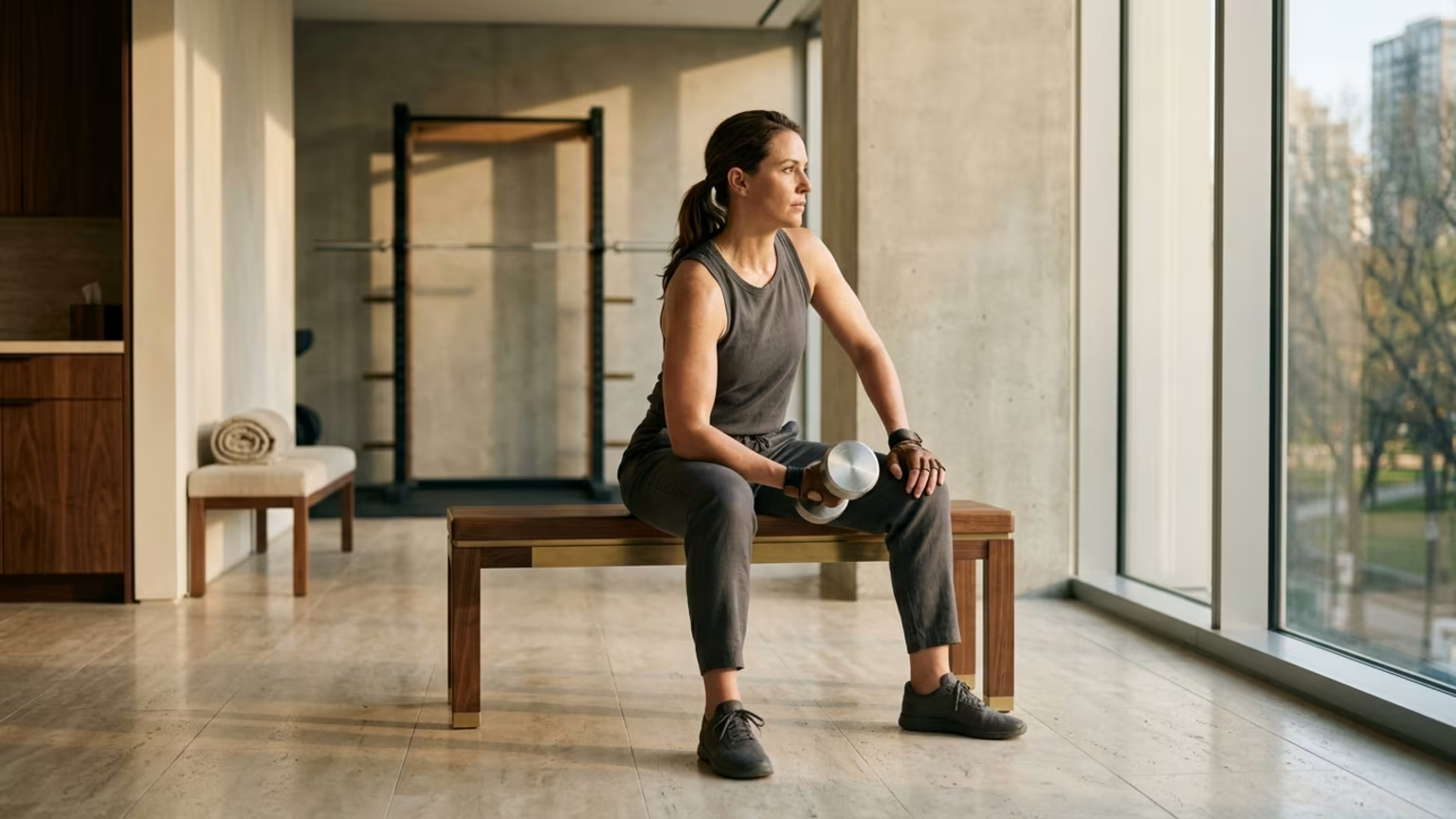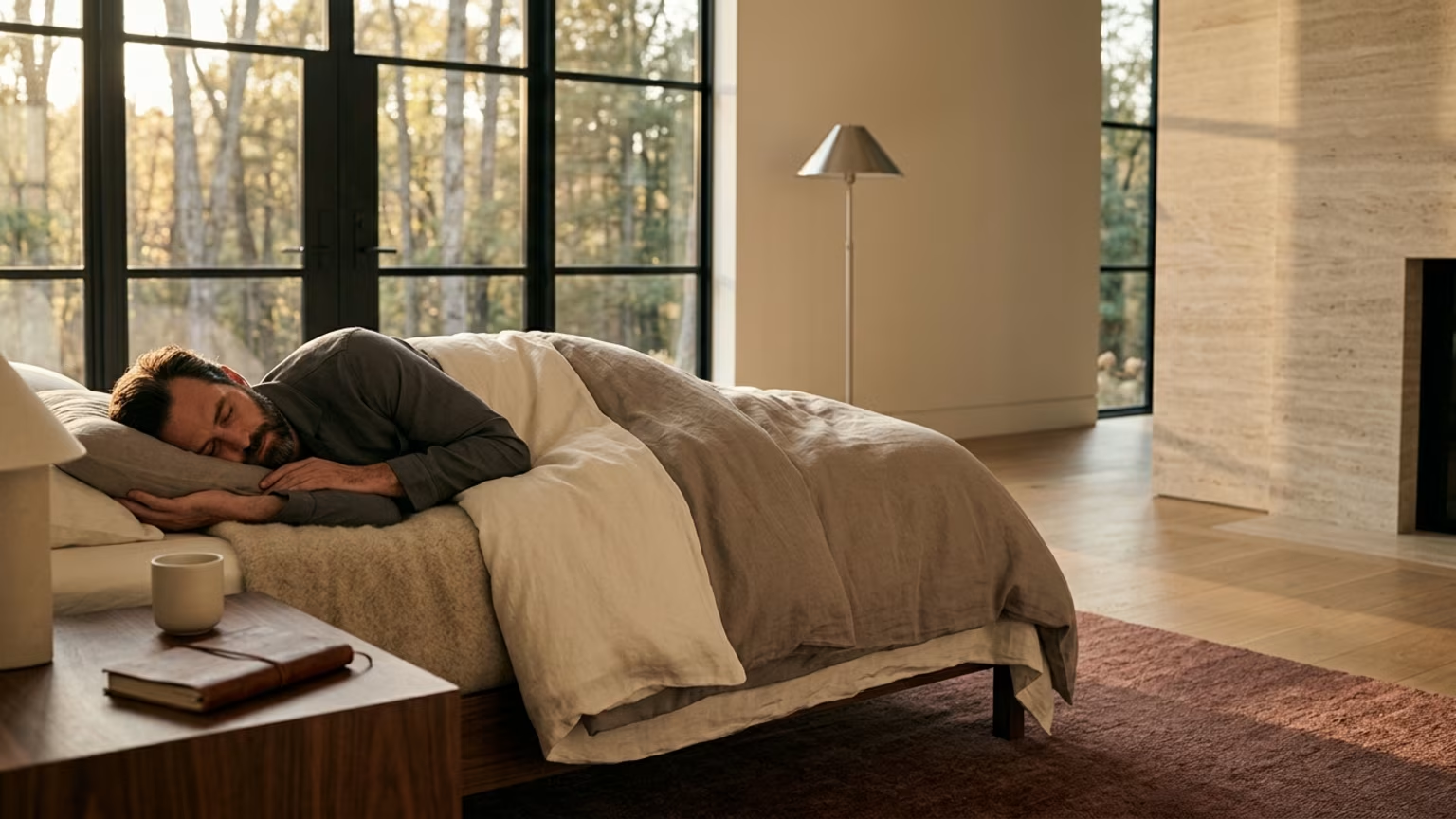

A new study shows moderate evening exercise can buffer memory loss after restricted sleep. Learn how active adults can protect their cognitive performance.





The alarm sounds at four in the morning for a red eye flight. The hotel room is entirely dark. You have managed just four hours of rest before a packed schedule begins. Moments like these test your physical baseline.
Slow wave sleep is not just an obscure clinical term. It is the absolute ceiling of your physical and cognitive independence. This deep stage of non REM sleep is crucial for memory consolidation. It provides the physiological foundation for brain recovery.
When you curtail your rest, you sacrifice this exact restorative window. A new study published in SLEEP on August 26, 2026, explains how to buffer this loss. Researchers found that one session of moderate intensity exercise was associated with memory protection. Specifically, it protected against long term declarative memory impairment caused by short term sleep restriction.
The study included 88 healthy young adults. Among them, 52 percent were women. Their mean age was 24.0 years. Because the participants were young adults, additional research is needed to verify the exact effect size for adults over 40.
However, the mechanism provides a fascinating look at human performance. The authors concluded that acute moderate intensity exercise offsets the negative effect of sleep restriction. They noted the relationship was statistically mediated by the percentage of slow wave sleep.
In our experience, sleep restriction often strikes during demanding travel schedules. After a grueling thirty hour transit to Tokyo, I realized my old strategy of just powering through was no longer working. I felt foggy for three days. I started digging into circadian biology and realized that timing my light exposure and fasting during the flight could completely shift my recovery.
Now, I never board a long haul flight without a precise schedule for when to eat and when to put on an eye mask. It is the difference between losing a week of your trip and hitting the ground running. Structured routines provide a foundation when rest is compromised. This philosophy aligns perfectly with the latest findings on brain recovery.
Travel and outdoor sports demand sharp judgment and quick adaptation. If you want to maintain your energy for global travel, you cannot afford persistent cognitive fog. Sleep health sources describe an age related reduction in stage three sleep across adulthood. Active older adults may also experience more fragmented sleep over time.
This makes deep sleep preservation an essential part of healthy aging. A strong travel recovery framework must account for these biological shifts. The SLEEP study focused on restricted sleep of approximately 4.5 hours per night. Participants were randomly assigned to four specific experimental conditions.
These included approximately 8.5 hours of sleep without exercise, and approximately 4.5 hours of sleep without exercise. The other groups performed exercise before average sleep, or exercise before restricted sleep. After exercising or resting, participants learned 80 face and name pairs at 10:00 p.m. Memory was tested immediately and again after sleep.
The researchers used a larger recognition test containing 120 pairs. This test included the 80 studied pairs and 40 novel pairs. Participants who exercised before restricted sleep performed significantly better on delayed recall. They outperformed the participants who experienced restricted sleep without exercise.
The researchers noted this result was statistically significant with a p value of 0.028. Their delayed recall performance was statistically comparable to the average sleep groups. This specific cognitive maintenance is vital for active adults. The proportion of slow wave sleep statistically mediated the association between exercise and delayed recall.
The indirect effect estimate was B = 0.105. The standard error was 0.091. The researchers reported a 95 percent bootstrap confidence interval of 0.073 to 0.924. This detailed analysis connects moderate physical effort directly to brain recovery.
You do not need an extreme lifestyle overhaul to see these cognitive benefits. The exercise intervention consisted of 30 minutes of evening cycling. Participants maintained 55 to 60 percent of their maximum oxygen uptake. This metric is also known as your VO2 max.
A moderate conditioning plan for travel fitness can easily incorporate similar steady state work. The goal is finding the simplest way to protect your cognitive performance. The SLEEP researchers found a statistically significant interaction between exercise and sleep condition. They measured delayed recall using the discriminability index, d'.
This calculation returned a p value of 0.033 and a partial η² of 0.056. This shows that a highly controlled effort is sufficient. You do not need a punishing workout to influence this biological marker. A separate 2026 PNAS study also examined acute sleep loss.
It reported that a 20 minute bout of moderate to vigorous exercise preserved episodic memory performance. A 90 minute nap also achieved this effect after 30 hours of uninterrupted wakefulness. Both intervention groups averaged 22 percent higher performance than a no intervention control group. The EEG analysis suggested that exercise and napping operated through different neural contributions.
Exercise related memory performance was associated with episodic memory markers. Nap related performance was more strongly related to markers of neural fatigue and sleep pressure. This comparison is useful but not conclusive evidence that the two interventions work through entirely separate mechanisms. The PNAS and SLEEP studies used different sleep loss models, memory tasks, and physiological measurements.
These findings support highly practical actions for demanding days. A brief cycling session might offer a temporary cognitive buffer. You should pair this movement with strategies that protect your next full night of sleep. Fueling your exercise properly is also important when recovering from short rest.
Keep your heart rate controlled and avoid late evening behaviors that disrupt your circadian rhythm. For an otherwise healthy adult facing an occasional curtailed night, the translation is straightforward. You can use a structured, moderate workout as one strategy for protecting next day memory. You should not use it as a replacement for recovering the lost sleep.
The most defensible practical translation is to stay close to the tested protocol. Approximately 30 minutes of moderate cycling is a reasonable option. Travelers can easily adapt this finding for life on the road. A moderate hotel bike session or a brisk walk works well after an isolated short night.
You must ensure you are medically able to exercise and not dangerously drowsy. Adults should avoid interpreting the findings as permission to exercise intensely when sleep deprived. The study tested supervised cycling, not high risk sport or maximal exertion. A sound practical recovery plan requires discipline and restraint.
You should use moderate exercise conservatively and keep the session controlled. You must prioritize the next full sleep opportunity above all else. Anyone with persistent short sleep, loud snoring, or excessive daytime sleepiness should seek clinical assessment. The study did not test treatment for sleep disorders.
People often overcomplicate their response to a short night of sleep. They read wellness headlines and attempt high intensity interval training while exhausted. The SLEEP evidence specifically concerns 30 minutes of evening cycling at a moderate pace. It does not establish equivalent benefits from strenuous interval training or heavy resistance training.
Pushing too hard when tired can compromise your balance and judgment. Another common mistake is treating exercise as a permanent substitute for rest. The new findings are relevant to a curtailed night or short period of restricted sleep. The SLEEP study focused on restricted sleep of approximately 4.5 hours per night.
The related PNAS study examined 30 hours of continuous wakefulness. These are materially different scenarios from chronic sleep deprivation. You cannot train your way out of long term sleep loss. Tracking technology also creates unnecessary confusion for many active adults.
The primary study measured sleep with polysomnography in a laboratory setting. This is an objective and highly accurate clinical technique. Consumer wearables estimate sleep stages but are not equivalent to polysomnography. Relying entirely on a smartwatch deep sleep score can lead to misplaced anxiety.
You should focus on how you actually feel and perform during your day. Finally, we must remember that memory preservation is task specific. The researchers tested long term declarative memory using face and name learning and recognition. The results should not automatically be extended to reaction time or driving safety.
Older adults might have different cardiometabolic profiles or take sleep affecting medication. You should view moderate movement as a helpful tool rather than a guaranteed performance cure. The foundational goal is always returning to a consistent schedule for healthy aging.
Moderate evening exercise provides a physiologically grounded buffer against sleep loss deficits by enhancing slow wave sleep.
Prioritize your next full night of rest, and let moderate movement bridge the gap when schedules demand it.
Stay connected for research and practical guidance on longevity, strength, recovery, energy and active living. New ideas to help you stay capable, curious and ready for more.



Explore practical guidance on strength, recovery, energy, travel and longevity for a life that stays active.
explore the Blog