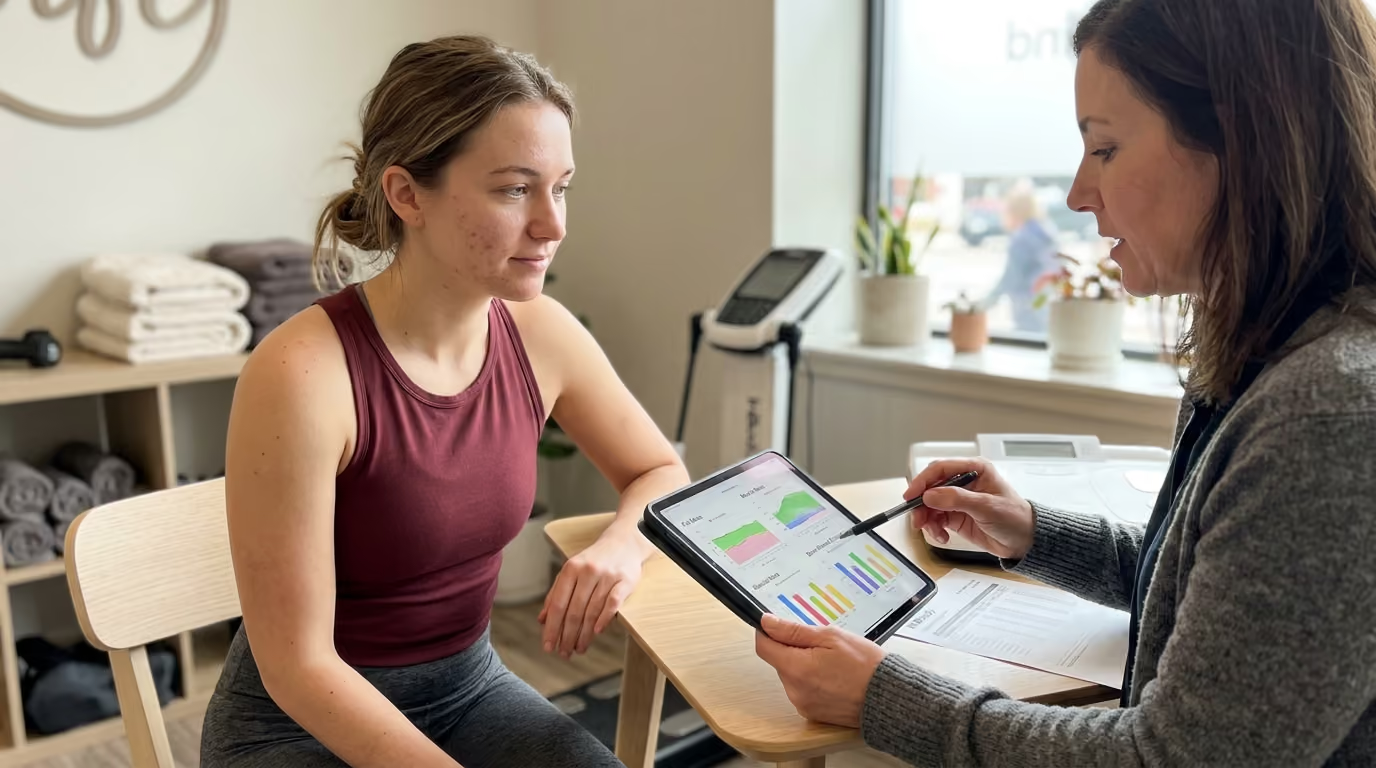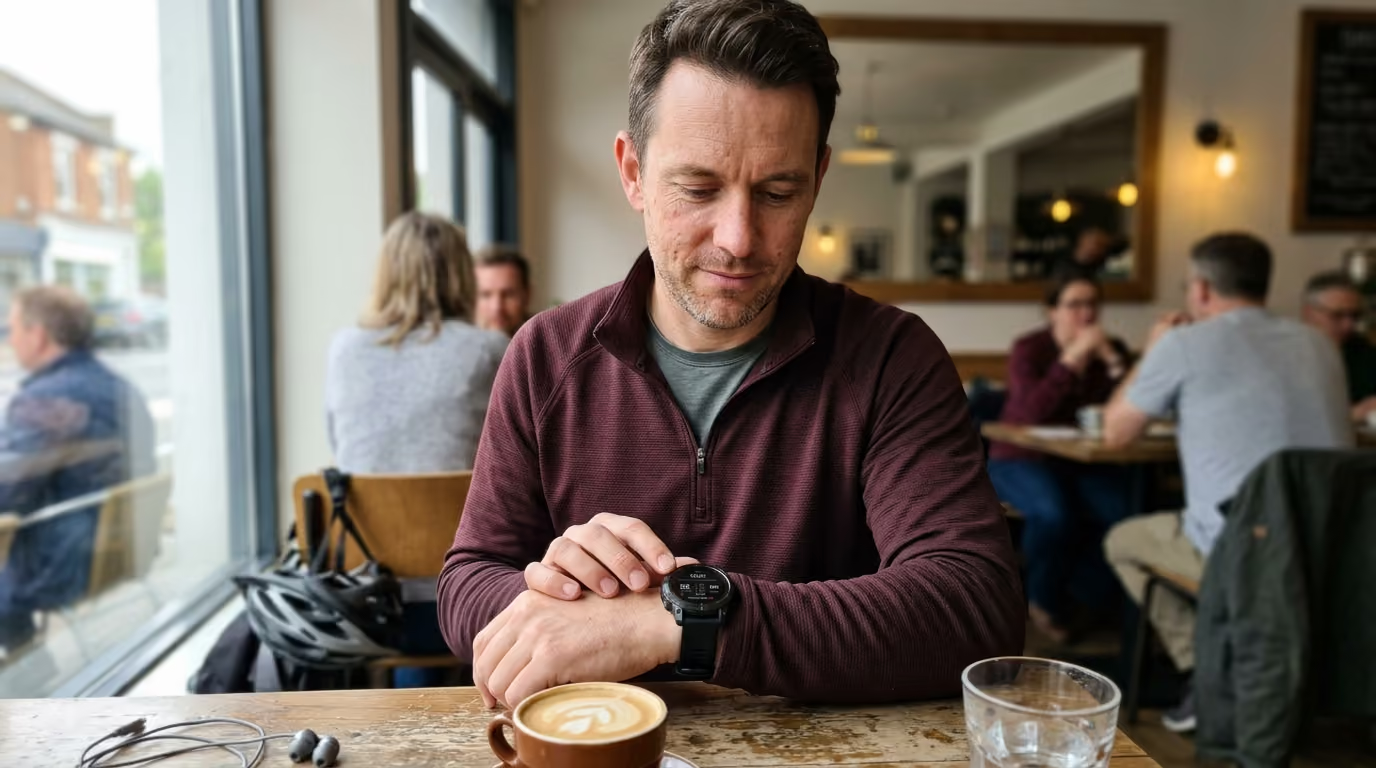

Better health metrics and improved physical performance come from choosing wearables that measure accurate body signals rather than relying on unverified algorithmic estimates.





The most expensive health wearable on the market will not make you live longer or perform better. In fact, wearing a device packed with advanced sensors often produces more anxiety than actionable insight. Most consumer health technology is sold on the promise of total biological clarity, yet it delivers proprietary scores calculated from crude estimates.
Wearables are measurement and feedback systems, not passive windows into human physiology. Their real value depends on measurement validity, feedback clarity, your ability to act, and whether the device causes unnecessary distraction. A simple tool that tracks one variable reliably is far superior to a complex watch that presents unverified readiness scores.
To gain actual utility from modern health technology, you must understand what your device measures, what it guesses, and when a simpler approach serves you better. This guide provides a clear framework for choosing and using health hardware to support lifelong vitality, athletic capability, and daily energy.
The primary error consumers make is treating every number on a screen as an absolute physical measurement. Consumer devices produce several distinct tiers of information, ranging from raw electrical signals to speculative composite metrics.
The first tier consists of direct measurements. These are physical signals captured close to the underlying event. Examples include an electrocardiogram waveform recorded across two contact points, or an optical pulse wave detected at the wrist.
The second tier consists of derived metrics. These are mathematical models built from sensor readings, personal demographics, and algorithmic assumptions. Common derived metrics include calories burned, sleep stages, recovery scores, daily strain, and biological age.
When you evaluate a device, you must identify whether a metric is a direct reading or a mathematical model. Algorithms vary significantly across manufacturers, meaning two devices worn on the same wrist can report completely different recovery or sleep scores from identical physiological events.
Photoplethysmography, commonly called PPG, uses light-emitting diodes and photodiodes to measure changes in blood volume in tissue near the skin surface. As your heart pumps blood, the expansion and contraction of local blood vessels alter the amount of light absorbed or reflected back to the sensor.
PPG sensors perform well for steady heart rate tracking. Research demonstrates an average heart rate bias of approximately three percent during resting conditions and moderate, rhythmic exercise. Mean absolute errors under controlled conditions typically sit around two beats per minute when compared against clinical reference standards.
However, PPG does not measure the electrical activity of your heart. It detects a mechanical pulse wave traveling through peripheral tissue. Muscle contractions, poor strap fit, cold weather, and vigorous arm movements can distort this optical reading. For active adults monitoring intensity during interval training or rowing, optical sensors often lag behind rapid heart rate changes.
Single-lead consumer electrocardiogram sensors record the electrical impulses that trigger your heartbeat. Users typically activate this feature by placing a finger on a conductive bezel, watch crown, or secondary contact point to complete an electrical circuit across the chest.
A single-lead consumer reading provides valuable rhythm information, but it is not equivalent to a clinical twelve-lead hospital assessment. Consumer ECG features are primarily cleared to identify normal sinus rhythm or atrial fibrillation under resting conditions.
According to regulatory documentation from the Food and Drug Administration, these tools are not designed to detect all cardiac arrhythmias, structural issues, or heart attacks. A normal reading on a wrist device should never be used to dismiss active chest pain, pressure, or shortness of breath.
Accelerometers measure changes in velocity along multiple axes, while gyroscopes measure rotational movement. Together, they form the engine for step counting, cadence tracking, activity classification, and basic sleep and wake detection.
Step counts provide a practical baseline for daily movement, but they remain operational estimates rather than exact measurements. Studies analyzing consumer fitness trackers show that wearables frequently underestimate or overestimate daily steps, with mean absolute percentage errors ranging from minus nine percent to positive twelve percent.
Your walking mechanics, carrying a briefcase, pushing a stroller, or placing the sensor in a pocket will alter the recorded totals. For general wellness and cardiorespiratory health, these discrepancies rarely matter. Tracking broad movement trends over weeks is far more valuable than obsessing over reaching an exact daily number.
Wrist and finger devices often record skin temperature during sleep. This metric reflects the thermal state of your peripheral tissue, not your internal core body temperature.
Skin temperature fluctuates based on ambient bedroom temperature, bedding choices, peripheral circulation, and device contact. A localized reading can help identify personal baseline variations over time, such as the onset of an immune response or changes in sleep environment. You should not treat minor skin temperature shifts as diagnostic proof of a medical condition without corroborating clinical signs.
Wearable pulse oximeters estimate peripheral blood oxygen saturation by transmitting light at specific wavelengths through the skin and calculating the ratio of oxygenated to deoxygenated hemoglobin.
These optical readings are sensitive to motion, low peripheral blood flow, cold skin, and sensor fit. The Food and Drug Administration has highlighted that consumer optical sensors can exhibit variable accuracy across different skin pigmentations and physical conditions.
A wearable blood oxygen reading should serve as an informational trend, not a medical monitoring tool. If you suspect respiratory compromise, rely on a validated medical device and seek clinical care rather than relying on a smartwatch display.
Modern trackers infer sleep stages by combining movement data, optical pulse patterns, and skin temperature variations. The device applies statistical models to categorize your night into light sleep, deep sleep, and rapid eye movement sleep.
These consumer devices do not monitor brainwave activity, eye movements, or muscle tone, which are the formal clinical criteria used in polysomnography sleep laboratories. Validation research shows that consumer wearables frequently misclassify sleep stages, showing error rates between 12 percent and 180 percent when compared to clinical sleep studies.
Trackers routinely overestimate total sleep time and underestimate the time it takes to fall asleep. Use your device to evaluate your overall sleep consistency, bedtime habits, and total sleep opportunity, rather than stressing over algorithmic deep sleep percentages.
Continuous glucose monitors, or CGMs, measure glucose concentrations in interstitial fluid beneath the skin rather than direct capillary blood glucose. Interstitial readings inherently lag behind actual blood sugar by five to fifteen minutes, particularly during rapid changes following meals or intense exercise.
Clinical evidence supports CGM use in managing diabetes and metabolic conditions. Meta-analyses demonstrate that continuous monitoring can produce a modest reduction in glycated hemoglobin of roughly 0.31 percent to 0.32 percent in adults with type 2 diabetes.
For healthy individuals without diabetes, using a monitor can offer short-term insight into how meal composition, walking, and stress impact glycemic excursions. However, healthy physiology includes natural post-meal glucose fluctuations. Treating ordinary glucose rises as medical emergencies creates unnecessary dietary fear without providing meaningful longevity benefits.
Before choosing any device, you must determine what decision the data will guide and what will happen if that data is wrong. The required standard of accuracy depends entirely on the consequence of an incorrect measurement.
When an error carries minimal risk, high precision is unnecessary. If your fitness tracker miscounts your daily steps by eight percent, the behavioral outcome remains positive because you were motivated to walk more.
When an error carries significant health risks, relying on consumer algorithms can be dangerous. Changing prescription medications, evaluating suspected cardiac symptoms, or ignoring signs of illness based on a wearable score can lead to serious harm.
To make practical sense of wearable claims, you must separate several key dimensions of data quality:
For longevity and athletic conditioning, within-person change is almost always more relevant than absolute laboratory precision. You do not need to know your exact physiological maximum heart rate down to the single digit. You simply need to know whether your resting cardiovascular metrics are trending in a healthy direction over months of consistent training.
Different hardware form factors suit different lifestyles, athletic goals, and physical preferences. Choosing the best tool requires matching the form factor to the specific questions you want answered.
Smartwatches represent the most versatile hardware category. They combine multi-sport tracking, global positioning systems, wrist-based optical sensors, optional communication tools, and extensive third-party application ecosystems.
These devices excel at delivering real-time workout metrics, mid-run navigation, and structured movement cues throughout the day. Modern models frequently offer solid resting heart rate accuracy and validated fall detection capabilities.
The trade-off comes in battery consumption and cognitive distraction. Devices requiring daily charging often lead to missed sleep data. Constant wrist notifications can also fragment your attention and increase daily stress levels.
Fitness bands offer a streamlined alternative for individuals who want continuous health monitoring without a digital screen demanding their attention. These devices focus primarily on continuous heart rate tracking, movement volume, and sleep duration.
Bands typically feature longer battery lives than smartwatches, often lasting several days between charges. Their smaller profile makes them comfortable for continuous night wear, reducing gaps in your baseline dataset.
The primary limitation is the lack of rich real-time visual feedback during training. If you require instant pacing data or complex route navigation during outdoor sports, a band alone may prove insufficient.
Smart rings pack miniaturized sensors into a discreet piece of jewelry. By collecting data from the digital arteries of the finger, rings can capture clean optical pulse signals and skin temperature trends during resting periods.
Rings are an outstanding option for tracking sleep habits and overnight physiological baselines. They eliminate screen glare entirely and feel natural for individuals who dislike wearing a watch to bed.
However, rings are less effective for real-time exercise tracking. Finger swelling during heavy weightlifting or endurance running can alter sensor contact and reduce data quality. Hard barbell knurling can also scratch or damage the ring exterior.
Chest straps remain the gold standard for dynamic cardiovascular tracking. By measuring electrical cardiac signals directly against the chest wall, they capture rapid heart rate spikes and precise beat-to-beat variability during intense physical exertion.
If your training involves high-intensity intervals, functional conditioning, or competitive endurance sports, a chest strap is unmatched. It avoids the motion artifacts and optical lag common to wrist-based monitors.
The drawback is convenience. Chest straps are designed for specific workout sessions rather than all-day wear or overnight sleep analysis.
Understanding these hardware differences allows you to invest in tools that support your actual physical pursuits, whether you are developing strength and physical performance in the gym or preparing for mountain adventures.
Consumer health devices often display numbers with multiple decimal places, creating an illusion of laboratory-grade precision. Confusing mathematical precision with scientific accuracy is one of the most common pitfalls in personal health tracking.
A reader recently asked me if they needed to start a complicated, three hour morning routine they saw online. I told them absolutely not. When I looked at the research they referenced, the actual benefits were marginal compared to simply getting eight hours of sleep and lifting heavy things twice a week. It is incredibly easy to get distracted by the top one percent of optimization and forget that the foundation is where all the real longevity gains are made.
One of the least reliable metrics on any consumer wearable is total energy expenditure. Trackers do not measure metabolic heat production or gas exchange. Instead, they calculate calorie burn by feeding motion, heart rate, age, and weight into broad statistical formulas.
Systematic reviews analyzing commercial health monitors confirm that wearable calorie burn estimates exhibit wide and unpredictable margins of error. In many workout settings, energy expenditure calculations can be off by twenty to forty percent.
Using your watch's calorie display to justify eating extra food can completely undermine metabolic health and body composition goals. Treat active energy numbers as rough indicators of relative daily exertion, never as an accounting ledger for nutritional intake.
Algorithmic sleep scores can unintentionally degrade your daytime mental performance. When people wake up feeling refreshed but check their phone and see an alarming red recovery score, their perceived energy and cognitive focus often plummet.
This psychological phenomenon occurs when an algorithmic rating overrides your actual subjective vitality. A poor sleep score is frequently the result of sensor displacement or an imperfect algorithm rather than physiological impairment.
If you wake up feeling energetic and capable, trust your internal perception. Use sleep metrics to evaluate your monthly schedule consistency, but never let an arbitrary morning score dictate your confidence for the day ahead.
Heart rate variability, or HRV, measures the minute variations in time between consecutive heartbeats. Higher values generally indicate robust parasympathetic nervous system activity, while suppressed readings can reflect physical fatigue, emotional stress, or alcohol consumption.
However, HRV is an individualized metric influenced by genetics, age, posture, breathing rates, and underlying cardiac health. Comparing your absolute HRV score to another person is biologically meaningless.
Furthermore, higher HRV is not universally better in every clinical scenario. Certain cardiac arrhythmias can produce artificially elevated variability readings. Focus strictly on your personal multi-week rolling baseline rather than chasing higher absolute numbers.
If you want to maintain long-term capability, pairing clear cardiovascular tracking with targeted performance and fitness training yields far greater returns than obsessing over daily recovery algorithms.
The most effective approach to health tracking is utilizing the minimum viable measurement. This means identifying the fewest data points required to make meaningful improvements in your daily routine.
Collecting excessive data creates decision fatigue. When you monitor twenty different metrics simultaneously, it becomes impossible to determine which habit produced a positive shift in your energy or recovery.
A sustainable tracking routine follows a simple sequence: measure one variable, interpret it against your personal baseline, take a single practical action, and observe the results over several weeks.
Wear your chosen device consistently for three to four weeks without altering your normal routine. This establishes a clean baseline for your resting heart rate, sleep timing, and daily movement.
Do not establish baselines during periods of international travel, acute illness, or extreme training camps. Baselines built under unusual physical stress will distort your long-term data trends.
Choose a single metric directly connected to an active lifestyle goal:
Whenever you introduce a new health habit, maintain it for four consecutive weeks before judging its success on your wearable. Whether you are adding evening walks, cutting out late-night meals, or starting a new lifting program, physiological systems require time to adapt.
Look for sustained directional trends rather than day-to-day noise. If your resting heart rate trends downward over four weeks while your energy remains high, your intervention is working.
Adopting this disciplined approach prevents technology from dominating your schedule, supporting a healthy balance between data collection and longevity and living well.
When you wear a connected biometric device, you generate continuous records of your location, heart rhythms, sleep patterns, and daily habits. Understanding how this information is stored, processed, and protected is a critical component of choosing a platform.
Many consumers assume that consumer health technologies fall under the privacy protections of the Health Insurance Portability and Accountability Act, known as HIPAA. In reality, most commercial wearables and mobile fitness applications are not covered entities under HIPAA regulations.
Instead, regulatory oversight in the United States often falls under the Federal Trade Commission. The FTC enforces the Health Breach Notification Rule, which requires vendors of personal health records and connected health devices to notify consumers and regulators in the event of unauthorized data access or improper data sharing.
The FTC has made it clear that unauthorized disclosures of sensitive health information to third-party advertisers can constitute a security breach under federal rules. Before investing in a health platform, review the manufacturer's data governance practices.
Data access is not the same as data portability. Seeing your sleep stats on a colorful smartphone dashboard does not mean you own your data. If a company goes out of business or alters its business model, you risk losing years of personal health history.
Look for platforms that allow you to export your raw and semi-processed records in standard, open formats such as CSV, JSON, FIT, or TCX files. This ensures that you can transfer your cardiovascular and training history into independent analytical software or share it directly with a physician.
Managing your personal data privacy ensures that your pursuit of longevity and biohacking insights does not compromise your personal security.
For active adults who travel internationally or engage in outdoor adventures, health wearables present both unique advantages and practical challenges. Travel disrupts circadian rhythms, alters hydration levels, and changes ambient environments, all of which influence biometric readings.
Battery life becomes a primary measurement variable during travel. A device that requires charging every twenty-four hours frequently runs out of power on long flights or backcountry trips, resulting in fragmented datasets and missing sleep records.
When crossing multiple time zones, your wearable can serve as a structured tool for circadian realignment. Use your device's activity prompts and light exposure guidance to anchor your body clock to the destination timezone.
During flights, lower cabin air pressure and dry air can cause temporary drops in peripheral blood oxygen readings and minor elevations in resting pulse rate. These shifts represent normal physiological responses to the aircraft environment, not an acute health event.
Similarly, sleeping in hotel rooms with unfamiliar climate controls can elevate skin temperature readings. Rather than reacting to single-night data spikes while traveling, focus on using your wearable to maintain basic hydration, scheduled physical activity, and adequate rest.
For those dedicated to travel and adventure, choosing hardware with robust battery performance and independent GPS navigation ensures reliable operation in demanding environments across the globe.
The broader scientific community agrees that long-term healthspan is driven by fundamental lifestyle behaviors rather than advanced consumer metrics. No wearable device can replace the physiological benefits of consistent strength training, cardiorespiratory exercise, adequate nutrition, and restorative rest.
The metrics with the strongest scientific support for predicting long-term vitality are well-established:
Proprietary readiness scores, strain calculations, and daily biological age estimates provide behavioral motivation for some users, but they are not clinical endpoints. Treat your wearable as an objective logging tool that keeps you honest about the basic habits that support vitality.
By using technology to support proven physiological fundamentals, you can build a sustainable lifestyle that keeps you strong, sharp, and capable throughout your life. Focusing on proper recovery and sleep routines will consistently yield far greater dividends than endlessly tweaking algorithmic scores.
Wearables are valuable instruments when they serve your broader life goals, but your personal capability, physical strength, and daily energy will always remain the true measures of your vitality.
Stay connected for research and practical guidance on longevity, strength, recovery, energy and active living. New ideas to help you stay capable, curious and ready for more.


Explore practical guidance on strength, recovery, energy, travel and longevity for a life that stays active.
explore the Blog