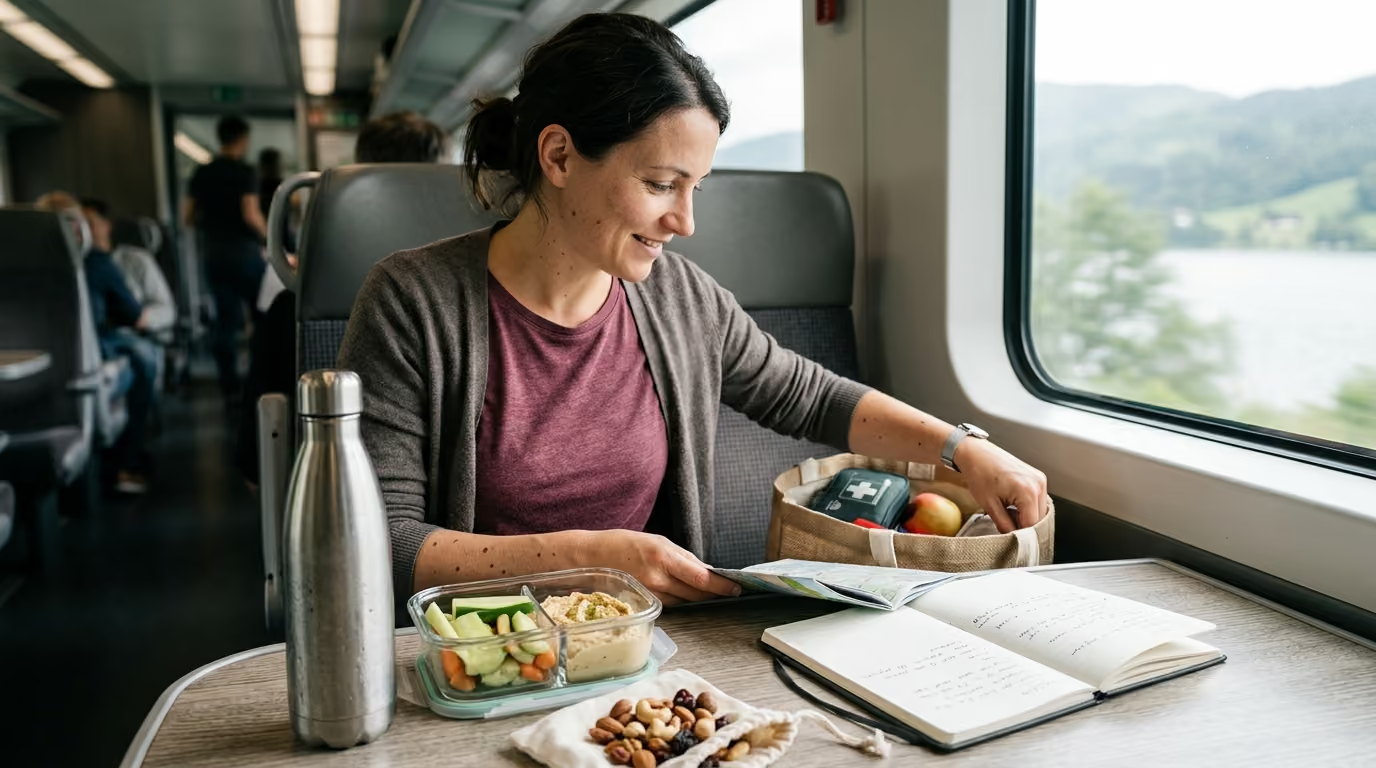

Long travel days and shifting time zones disrupt digestion and energy, but daily nutritional anchors and circadian meal timing preserve vitality everywhere.





Most health advice suggests that traveling requires strict nutritional perfection or complete surrender to indulgence. Both extremes miss the reality of how the human body functions under transit stress. Attempting to follow a rigid meal plan in foreign airports or remote mountain villages often creates unnecessary friction.
A resilient nutritional strategy does not rely on packing every meal in advance. Instead, it operates as an adaptable decision framework that protects your energy, sleep quality, and gut health while letting you experience local food culture. By establishing a few non-negotiable daily anchors, you can maintain peak physical capability without feeling restricted.
Sustainable longevity is built through repeated, high-value decisions under changing conditions. Travel challenges our biological systems through altered meal timing, sleep disruption, elevated sodium, and unfamiliar food handling. This playbook provides a clear, practical approach to eating well across airports, hotels, fine dining, and adventurous terrain.
Crossing time zones and sitting in pressurized cabins affects your internal physiology in predictable ways. Your digestive tract possesses its own circadian clock, which is synchronized with central timekeeping mechanisms in the brain. When you change time zones rapidly, the rhythmic secretion of digestive enzymes, stomach acid, and bile acids becomes desynchronized from your actual meal schedule.
This internal mismatch can cause slower stomach emptying, bloating, and unexpected energy crashes. Research published in the journal Sports Medicine highlights that travel fatigue stems from a combination of circadian desynchronization, disrupted sleep opportunity, and prolonged physical inactivity. In our experience, travelers often mistake these normal physiological shifts for sudden food intolerances or metabolic failure.
Nutrient density becomes critical when transit delays disrupt your regular eating patterns. Nutrient-dense foods deliver significant amounts of essential amino acids, dietary fiber, vitamins, and minerals relative to their total energy content. When your access to food is constrained to just one or two sittings a day, selecting foods that stabilize blood sugar is far superior to relying on refined starches or processed snacks.
Maintaining this biological stability also protects your vascular and cellular health. Flying exposes the body to mild hypobaric hypoxia, which increases systemic oxidative stress and inflammatory signaling. Consuming whole foods rich in natural polyphenols and high-quality protein provides the necessary substrates for cellular repair, helping you arrive at your destination ready for hiking, business, or exploration.
A reader recently asked our team if they needed to start a complicated, three hour morning routine they saw online to stay healthy while traveling. We told them absolutely not. When we looked at the research they referenced, the actual benefits were marginal compared to simply getting eight hours of sleep and lifting heavy things twice a week. It is incredibly easy to get distracted by the top one percent of optimization and forget that the foundation is where all the real longevity gains are made.
The anchor-and-flex model is the simplest way to maintain that foundation on the road. Instead of attempting to control every calorie or macronutrient gram, you establish three to four daily nutritional anchors. Once these anchors are satisfied, the rest of your daily food intake remains completely flexible. This approach eliminates decision fatigue and adapts effortlessly to any culture or schedule.
Start your active day with 25 to 40 grams of high-quality protein. Protein stimulates muscle protein synthesis, supports satiety, and prevents blood sugar spikes. Great options include eggs, Greek yogurt, tofu scramble, or a clean protein supplement.
Ensure at least one meal contains a significant portion of colorful vegetables or whole fresh fruit. This guarantees an intake of essential fiber, potassium, and protective phytonutrients. It also aids gastrointestinal motility during long transit days.
Drink clean water with meals and carry an empty bottle through airport security to fill at verified stations. Your baseline fluid intake should reflect your body size, local climate, and daily activity levels.
Keep a shelf-stable, high-protein snack in your carry-on bag at all times. Options like roasted chickpeas, single-ingredient jerky, or plain nuts prevent desperate, low-quality food choices when flights are delayed.
Applying these four anchors allows you to enjoy an elaborate tasting menu or a local street market without guilt. If your morning meal and hydration are solid, a single rich dinner will not derail your metabolic health. You can learn more about balancing physical capability and nutrition through our guide to foundational nutrition and metabolism.
Airports are designed for retail speed, not human vitality. The default offerings are heavily skewed toward refined carbohydrates, oxidized cooking oils, and excessive sodium. Navigating these transit terminals successfully requires a proactive strategy before you board.
Begin by eating a balanced meal containing protein and fiber before leaving home or your hotel. Arriving at the terminal comfortably satisfied reduces the impulsive pull of processed food stands. If you must purchase a meal post-security, scan the options for whole-food combinations like grain bowls with grilled chicken, vegetable-packed omelets, or sushi from high-turnover outlets.
In-flight eating requires intentional moderation. Flight attendants frequently offer high-sodium snacks, sugary desserts, and alcohol, but you are not obligated to consume them. Eating large, rich meals at high altitudes can worsen gastrointestinal discomfort due to reduced cabin pressure and low ambient movement.
Treat food on the airplane as functional fuel rather than entertainment. If your flight crosses standard meal windows, consume the protein and vegetable components of the airline meal while bypassing heavily sweetened desserts. Drink plenty of still water alongside your meal, and rely on your portable protein snacks if the onboard options appear questionable.
Hotel environments can quickly disrupt your dietary consistency if you lack a clear room strategy. A standard hotel room can be quickly converted into a high-performance staging ground with a quick visit to a local grocery market. This gives you autonomy over your morning fuel and late-night snacks.
Stock your room with shelf-stable staples like whole fruit, unsalted almonds, single-serve nut butter packets, and high-fiber rolled oats. If your room features a functioning refrigerator, verify its temperature before storing perishables. The Centers for Disease Control and Prevention notes that perishable foods must be kept at or below 4°C (40°F) to prevent rapid bacterial proliferation.
The hotel breakfast buffet is one of the easiest places to lose dietary control. The abundance of free-flowing pastries, sweetened juices, and processed meats encourages unplanned overeating. Navigating the buffet effectively requires an established sequence of plate selection.
First, complete a full visual survey of the entire buffet line before touching a plate. This simple pause prevents filling up on low-value items just because they appear first in line. Second, fill half your plate with quality protein sources, such as soft-boiled eggs, smoked salmon, or unsweetened yogurt.
Third, add a generous serving of fresh berries, sliced fruit, or sautéed vegetables. Fourth, select one high-quality carbohydrate source, like whole-grain bread or porridge, and choose a single specialty item you genuinely want to enjoy. Finally, sit down, eat slowly, and stop when you are satisfied rather than when the plate is empty.
For late arrivals when room service is closed, avoid the trap of ordering heavy delivery fast food. Utilize your room stock to build a balanced light meal of oatmeal with nuts, a protein pouch, and fruit. This satisfies genuine hunger without overwhelming your digestive system right before sleep.
Dining out is often the highlight of travel, whether you are skiing in Switzerland, trekking through Patagonia, or negotiating in Tokyo. Rather than viewing restaurant meals as a dietary threat, treat local cuisine as a prime opportunity to enjoy whole, nutrient-dense regional foods. Longevity is about enjoying life fully with physical vigor, not isolating yourself from cultural traditions.
A constructive psychological approach is to add high-value foods before attempting to restrict anything. Ask the kitchen for an extra side of grilled greens, a portion of steamed vegetables, or an additional piece of fish. Once your plate is rich in micronutrients and protein, your appetite will regulate naturally, making portion control effortless.
Learn to decode restaurant menus with simple heuristics. Seek out dishes featuring regional produce, whole legumes, and lean animal or plant proteins. Traditional diets worldwide naturally align with longevity principles, from the legume-rich stews of the Mediterranean to the fermented dishes and fresh seafood of coastal Asia.
When ordering in social settings, consider sharing family-style entrées to experience multiple flavors without overconsuming. If you desire a rich dessert, share it with your companions, or alternate evenings between enjoying fine wine and having dessert. This simple boundary keeps your total intake balanced while preserving the delight of world-class dining. For more active journey planning, view our practical strategies for travel and adventure.
Gastrointestinal illness is one of the fastest ways to derail your travel performance. The CDC reports that travelers’ diarrhea attack rates range between 30% and 70% during a two-week journey depending on destination and season. Protecting your gut integrity requires rigorous adherence to basic food and water safety principles.
The World Health Organization outlines five core keys to safer food: keep clean, separate raw and cooked ingredients, cook thoroughly, keep food at safe temperatures, and use safe water and raw materials. In regions with questionable sanitation, ensure that your hot food is served steaming and freshly cooked. Avoid raw leafy greens, unpeeled fruits, and lukewarm buffet trays that have sat exposed to room temperatures.
When evaluating street food, do not rely on blanket avoidance. A bustling street stall with continuous high-heat cooking, high customer turnover, and clean surfaces is often safer than an empty hotel restaurant holding food in lukewarm warming pans. Look for vendors who cook orders live and keep raw ingredients separated from cooked items.
If travelers’ diarrhea does occur, prioritize hydration and electrolyte replacement over rapid fasting. The World Health Organization recommends using medically formulated oral rehydration salts mixed into one liter of clean, safe water. These specific formulations balance sodium and glucose to maximize fluid absorption through the intestinal lining. Seek immediate medical attention if you experience high fever, severe dehydration, or blood in your stool.
Hydration advice for travelers is often filled with extreme claims, from forced fluid overloading to excessive reliance on commercial electrolyte packets. Understanding the actual physiology of aircraft cabins and climate adaptation will help you avoid unnecessary interventions.
A common myth claims that aircraft cabin air causes massive, dangerous systemic dehydration. A comprehensive environmental review published in Dermatology noted that total additional water loss over an eight-hour flight in very low humidity is only around 100 mL. While low humidity certainly dries out your nasal passages, eyes, and skin, it does not rapidly deplete total body water if you drink normally.
Drink clean water whenever you feel thirsty and consume adequate fluids with meals. Electrolyte supplements are not required for every sedentary short-haul flight. They become genuinely necessary when you face significant sweat losses from intense heat, endurance hiking, high altitude, or gastrointestinal fluid loss.
Alcohol consumption requires careful moderation during transit. While some guidelines cite up to two daily drinks for men and one for women as moderate, the World Health Organization emphasizes that no level of alcohol consumption is free of health risks, particularly regarding cancer development. Alcohol also fragments sleep architecture, suppresses rapid eye movement (REM) sleep, and worsens morning lethargy.
During travel, alcohol multiplies the dehydrating effects of warm climates and complicates your circadian adjustment to new time zones. Establish an alcohol-free default for flight days and intense adventure stages. When you choose to drink socially, alternate every glass of wine or spirits with a large glass of water, consume food beforehand, and finish drinking several hours before bedtime. You can read deeper strategies on sleep optimization in our section on circadian recovery and sleep.
Jet lag is fundamentally a circadian timing disorder, not just generalized fatigue. Your central master clock in the brain is set primarily by environmental light, while peripheral clocks in your liver, stomach, and muscles are reset largely by meal timing and physical movement. Misalignment between these systems causes poor sleep, metabolic sluggishness, and daytime brain fog.
To speed your adaptation across multiple time zones, coordinate your food intake with the local time of your destination. As soon as you board a long-haul flight, set your watch to destination time and avoid consuming large meals during the destination’s biological night. When you land, eat a balanced, protein-rich meal at the local breakfast or lunch hour to signal to your digestive system that the active day has begun.
Melatonin can serve as an effective chronobiotic aid for crossing multiple time zones. A systematic review published in the Cochrane Database of Systematic Reviews found that melatonin taken near the target bedtime at the destination significantly reduced jet lag symptoms across eight out of ten clinical trials. Doses between 0.5 mg and 5 mg showed similar efficacy, with higher doses producing stronger hypnotic effects.
Always consult a qualified healthcare professional before using melatonin, particularly if you take prescription anticoagulants, sedatives, or manage underlying metabolic conditions. Combine sensible timing aids with outdoor daylight exposure and morning physical activity. This integrated approach restores mental clarity far faster than relying on caffeine alone. Explore more performance tools through our guide on sustaining energy and focus.
The first day after a long journey sets the tone for your entire trip. Rather than resorting to restrictive cleanses or intense compensatory fasting, your body requires nutritional consistency, hydration, and rhythmic movement. A structured reset protocol calms transit inflammation and re-establishes normal gut motility.
Begin your first morning with a large glass of safe, clean water and an outdoor walk in natural daylight. The combination of gentle movement and morning sun helps reset your central circadian clock while stimulating healthy intestinal peristalsis. Keep your first post-travel meals straightforward, focusing on easily digested proteins, cooked vegetables, and complex carbohydrates.
This simple reset framework supports your natural recovery mechanisms without stress. Whether you are preparing for a backcountry expedition or high-stakes business meetings, this protocol ensures you remain sharp, energized, and capable. For broader performance frameworks, explore our frameworks for travel and human performance.
Maintaining vibrant physical capability on the road comes down to making consistent, high-value choices that allow you to enjoy your journey to the fullest.
Stay connected for research and practical guidance on longevity, strength, recovery, energy and active living. New ideas to help you stay capable, curious and ready for more.


Explore practical guidance on strength, recovery, energy, travel and longevity for a life that stays active.
explore the Blog