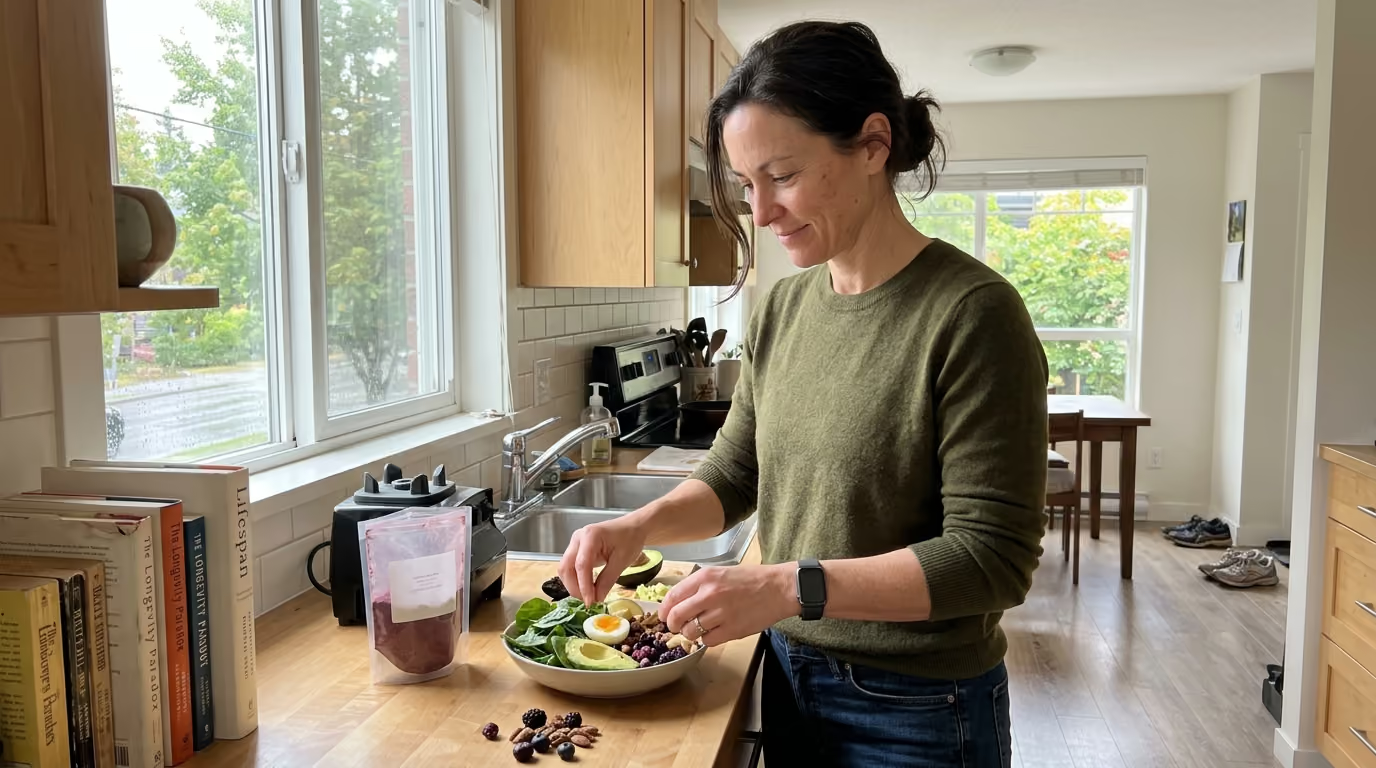

Faced with endless wellness trends and complex supplement stacks, active adults need a systematic framework to prioritize proven clinical health outcomes over hype.





The modern wellness industry often suggests that adding more protocols, pills, and tracking devices leads directly to a longer life. In practice, the opposite is frequently true. Piling unproven interventions onto an already demanding schedule tends to create unnecessary anxiety, significant financial waste, and genuine medical risk without improving health outcomes.
True biological optimization is not a collection of expensive gadgets or morning rituals. It is a systematic process designed to preserve physical capability, cognitive clarity, and metabolic resilience over decades. When you filter health claims through rigorous evidence, you quickly realize that the most powerful tools are straightforward, accessible, and grounded in solid human physiology.
This framework provides a clear method for evaluating supplements, diagnostics, wearables, and recovery tools. By focusing on measurable outcomes rather than theoretical mechanisms, you can protect your long-term independence and vitality while ignoring the noise of commercial health trends.
The term longevity is used so broadly that it has lost much of its practical meaning. When evaluating any new health habit, you must first clarify the exact endpoint you want to improve. A compound that alters a cellular marker in a test tube is useless if it does not translate into better physical function, reduced disease risk, or enhanced daily energy.
In longevity science, clinical research separates health endpoints into four distinct categories:
These are the hard medical endpoints that directly affect how long you live and whether you remain free of serious disease. They include cardiovascular events, stroke, cancer incidence, osteoporotic fractures, cognitive decline, disability, and all-cause mortality. Well-designed clinical trials focus on these outcomes because they represent true health preservation.
These endpoints determine how capable, mobile, and independent you remain as the years pass. Functional outcomes include grip strength, walking speed, leg power, aerobic capacity, balance, sleep quality, and mental clarity. For active adults over 40, protecting functional capacity is often more immediately relevant than tracking abstract markers.
These are validated clinical measurements that directly track disease risk. Common examples include resting blood pressure, fasting blood glucose, ApoB, LDL cholesterol, HbA1c, and visceral adipose tissue. Improving an intermediate outcome is valuable because decades of medical research link these numbers directly to clinical events.
These include proprietary recovery scores, inflammatory panels, biological age algorithms, and epigenetic methylation clocks. While these measurements can be interesting for scientific research, changing a surrogate biomarker does not guarantee that your health has improved. A test score is an indirect signal, not a guarantee of extended vitality.
When deciding whether to adopt a new protocol or purchase an expensive diagnostic, always identify which category it targets. An intervention that only moves an unvalidated surrogate marker should never take priority over actions that improve validated functional or clinical outcomes.
Scientific claims in the longevity space are not all equal. To protect your time and capital, you need a disciplined way to separate robust human findings from marketing exaggerations.
The gold standard of medical science rests on large, randomized controlled trials and comprehensive systematic reviews. These studies show whether an intervention actually reduces heart attacks, prevents cognitive decline, or extends human survival. Because these trials require years of observation and substantial funding, they are rare, but they provide the highest level of confidence.
If hard clinical trial data is unavailable, look for validated functional performance metrics. Studies demonstrating improvements in muscular power, joint stability, cognitive processing speed, or aerobic endurance carry significant weight. Research shows that physical capacity and frailty scores are powerful predictors of long-term independence.
Interventions that reliably improve blood pressure, lipid profiles, glycemic control, or body composition belong in this tier. These risk factors are central to preventive medicine because their connection to cardiovascular and metabolic disease is well established. However, the value of changing a risk factor depends on your personal baseline numbers and whether the improvement can be sustained indefinitely.
Epigenetic clocks, biological age algorithms, and proprietary wearable metrics belong in this exploratory category. These tests can help researchers generate hypotheses, but they should never be treated as direct measurements of remaining lifespan. A lower biological age score does not replace the clinical reality of high blood pressure or poor physical conditioning.
Many popular supplements and protocols base their marketing entirely on cellular pathways or mouse studies. While animal research helps scientists understand basic biology, it rarely translates directly into human benefits. Model organisms kept in sterile laboratory settings have vastly different metabolic systems than active adult humans living complex lives.
Understanding this hierarchy allows you to see through bold marketing claims. If a product relies entirely on cellular mechanisms without showing tangible human benefits, it belongs at the bottom of your priority list.
Before adding any new routine, device, or supplement to your lifestyle, run it through a structured evaluation. You can evaluate the practical value of any longevity intervention using five balanced criteria:
This simple decision model ensures you do not get distracted by novel mechanisms while ignoring real-world costs and risks.
Determine where the supporting data sits on the evidence hierarchy. Look for human trials with proper control groups, adequate participant numbers, and meaningful follow-up periods. Be skeptical of claims based solely on pilot studies, company-sponsored trials without independent peer review, or anecdotal testimonials.
Always distinguish between relative risk reduction and absolute risk reduction. A headline claiming a 50 percent reduction in disease risk sounds impressive until you realize the absolute risk only dropped from two in ten thousand to one in ten thousand. Focus on interventions that deliver meaningful, noticeable improvements to your daily performance and long-term health.
An intervention must address a specific need in your individual biology or lifestyle. For example, continuous glucose tracking offers immense clinical utility for an individual managing type 2 diabetes. That same monitor offers far less practical value for a lean, active adult with normal insulin sensitivity.
Every protocol carries potential downsides that extend beyond obvious side effects. These include drug interactions, training injuries from unmanaged volume, false reassurance from inaccurate tests, and psychological anxiety caused by constant monitoring. High-severity risks demand caution regardless of how attractive the theoretical reward might seem.
Calculate the true financial and cognitive burden of maintaining the habit. Include device subscriptions, recurring lab panels, specialist consultations, and daily time demands. If a protocol creates friction in your personal life or travel schedule, it will likely be abandoned within months.
A reader recently asked our team if they needed to start a complicated, three hour morning routine they saw online. We told them absolutely not. When we looked at the research they referenced, the actual benefits were marginal compared to simply getting eight hours of sleep and lifting heavy things twice a week. It is incredibly easy to get distracted by the top one percent of optimization and forget that the foundation is where all the real longevity gains are made.
By weighing potential benefits against real-world friction, you can build a sustainable routine that enhances your life rather than complicating it. Explore our comprehensive resources on healthy aging and living well to see how simple, consistent habits outperform complex protocols over time.
The most effective longevity tools are neither expensive nor proprietary. Decades of epidemiological and clinical research confirm that regular movement and restorative sleep provide greater protection against chronic disease than any known supplement or device.
The World Health Organization establishes clear physical activity guidelines for adult health and functional independence. Adults should accumulate at least 150 to 300 minutes of moderate-intensity aerobic physical activity per week, or 75 to 150 minutes of vigorous aerobic work. Meeting these standards reduces all-cause mortality, lowers cardiovascular risk, improves metabolic health, and enhances cognitive function.
In addition to aerobic conditioning, the guidelines recommend muscle-strengthening activities involving all major muscle groups on two or more days per week. Preserving muscle mass and bone mineral density is essential for preventing frailty, maintaining joint integrity, and supporting active adventures. You do not need exotic equipment to meet these goals; consistent resistance training, brisk walking, swimming, cycling, and hill hiking deliver exceptional returns.
To design an effective weekly routine, review our detailed guide on strength and physical performance. Combining structured resistance work with consistent aerobic movement creates an enduring physiological reserve.
Sleep is the primary biological mechanism for cellular repair, memory consolidation, and hormonal balance. The American Academy of Sleep Medicine and the Sleep Research Society recommend that adults sleep seven or more hours per night on a regular basis. Consistently sleeping fewer than seven hours is associated with elevated rates of hypertension, diabetes, weight gain, impaired immune response, and cardiovascular disease.
Optimizing your sleep does not require complicated gadgets. Instead, focus on these core behavioral fundamentals:
When your foundational habits of movement and sleep are locked in, you gain the vast majority of achievable longevity benefits. Advanced biohacking tools should only be considered after these basics are mastered.
Dietary supplements represent one of the most confusing areas of personal health. Clever marketing often frames basic vitamins and proprietary herbal blends as essential longevity tools. To maintain clarity, classify any supplement into one of three distinct categories before taking it:
This category involves treating a documented nutritional deficiency verified by laboratory testing. If a blood panel reveals low ferritin, insufficient vitamin D, or low B12, targeted supplementation is medically justified and clinically effective. Once normal physiological levels are restored, the body functions properly again.
Therapeutic supplements are utilized under direct clinical supervision to manage specific health challenges. Examples include high-grade omega-3 fatty acids for elevated triglycerides or targeted fiber supplements to assist with lipid management. In these scenarios, supplementation is guided by objective data and specific clinical endpoints.
This group includes compounds taken for theoretical anti-aging, cellular cleansing, or energy optimization. The scientific evidence supporting these products in healthy humans is often weak, preliminary, or entirely absent. Taking dozens of speculative compounds simultaneously creates biological complexity and increases the risk of organ stress.
The United States Preventive Services Task Force conducted an extensive evidence review of 84 randomized controlled trials involving vitamin and mineral supplementation. They found that for healthy adults without nutritional deficiencies, routine supplementation provided no clinically meaningful protection against cardiovascular disease, cancer, or all-cause mortality. The Task Force explicitly advised against using beta-carotene or vitamin E supplements for disease prevention due to a lack of net benefit and potential harms.
Furthermore, regulatory oversight of dietary supplements differs significantly from pharmaceutical standards. The FDA does not approve dietary supplements for safety and effectiveness before they enter the commercial market. Manufacturers are not required to prove efficacy or submit comprehensive safety data to regulatory agencies prior to selling their formulations.
When evaluating any supplement, watch for these common marketing warning signs:
Approach supplements with a corrective mindset. Test for genuine nutritional gaps, correct confirmed deficiencies, and avoid building massive daily stacks of unproven compounds.
Modern fitness trackers, smart rings, and continuous sensors provide unprecedented access to physiological data. However, collecting continuous data is not the same as taking a meaningful health action. A wearable device is only useful if the information it provides leads to sustainable, healthy behavior changes.
To evaluate any wearable metric, consider three fundamental questions:
Consumer wearables generally track step counts, resting heart rate, and heart rate variability with acceptable accuracy. However, they are significantly less reliable when estimating sleep stages, such as deep or REM sleep, and measuring total caloric expenditure. Relying on an inaccurate measurement to make daily health decisions often causes unnecessary frustration.
Many consumer devices combine raw physiological metrics into proprietary scores labeled as readiness, recovery, or stress. While these numbers can be interesting, they are generated by private corporate algorithms rather than standardized clinical methods. An algorithm cannot capture how you feel, your joint health, or your cognitive motivation.
If a wearable device confirms that poor sleep reduces your morning energy, it has provided useful feedback. However, if you wake up feeling energetic and capable, yet feel discouraged because a device assigned you a low recovery score, the technology is working against you. Never let a proprietary algorithm override your direct physical self-awareness.
For further insights on managing physiological data and athletic recovery, read our analysis on recovery and sleep strategies.
Continuous glucose monitors are life-changing diagnostic tools for individuals managing type 1 or type 2 diabetes. These sensors provide vital, real-time data that helps prevent dangerous glycemic excursions and guides insulin dosing. Clinical trials confirm that continuous glucose monitoring produces meaningful reductions in HbA1c among individuals with metabolic disorders.
Recently, these sensors have been marketed heavily to healthy adults as general longevity tools. Proponents suggest that keeping glucose traces completely flat will prevent aging and optimize physical performance. However, transient glucose rises following a balanced meal containing complex carbohydrates are a normal, healthy physiological response.
For metabolically healthy individuals, continuous monitoring often creates anxiety around nutritious foods, leading to unnecessary dietary restriction. Unless you are working with a physician to evaluate a suspected metabolic condition, continuous monitoring rarely provides actionable benefits for healthy adults.
Direct-to-consumer genetic panels promise personalized insights into disease risk, dietary needs, and optimal training styles. While genetic sequencing is a remarkable scientific achievement, commercial interpretations are often overstated. The FDA notes that consumer wellness genetic tests are generally not reviewed for clinical accuracy before being sold to the public.
For authorized pharmacogenetic tests, the FDA emphasizes that results do not determine whether a medication is appropriate and must be confirmed with formal clinical testing before altering treatment. Polygenic risk scores provide statistical probabilities across broad populations, but they do not account for lifestyle, environment, or family medical history. Use commercial genetic data as curious background information, not as a definitive medical roadmap.
The wellness market offers an expanding array of recovery modalities, including massage guns, infrared saunas, cold plunge tubs, compression sleeves, and hyperbaric chambers. While these tools can feel pleasant, it is vital to distinguish between temporary symptom relief and genuine physiological adaptation.
Sauna bathing and heat exposure have a documented history of cardiovascular benefits. Regular sauna use promotes vasodilation, increases heart rate, and stimulates endothelial function in a manner similar to moderate aerobic exercise. For active adults, regular heat sessions can support cardiovascular conditioning and offer mental relaxation after demanding physical tasks.
Cold water immersion, by contrast, is an effective tool for acutely blunting muscular soreness and reducing perceived fatigue after intense athletic events. However, submerging yourself in ice water immediately following resistance training can attenuate the inflammatory signaling required for muscle hypertrophy and strength gains. If your primary goal is building muscular strength and functional capacity, save cold exposure for days focused on active recovery or recovery from travel.
Pneumatic compression boots, percussion massage devices, and infrared blankets provide temporary relief from muscle stiffness and enhance local blood flow. They are excellent tools for helping you unwind after a long day of skiing, trail running, or heavy training. However, these passive modalities do not replace the fundamental pillars of recovery: adequate caloric intake, high-quality protein, proper hydration, and deep sleep.
No mechanical recovery device can compensate for chronic sleep deprivation or an aggressive training program that exceeds your structural capacity. Use recovery tools to support your comfort and consistency, but never rely on them to fix poor lifestyle fundamentals.
To understand how physical capacity and restorative protocols integrate with daily vitality, explore our collection of longevity and biohacking resources.
Maintaining physical capability and mental sharpness becomes particularly challenging during international travel and backcountry adventures. Changing time zones, irregular meal schedules, cabin pressure, and altered sleeping environments place significant stress on your physiology. Applying an evidence-based approach helps you recover rapidly and remain capable wherever your journeys take you.
Jet lag is primarily a circadian misalignment between your internal central clock and the environmental cues of your new destination. You can accelerate your adaptation by systematically managing light exposure, movement, and meal timing:
When traveling for alpine skiing, mountain trekking, or endurance adventures, environmental factors like altitude and dry air increase physical strain. High-altitude environments accelerate fluid loss through respiration and increase metabolic demand.
Prioritize hydration with balanced electrolytes rather than relying on plain water alone. Maintain adequate carbohydrate intake to fuel increased glycogen consumption at altitude, and incorporate deliberate rest days into your itinerary. By respecting environmental stressors and providing adequate recovery, you can perform at your best throughout your journey.
Discover practical strategies for maintaining peak performance on the road in our travel and adventure section.
Navigating the modern health landscape requires recognizing the psychological biases and marketing tactics that lead people away from evidence-based practices.
One of the most frequent misconceptions is believing that any positive change in a surrogate biomarker directly translates to a longer lifespan. A compound might lower an inflammatory protein or alter an epigenetic methylation site without producing any measurable reduction in disease risk or functional decline. Always look for improvements in validated clinical and functional outcomes.
Marketing campaigns frequently suggest that natural botanicals, extracts, and unregulated supplements are entirely harmless. In reality, bioactive plant compounds possess real pharmacological properties. They can strain hepatic and renal clearance pathways, interact unpredictably with prescription medications, and cause unexpected adverse reactions.
Undergoing comprehensive full-body scans and exploratory blood panels without a clinical indication often causes more harm than good. Unnecessary testing frequently reveals benign incidental findings that prompt anxiety, invasive follow-up biopsies, and expensive secondary imaging. Diagnostic screening is most valuable when directed by clear clinical risk factors and guided by a knowledgeable physician.
It is easy to assume that an intricate, multi-step health protocol is superior to simple habits. High-cost therapies, specialized bio-resonance machines, and exotic peptide protocols carry an aura of advanced science. Yet basic habits like progressive resistance training, brisk daily walking, balanced nutrition, and consistent sleep provide far greater, research-backed longevity returns.
When an individual reports dramatic improvements after adopting a new supplement or device, the benefits are often driven by the placebo effect, concurrent lifestyle changes, or natural regression to the mean. While personal experimentation is valuable for low-risk habits, it cannot replace large, controlled clinical trials when making major medical decisions.
To review our philosophy on sustainable health practices, visit our healthy aging and living well insights.
If you decide to evaluate a safe, low-risk health behavior, wearable device, or dietary adjustment, use a structured individual testing framework. Treating your self-experimentation with scientific discipline prevents you from wasting time and capital on ineffective habits.
Clearly define what you expect to achieve before altering your routine. For example, write down: "Going for a 20-minute walk outside every morning will improve my afternoon focus and help me fall asleep faster."
Measure your primary outcome for 7 to 14 days without changing your current habits. Track simple metrics such as sleep latency, subjective daytime energy on a 1-to-10 scale, or resting blood pressure. Having a clear baseline gives you an objective comparison point.
Never start a new training program, adopt three supplements, and buy a smart ring at the same time. If you alter multiple variables simultaneously, you will never know which intervention caused the change. Introduce one specific protocol at a time.
Commit to testing the intervention for a predetermined period, typically two to four weeks for behavioral changes. Short-term experiments work well for sleep timing, daily energy, and athletic recovery. Long-term health metrics like blood pressure or lipid changes require several months of consistent practice before retesting.
Record any adverse effects, such as gastrointestinal upset, joint discomfort, or sleep disruption. Pay close attention to how much mental effort, time, and money the intervention requires. If a protocol creates significant daily hassle, its practical value is low.
Compare your experimental results against your baseline data. If the intervention produced clear, measurable improvements with minimal friction, keep it as part of your permanent routine. If the benefits were negligible or the costs outweighed the rewards, discard it and move on.
For a broader collection of evidence-based health frameworks and expert articles, explore the WealthAtPlay resources directory.
Self-directed health optimization must operate within safe medical boundaries. An evidence-based framework requires knowing when to stop self-experimenting and seek professional medical guidance.
Consult a licensed physician immediately if you experience any of the following warning signs:
Exercise extreme caution with interventions that carry high physiological risks, such as unprescribed hormone therapies, unregulated research peptides, severe multi-day fasting, and unsupervised hyperbaric oxygen protocols. Longevity is built on protecting your biological systems from harm, not exposing them to unnecessary danger.
True physical optimization comes from applying rigorous scientific standards to your everyday health choices. By focusing on validated functional outcomes, prioritizing high-yield movement and sleep, and rejecting commercial hype, you can maintain your strength, sharp intellect, and adventurous spirit for decades to come.
Investing your energy into proven physiological fundamentals ensures you remain strong, capable, and ready for whatever adventure comes next.
Stay connected for research and practical guidance on longevity, strength, recovery, energy and active living. New ideas to help you stay capable, curious and ready for more.


Explore practical guidance on strength, recovery, energy, travel and longevity for a life that stays active.
explore the Blog