
Passive flexibility fails to ensure functional longevity, whereas active joint control, targeted strength, and validated movement assessments build durable.





Mobility is not passive flexibility, and it is not the ability to contort into extreme yoga poses. True mobility is usable movement capacity, representing the dynamic intersection of active range of motion, motor control, strength at joint end ranges, and nervous system tolerance. This comprehensive guide provides a practical, research-backed framework designed to build physical resilience, protect joint function, and sustain performance for decades of active living.
At its core, functional independence requires a physical reserve that exceeds the demands of daily life. When joint control and strength decline, everyday tasks like descending steep mountain trails, hoisting luggage into overhead compartments, or recovering from an unexpected slip become compromised. By prioritizing active control and strength across full joint ranges, you build a durable physical buffer against injury, stiffness, and physical decline.
This guide details the biological foundations of joint health, provides practical assessment protocols, and outlines field-tested routines. Whether you are navigating remote alpine terrain, preparing for demanding athletic pursuits, or ensuring lifelong physical freedom, this framework translates complex movement science into sustainable daily habits.
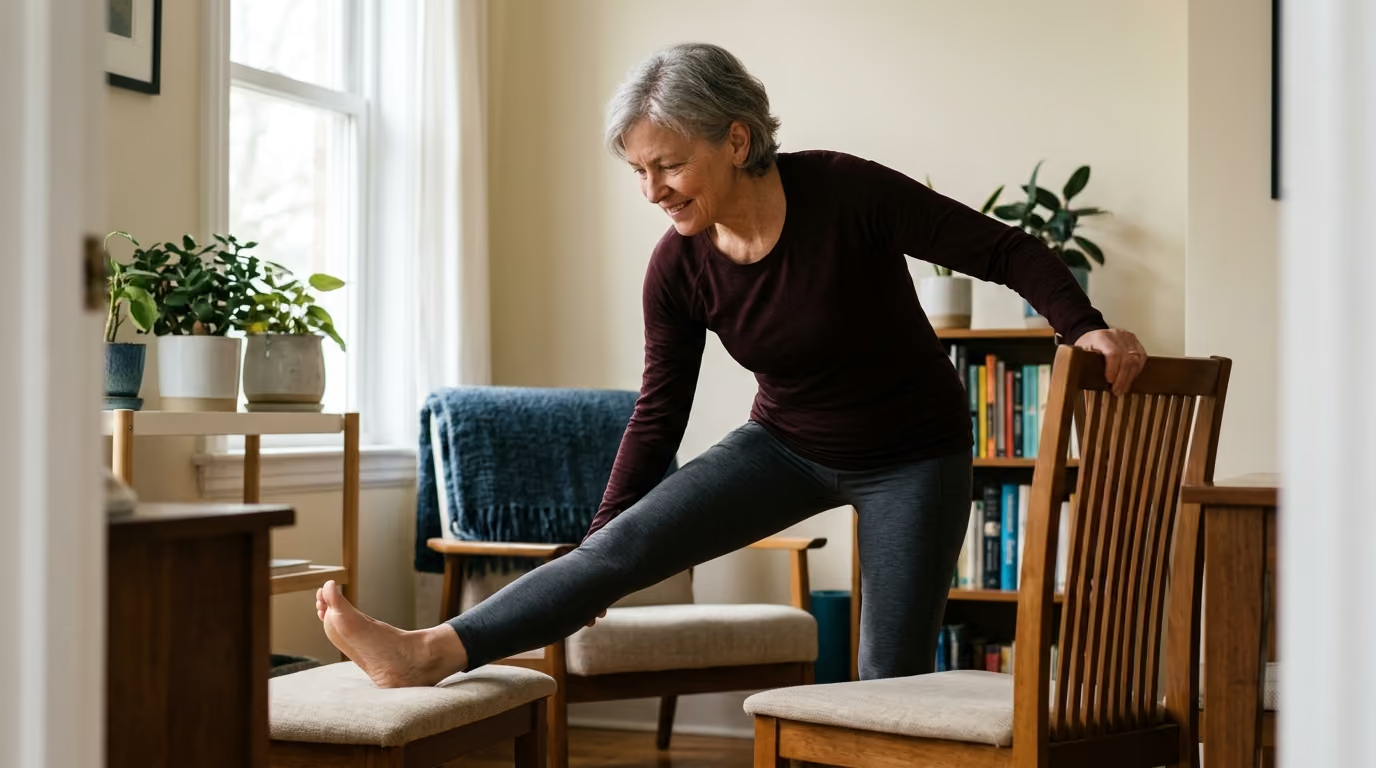
Passive flexibility measures how far an external force can push a relaxed joint through a range of motion. Mobility, by contrast, is the active range of motion you can reach, control, and load using your own muscular effort. A person may possess excessive passive hamstring flexibility while lying on an examination table, yet lack the hip control and strength needed to step down safely from a high ledge.
A systematic review published in Topics in Geriatric Rehabilitation evaluated flexibility training in older adults. The researchers found that while passive stretching improved measured range of motion, evidence that stretching alone enhanced daily functional capacity remained inconsistent. Range without control does not reliably translate into functional performance.
To build meaningful physical capability, movement capacity can be organized into six interacting layers:
When you experience movement restrictions, the issue is rarely a simple tight muscle. A restricted squat, for example, may stem from limited ankle dorsiflexion, inadequate hip flexion control, insufficient quad strength, or poor pelvic stability. Approaching your body through these six layers prevents wasted effort on passive stretching and directs attention toward building active capacity.
Research published in Sports Medicine examined the comparative effects of strength training and stretching on range of motion. The meta-analysis demonstrated that resistance training through full ranges of motion produces improvements in joint range that are statistically indistinguishable from traditional stretching routines. When you strengthen a muscle at its end range, you signal to the central nervous system that the position is safe, stable, and usable.
Building this control directly supports our broader library of dedicated strength and physical performance resources. True mobility bridges the gap between pure strength and fluid movement, allowing you to express your physical capacity safely in any environment.
Physical capability does not deteriorate solely due to chronological aging. A substantial portion of physical decline stems from progressive disuse, reduced movement variability, and the loss of neuromuscular strength. When an individual stops moving joints through full ranges, the central nervous system downregulates access to those positions to protect unconditioned tissues.
Clinical research demonstrates measurable annual declines in key physical performance metrics among aging populations. Studies show that without targeted intervention, individuals experience annual performance reductions of roughly 1.2% in gait speed, 2.1% in Timed Up-and-Go duration, and between 2.2% and 3.0% in knee extension and flexion moments. These subtle decrements accumulate over decades, eventually eroding the physical reserve required for strenuous outdoor pursuits and basic independence.
Functional reserve is the critical gap between your maximum physical capacity and the energy required for daily activities. An adult with low reserve operates near their maximum physical threshold simply climbing a flight of stairs. Conversely, an adult with substantial reserve negotiates stairs, carries heavy gear, and absorbs unexpected slips with minimal systemic fatigue.
Falls and balance failures are mobility system breakdowns rather than simple accidents. A fall typically involves multiple failing components, including reduced foot clearance, diminished reactive balance, weak eccentric hip control, and slowed neuromuscular response times. Research published in The BMJ on clinical fall prevention emphasizes that effective mitigation requires addressing lower-limb strength, gait dynamics, and environmental hazards rather than focusing on flexibility alone.
Ankle function represents an early biological indicator of movement decline. Research indicates that reductions in ankle range of motion and plantarflexor power begin as early as middle age, altering gait mechanics and placing greater stress on the knees and hips. Preserving robust ankle mobility and calf capacity early in life protects the entire lower-limb kinetic chain from compensatory breakdown.
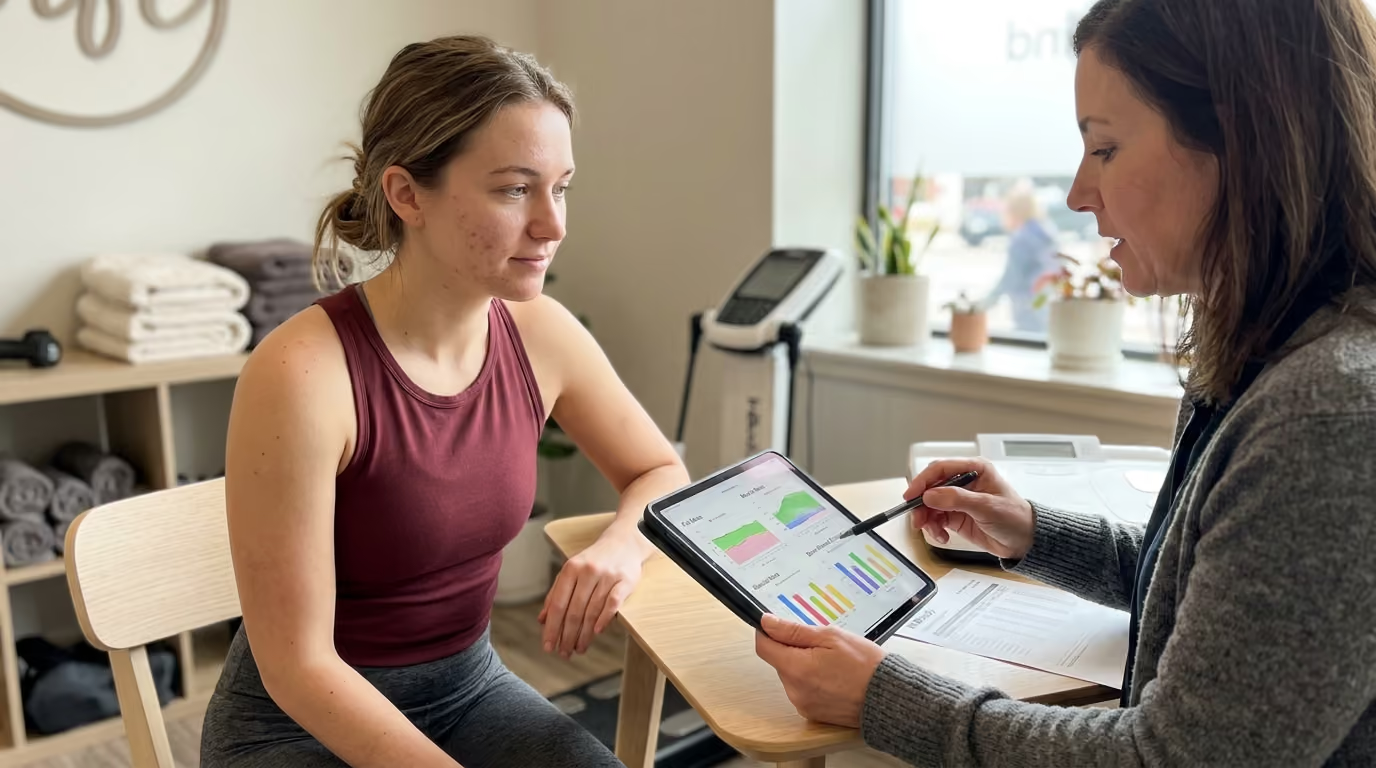
Objective self-assessment allows you to establish a baseline, identify asymmetrical restrictions, and track physical progress without expensive diagnostic equipment. Rather than chasing arbitrary flexibility numbers, baseline testing should measure how your joints behave during realistic physical tasks.
You can evaluate your movement capacity using four standardized, validated functional screens alongside targeted joint assessments:
The Timed Up-and-Go assessment evaluates functional mobility, dynamic balance, and transitional strength. Begin seated in a standard, armless chair. Stand up without pushing off your thighs, walk three meters (approximately ten feet) at a comfortable pace, turn around, return to the chair, and sit down with control.
Clinical data from MedlinePlus and the Centers for Disease Control and Prevention indicate that completing the test in 12 seconds or more correlates with an elevated risk of balance loss. Beyond the total time, observe your movement quality. Note whether you hesitate upon standing, shorten your stride during turns, or drop heavily into the chair rather than lowering yourself under control.
This test evaluates lower-body muscular endurance and dynamic hip control. Sit in a standard dining chair with your feet flat on the floor and arms crossed across your chest. Rise to a full standing position and return to a complete sit as many times as possible within 30 seconds.
Healthy adults over 40 should aim for 14 or more smooth, unassisted repetitions. Pay close attention to knee alignment and foot stability throughout the test. Your knees should track cleanly over your second toes without collapsing inward, and your heels should remain grounded.
Balance is a neuromuscular skill that declines rapidly without deliberate practice. Perform this test barefoot near a wall or sturdy counter for safety, progressing through four distinct foot positions:
Inability to hold the tandem or single-leg stance without touching support indicates reduced reactive balance and compromised lower-limb stability.
Gait speed is widely recognized in longevity research as a vital sign of biological function. Measure a flat, unobstructed 10-meter walkway. Record the time it takes to walk the distance at your normal everyday pace, then repeat the test walking as briskly as possible without running.
A normal walking speed exceeding 1.2 meters per second reflects healthy cardiopulmonary function, lower-limb power, and neuromuscular coordination. Significant slowing over time often precedes joint stiffness and reduced exercise tolerance.
Supplement functional tests with simple qualitative screens for major joint complexes:
These practical screens lay the groundwork for building sustainable longevity and healthy lifestyle strategies. Retest these markers every eight weeks under identical conditions to ensure your movement practice delivers measurable physical gains.
The human body operates as an integrated kinetic chain rather than a collection of isolated joints. A restriction in one region forces adjacent joints to compensate by providing motion they were not anatomically designed to handle. Developing regional joint capacity protects neighboring structures from chronic overload.
The hip is a multi-axial ball-and-socket joint designed for broad ranges of motion in all planes. It requires robust flexion to squat, deep extension to sprint and walk efficiently, and substantial internal and external rotation to change direction. When hip internal rotation is lost, the lumbar spine and knee joints are forced to absorb excessive rotational stress during activities like golf, tennis, and trail running.
To maintain hip longevity, you must train both ends of the rotational spectrum. Practicing 90/90 hip transitions, controlled hip airplanes, and deep split squats ensures that the joint capsule remains spacious while surrounding muscles learn to produce force at deep angles.
Your feet and ankles form the base of support for every terrestrial movement. The ankle complex must provide sufficient dorsiflexion to allow the knee to travel forward during stair descent and downhill hiking. It also requires substantial plantarflexor strength to propel your body forward and absorb landing impacts.
Limited ankle dorsiflexion causes the foot to collapse into excessive pronation, twisting the tibia and placing shearing forces on the patellar tendon and hip. Regularly training loaded calf raises, deep knee-over-toe lunges, and barefoot balance exercises restores foot dome integrity and preserves lower-leg power.
The thoracic spine is built for rotation, flexion, and extension, while the lumbar spine is optimized for stability. Modern habits of prolonged sitting and screen use often freeze the thoracic spine into chronic flexion. When the upper back loses rotational capacity, the lower back and shoulder joints compensate by over-rotating and over-extending under load.
Restoring thoracic extension and rotational freedom permits effortless overhead reaching and athletic twisting without compromising spinal health. Quadruped thoracic openers, side-lying rotations, and deep diaphragmatic breathing drills expand ribcage compliance and reduce neck strain.
The glenohumeral joint offers exceptional movement freedom at the expense of inherent bony stability. Safe overhead mechanics depend heavily on upward rotation and retraction of the scapula. If your shoulder blade cannot glide freely across the ribcage, reaching overhead results in subacromial pinching and rotator cuff irritation.
Developing pain-resilient shoulders requires integrating rotator cuff control with upper-back extension. Drills like wall slides, light kettlebell carries, and landmine presses build dependable shoulder strength without placing the joint into vulnerable, uncontrolled positions.
Lasting improvements in movement capacity require structured progression. Random stretching routines yield fleeting sensations of relief without changing long-term joint function. Applying six evidence-based principles ensures that your time investment produces measurable, durable physical capacity.
Passive stretching temporarily desensitizes local nerve endings, allowing you to sink deeper into a range for a few minutes. However, unless you actively recruit muscles within that newly accessed position, your nervous system will quickly tighten the tissue again upon standing. Always follow passive tissue work with active muscular contractions, such as end-range isometric holds and slow eccentric transitions.
Strength is joint-specific. Gaining ten degrees of hip flexion is only beneficial if your hip flexors and core musculature can produce force within those ten degrees. Incorporate loaded movements that challenge the muscle at its longest length, such as full-depth goblet squats, Romanian deadlifts, and deficit split squats. Research demonstrates that loaded eccentrics stimulate sarcomerogenesis, the biological addition of muscle units in series, creating permanent functional length.
Avoid simultaneously increasing depth, load, speed, and volume within a single training cycle. If you are learning to control a deeper split squat, maintain a light load and slow tempo. Once the range is comfortable, add external resistance before introducing explosive speeds or unstable surfaces. This measured progression allows connective tissues time to remodel without inflammatory flare-ups.
Predictable balance involves maintaining posture during planned movements, such as single-leg deadlifts or stationary lunges. Reactive balance requires correcting your center of mass after unexpected perturbations, such as catching your balance after stumbling on loose gravel. An effective mobility program combines deliberate, slow-tempo strength drills with dynamic stepping, lateral hops, and multi-directional balance catches.
Recent systematic reviews highlight the exceptional effectiveness of multimodal strength, balance, and perturbation training. Methods such as Tai Ji Quan and the Otago Exercise Program demonstrate substantial real-world reductions in balance loss by training the nervous system to execute rapid, subconscious stepping corrections.
Joint tissues thrive on regular, progressive mechanical load. Tendons and articular cartilage rely on cyclical compression and tension to circulate synovial fluid and stimulate cellular repair. Avoiding joint movement out of fear accelerates tissue degeneration and heightens nervous system sensitivity. Graded exposure gradually increases training volume, allowing biological structures to adapt smoothly over time.
Movement drills should always serve a tangible real-world purpose. Rather than performing abstract joint circles in isolation, connect your exercises to the physical demands of your active life. If your goal is multi-day mountain trekking, your routine must prioritize loaded ankle dorsiflexion, single-leg step-downs, and rotational trunk control under backpack loads.
These principles integrate directly with comprehensive athletic performance and fitness conditioning frameworks, ensuring that your mobility work actively enhances your overall strength, speed, and endurance.
You do not need hours of daily stretching to maintain exceptional movement capacity. A focused, 8-to-10-minute routine executed consistently delivers superior long-term results compared to sporadic marathon sessions. The following field-tested routines are structured for effortless daily implementation.
Perform this sequence daily upon waking or prior to training to lubricate joints and awaken neural pathways:
Integrate this loaded movement sequence two to three times per week alongside your general physical activity:
This comprehensive session strengthens the musculoskeletal system across extended positions, reinforcing joint stability under demanding real-world conditions.
Demanding travel schedules, long-haul flights, and mountain adventures place severe stress on your movement system. Prolonged sitting in confined aircraft cabins dehydrates spinal discs, tightens hip flexors, and diminishes gluteal neural drive. Transitioning immediately from hours of immobility into carrying heavy luggage, climbing steep terminal stairs, or hiking alpine paths creates prime conditions for acute joint strain.
After a grueling thirty hour transit to Tokyo, I realized my old strategy of just powering through was no longer working. I felt foggy for three days, and my hips and lower back were locked up from prolonged sitting. I started digging into circadian biology and joint preparation, realizing that light exposure, movement breaks, and active hip decompression completely altered my physical state. Now, I never board a long haul flight without a precise schedule for movement, hydration, and active recovery.
For a broader perspective on travel readiness, our travel and human performance guides outline comprehensive protocols for managing international travel stress and physical readiness.
To protect your body across long-distance journeys, deploy the following travel-specific preparation and recovery routine:
For mountain and wilderness trekking, joint demands shift dramatically toward eccentric braking strength and multi-directional ankle stability. Descending a steep 3,000-foot alpine trail requires the quadriceps, patellar tendons, and calf complex to absorb forces exceeding three to four times your body weight with every step.
Preparing for these environments requires targeted step-downs from a raised box, lateral band walks, and loaded uphill treadmill walks with a weighted pack. Building these movement capacities ensures you arrive at remote destinations capable of tackling challenging terrain without physical limitation.
Pain is an intricate neurological output designed to protect the body, but it is not a direct measurement of tissue damage. The International Association for the Study of Pain defines nociplastic pain as pain arising from altered nociception despite no clear evidence of actual or threatened tissue damage. Understanding this distinction prevents unnecessary fear of movement and empowers you to build durable joint tolerance safely.
Clinical practice guidelines from the National Institute for Health and Care Excellence (NICE) for persistent musculoskeletal discomfort recommend remaining physically active and utilizing structured exercise programs. These guidelines emphasize strengthening, movement instruction, and aerobic activity over passive rest and fear-based avoidance. Complete rest often sensitizes the nervous system and weakens tissues, prolonging recovery times.
To safely expand your movement capacity when managing familiar aches, utilize the following clinical monitoring framework:
Tissue adaptation requires patient, graded exposure. When rehabilitating a sensitive joint, find an entry-level movement variation that you can perform completely pain-free, then incrementally add range, volume, or load over weeks. Pair this movement progression with structured recovery and sleep practices to give connective tissues the physiological rest required for deep cellular remodeling.
Medical evaluation by a qualified physician or physical therapist is essential if you experience severe, unexplained joint swelling, persistent numbness or tingling radiating down a limb, pain following major traumatic impact, or progressive muscle weakness.
The broader scientific and medical consensus regarding physical longevity is clear: maintaining muscle strength, joint mobility, and dynamic balance is fundamental to lifelong capability and functional independence.
The World Health Organization (WHO) physical activity guidelines provide clear, evidence-based recommendations for older adults and individuals seeking lifelong health:
Leading clinical guidelines on fall prevention consistently emphasize that optimal outcomes require multifaceted strategies. Effective protocols integrate progressive resistance training, gait retraining, reactive balance challenges, vision optimization, environmental modifications, and regular medication reviews.
Flexibility training alone does not provide sufficient biological stimulus to safeguard functional independence. Global health authorities agree that resistance training performed through full, functional ranges of motion delivers superior adaptations by building bone mineral density, strengthening tendons, increasing muscle mass, and refining neurological motor control simultaneously.
While yoga and Pilates offer valuable physical benefits, traditional yoga often emphasizes static flexibility and end-range holding without external load. Pilates provides excellent core stability and controlled movement patterns.
A comprehensive longevity mobility framework builds upon these disciplines by adding heavy resistance through full joint ranges, high-velocity reactive balance training, and sport-specific loading. This combination ensures your tissues can tolerate real-world physical impacts and unpredictable external forces.
Yes. Articular cartilage is an avascular tissue that relies on cyclical joint movement and fluid compression to receive vital nutrients and clear metabolic waste. Gentle, progressive movement through pain-free ranges stimulates synovial fluid production, lubricates the joint capsule, and strengthens the surrounding musculature to offload the joint surface.
Consult your physician to establish safe starting baselines, and utilize non-impact movements like supported squats, cycling, and aquatic resistance exercises during acute flare-ups.
Neural adaptations and improved movement confidence occur within two to three weeks of consistent daily practice. True structural remodeling of connective tissues, including collagen realignment and muscle fiber elongation, requires eight to twelve weeks of progressive training. Consistency is paramount; five to ten minutes of daily active joint work creates far greater structural adaptation than one long session performed once a week.
Use dynamic, active mobility drills before training as part of your warm-up to lubricate joint capsules, activate the nervous system, and prepare tissues for loaded work. Reserve deeper loaded range-of-motion exercises, such as deficit lunges and full-range hinges, for your main workout. Light positional breathing and passive tissue relaxation drills are most effective immediately after training to downregulate the nervous system and promote systemic recovery.
Stay connected for research and practical guidance on longevity, strength, recovery, energy and active living. New ideas to help you stay capable, curious and ready for more.


Explore practical guidance on strength, recovery, energy, travel and longevity for a life that stays active.
explore the Blog