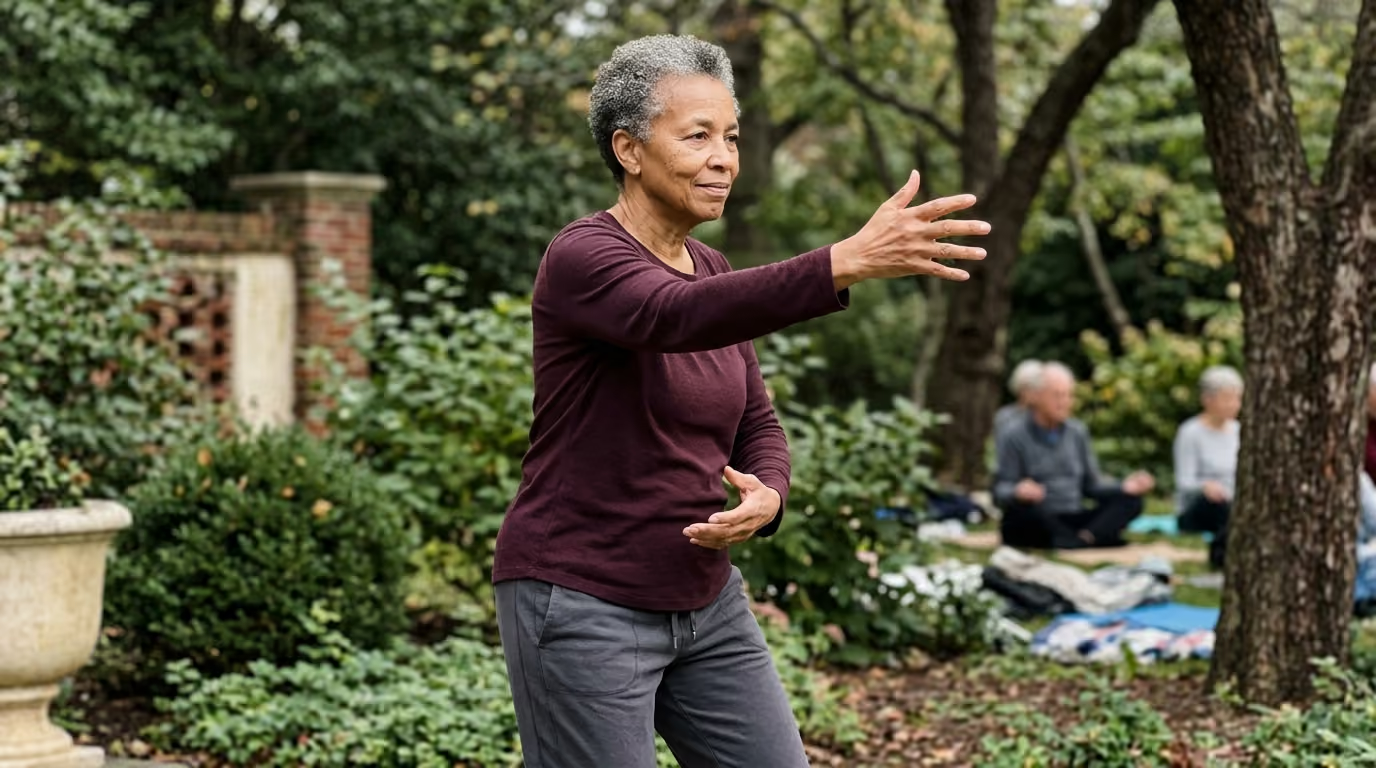

Four proven mind-body practices train your nervous system, physical balance, and mental sharpness to maintain long-term functional independence.





You have likely searched online for the best way to maintain mental focus, steady your balance, or calm your nervous system as the years advance. The internet often responds with sweeping promises, vague spiritual advice, or extreme wellness protocols that do not fit a demanding life. You need clear, evidence-based answers on which practices work, what they actually train, and how to use them efficiently. This guide provides a definitive roadmap to meditation, yoga, tai chi, and breathwork tailored specifically for active adults.
Mind-body practices represent an umbrella of disciplines that combine mental attention, conscious respiration, and physical movement. Rather than viewing these traditions as interchangeable wellness hobbies, it is helpful to categorize them by the exact physiological systems they stimulate. Different modalities produce entirely different adaptations in the human body and brain.
To understand where to invest your time, consider what each practice specifically trains:
Focused-attention meditation, mindfulness meditation, and mantra practices primarily train attentional control. These practices build metacognition, concentration, and the capacity to notice mental distraction without immediately reacting. They are best applied to manage cognitive fatigue and maintain mental sharpness during complex daily decisions.
Mindfulness techniques, compassion practices, and structured breathing exercises target the autonomic nervous system. These disciplines help regulate emotional reactivity, reduce daily anxiety, and improve coping mechanisms under pressure. They teach practitioners to observe uncomfortable sensations without adopting a fight-or-flight response.
Body scans, therapeutic yoga, and qigong develop interoception, which is the brain's ability to sense internal bodily signals. Practitioners become far more adept at detecting subtle muscle tension, early joint fatigue, and shifts in balance. This heightened internal awareness allows active adults to modify physical activity before an actual injury occurs.
Tai chi, qigong, and standing balance yoga directly challenge proprioceptive feedback loops. These movements emphasize controlled weight transfers, narrow base stances, and rotational control of the torso. They provide the most reliable protection against unexpected stumbles on uneven terrain or slick surfaces.
Vinyasa, Hatha, and restorative yoga train joint range of motion, isometric muscular endurance, and posture. These practices load connective tissues across functional angles that traditional linear gym machines often miss. When performed with proper mechanics, they preserve functional independence and upper-body loading capacity.
Slow resonant breathing, restorative yoga, and meditation stimulate the parasympathetic nervous system. These modalities lower resting heart rate, improve sleep onset, and reduce perception of chronic discomfort. They serve as essential active recovery protocols following demanding athletic days or long travel itineraries.
For those focusing on healthy aging and daily vitality, selecting the correct modality begins with identifying your primary physical or cognitive bottleneck.
The benefits of mind-body practices are grounded in fundamental neurobiology and biomechanics. As the body ages, communication between the brain, peripheral nerves, and skeletal muscles undergoes gradual shifts. Mind-body disciplines serve as targeted neurological drills that preserve and restore these essential pathways.
The autonomic nervous system alternates between sympathetic activation (fight-or-flight) and parasympathetic recovery (rest-and-digest). Chronic psychological stress and age-related changes can keep the sympathetic branch persistently elevated. Controlled, slow breathing exercises stimulate the vagus nerve, which immediately slows heart rate and lowers blood pressure. This shift improves heart rate variability, which is a recognized marker of cardiovascular resilience and autonomic flexibility.
Neuroimaging research demonstrates that regular meditation strengthens the prefrontal cortex and down-regulates the default mode network. The default mode network is the brain circuit responsible for mind-wandering, rumination, and past-or-future anxiety. By intentionally redirecting attention to the breath or a sensory anchor, practitioners reinforce executive control networks. This repetitive mental action helps offset age-related declines in processing speed and sustained concentration.
Proprioception relies on specialized mechanoreceptors located in muscles, tendons, and joint capsules. These receptors send instantaneous positional data to the cerebellum to maintain upright posture. As physical activity becomes more repetitive or sedentary, this sensory feedback loop can become sluggish. Slow, multi-planar movements like tai chi continuously recalibrate these sensory receptors, dramatically improving dynamic balance during movement.
Joint capsules, ligaments, and fascial sheaths require regular movement through complete ranges of motion to maintain hydration and elasticity. Sedentary periods cause collagen fibers to cross-link, creating joint stiffness and reduced mobility. Yoga and meditative movement load tissues through multiple planes of motion, promoting synovial fluid circulation and preserving functional movement capacity.
Choosing the right mind-body discipline requires understanding the mechanical and mental demands of each format. Each practice possesses unique advantages, physical requirements, and potential risks.
Meditation involves deliberately directing attention toward an object, such as the breath, sound, physical sensations, or present experience. In focused-attention practice, you repeatedly notice distraction and guide your focus back to the chosen anchor. In open-monitoring practice, you observe thoughts and sensations pass without judgment or attachment.
Mindfulness is the broader quality of awareness cultivated through these exercises, and it can be applied during walking, eating, or quiet conversation. The objective is never to stop thinking entirely, which is an impossible physiological task. The goal is learning to disengage from automatic mental reactions and observe events clearly.
Meditation requires zero specialized equipment and can be performed in any quiet setting. The primary hurdle is psychological rather than physical. Sitting in silence can initially reveal high levels of internal mental agitation.
Yoga represents a broad family of physical postures, breathing protocols, and focused relaxation methods. The physiological stimulus varies dramatically depending on the specific style you select.
Hatha and Vinyasa styles emphasize standing balance, core stability, and upper-body weight-bearing through planks and downward dogs. These active styles provide moderate strength and mobility benefits. However, they demand adequate wrist extension, shoulder flexion, and knee stability.
Restorative and Yin yoga focus on passive, long-held stretches supported by bolsters, blocks, and straps. These formats avoid cardiovascular strain and focus on parasympathetic down-regulation and deep connective tissue release.
For older adults, the primary consideration is floor-transfer capability and joint tolerance. A standing or chair-assisted class offers an exceptional workout for balance and posture without requiring rapid transitions onto and off the floor.
Tai chi is a traditional Chinese martial art characterized by slow, fluid, continuous movements coordinated with diaphragmatic breathing. Practitioners move continuously through sequence patterns while maintaining an upright posture and a low center of gravity.
Tai chi is uniquely effective for healthy aging because it emphasizes dynamic weight shifts from one leg to the other. You continuously spend brief moments balancing on a single leg or moving through a narrow base of support. This trains rotational torso control and ankle stability in ways that linear walking cannot duplicate.
The learning curve for tai chi involves memorizing movement forms and mastering subtle postural adjustments. However, the physical impact is exceptionally low, making it accessible for individuals with osteoarthritis or joint replacements.
Qigong incorporates slow repetitive movements, focused intention, and breathing techniques. Unlike the long choreographies of tai chi, qigong generally relies on repeating single, isolated movement patterns.
This repetitive structure lowers the cognitive learning curve, allowing practitioners to focus entirely on breath mechanics and muscle relaxation. Qigong is particularly well-suited for individuals recovering from illness, managing chronic fatigue, or dealing with significant joint discomfort. It restores movement confidence without overloading recovering tissues.
Mind-body practices deliver their greatest value when they translate into superior performance during outdoor pursuits and everyday activities. A disciplined practice enhances the physical and mental capabilities required for an active lifestyle.
Hiking rocky mountain paths or running variable trails requires continuous visual scanning and rapid micro-adjustments in the ankles and hips. Tai chi directly trains this multi-directional stability and single-leg balance.
When you lose footing on a loose stone, your nervous system must execute a split-second corrective movement. The neuromuscular pathways sharpened during slow, deliberate weight transfers allow you to recover balance without twisting an ankle.
Practicing regular balance work is essential for sustaining advanced physical performance and joint strength across a lifetime of outdoor adventure.
Alpine skiing places high demands on eccentric leg strength, spinal alignment, and rotational control of the hips. Standing yoga poses, such as warrior variations and chair poses, build isometric endurance in the quadriceps and gluteal muscles.
More importantly, mindful movement trains you to keep your chest facing forward while your lower body turns beneath you. This rotational independence between the pelvis and the thoracic spine reduces torque on the lumbar spine and knee joints.
The mental component of yoga also cultivates calm focus when navigating challenging terrain or poor visibility. You learn to maintain rhythmic breathing even when physical fatigue and adrenaline begin to rise.
Demanding professional responsibilities often produce mental exhaustion, shallow chest breathing, and forward-head posture. A brief mid-day meditation session interrupts this cycle of mental fatigue.
Taking five minutes to focus on slow exhalations down-regulates sympathetic nervous system arousal and clears mental working memory. This brief pause restores executive attention, allowing you to approach complex negotiations with greater patience and clarity.
Integrating targeted practices during demanding days helps preserve sustainable focus and mental drive without relying on excessive caffeine.
After a long day of cycling, tennis, or mountain climbing, muscles and connective tissues often tighten significantly. Performing ten minutes of restorative yoga or slow qigong before bed accelerates physical recovery.
Gentle, supported stretches promote circulation to recovering tissues and quiet the nervous system. This intentional down-regulation signals the brain that the physical threat is over, preparing the body for deep sleep.
Coupling these routines with dedicated regeneration and sleep protocols ensures you wake up ready for another day of movement.
Long-distance travel subjects the human body to prolonged immobility, disrupted circadian rhythms, and elevated stress levels. Mind-body techniques provide portable, effective tools for managing these travel-induced stressors.
Long hours spent in airplane seats compress the lumbar spine, tighten the hip flexors, and reduce venous blood return from the lower legs. You do not need a yoga mat to mitigate these effects.
While seated, you can perform subtle pelvic tilts, seated spinal twists, and ankle circles synchronized with slow breathing. Periodically engaging in mindful seated posture resets spinal alignment and relieves pressure on intervertebral discs.
During long flights, focused breath counting also serves as an effective antidote to travel fatigue and crowded cabin environments.
Crossing multiple time zones disrupts the central circadian clock in the hypothalamus. Mind-body movement combined with natural morning sunlight accelerates circadian realignment.
Upon arrival at your destination, perform ten minutes of dynamic yoga stretches or tai chi in an outdoor setting. The combination of retinal light exposure, conscious breathing, and muscle activation sends strong signals to the brain that it is time to be alert.
In the evening, switch to slow body scans and extended exhalations to encourage melatonin production and support sleep onset in unfamiliar hotel rooms. Using these active strategies makes international travel and remote expeditions far less physically draining.
Traveling to high-altitude mountain environments often causes hyperventilation, interrupted sleep, and elevated resting heart rates. Diaphragmatic breathing practices train practitioners to avoid inefficient, shallow chest breathing.
Practicing slow, controlled nasal breathing improves oxygen extraction efficiency in the lungs. It also prevents the excessive loss of carbon dioxide, helping maintain blood acid-base balance and calming altitude-related anxiety.
The popularity of wellness culture has generated numerous myths regarding mind-body practices. Navigating these disciplines effectively requires distinguishing validated physiological outcomes from commercial exaggeration.
A frequent point of frustration for beginners is the belief that meditation requires eliminating all thoughts. When thoughts inevitably arise, newcomers often assume they have failed and abandon the practice.
The true mechanism of meditation is noticing that the mind has drifted and calmly returning attention to your chosen anchor. Every time you recognize distraction without frustration, you perform the mental equivalent of a bicep curl for your attention networks. A wandering mind is not a failure; it is the exact training stimulus required.
Because tai chi and gentle yoga involve low-impact movements, many assume they carry zero risk of injury. However, balance challenges, deep spinal twists, and floor transfers can cause sprains, strains, or falls if executed without proper progression.
Emergency department data indicates that yoga-related injuries occur at a higher rate in adults aged 65 and older compared to younger practitioners. Common issues include hamstring strains, wrist sprains, and exacerbation of lumbar disc issues. Practices must always be scaled to match individual joint anatomy and physical capacity.
Tai chi provides outstanding balance and mobility benefits, but it does not supply a complete fitness stimulus on its own. It does not generate sufficient resistance to maximize bone mineral density or muscle hypertrophy in the upper body.
Tai chi should be integrated into a balanced regimen that includes dedicated resistance training and moderate-to-vigorous aerobic activity. It serves as an exceptional complement to, rather than a total replacement for, traditional strength and conditioning.
While relaxation practices benefit most people, they are not universally calming for every nervous system. Some individuals experience paradoxical anxiety, intrusive thoughts, or lightheadedness when instructed to sit quietly and focus internally.
Those with past trauma or panic tendencies may find seated meditation uncomfortable. In such cases, mindful walking, active tai chi, or external focus drills provide a safer, more grounding entry point.
Some marketing materials suggest that meditation or tai chi can single-handedly prevent or reverse neurodegenerative diseases. Current scientific consensus does not support such absolute claims.
Clinical trials show that mind-body interventions can improve executive function, working memory, and daily functioning in older adults. They are valuable supportive tools for brain health, but they must be integrated with nutrition, sleep, cardiovascular exercise, and standard medical care.
You do not need to spend hours each day in meditation or complete grueling yoga classes to gain measurable adaptations. Sustainable progress is built upon brief, consistent sessions that fit naturally into your existing weekly routine.
The easiest way to build a lifelong habit is to eliminate friction. Begin with a dose so manageable that you can maintain it even on your busiest days:
Once this baseline becomes second nature, you can expand session lengths based on your schedule and personal interest.
To advance your practice safely and effectively, follow a clear developmental sequence:
Public health guidelines from the Centers for Disease Control and Prevention recommend that adults combine aerobic, muscle-strengthening, and balance activities each week. A balanced weekly structure might look like this:
This schedule delivers robust cardiovascular, musculoskeletal, and neurological conditioning without creating excessive training fatigue.
The scientific literature surrounding mind-body interventions has grown substantially over the last two decades. Understanding the strengths and limits of this research helps set realistic expectations for your personal practice.
Rigorous systematic reviews and clinical trials have established several consistent benefits across aging populations:
When evaluating new health claims regarding mind-body practices, apply five critical questions:
Studies that compare an active practice to a completely inactive control group will almost always show positive results. The more meaningful question is whether the practice outperforms another active intervention, such as standard walking or basic physical therapy.
Look closely at the intervention parameters. A protocol involving 60 minutes of daily instruction from a master teacher will yield different results than using an automated smartphone app for five minutes twice a week.
Distinguish between subjective questionnaires and objective physiological markers. A study showing improved self-reported balance confidence is promising, but objective force-plate balance testing or actual fall tracking provides far more reliable data.
Results observed in frail, hospitalized patients cannot be directly applied to healthy, active 60-year-olds. Ensure the study population matches your current functional capacity and health status.
Many studies assess outcomes immediately upon the conclusion of a structured class. Long-term health depends on whether those physical and mental adaptations persist months or years down the road.
Reviewing the broader library of practical health and performance resources can help you navigate longevity claims with clarity and confidence.
Building a reliable mind-body habit does not require a dramatic lifestyle overhaul. Focus on executing small, precise actions over the next seven days to establish your foundation.
Identify the single physical or mental quality you most want to address right now. If your main concern is stability on uneven ground, select tai chi. If you need joint mobility and physical restoration, choose yoga. If your primary bottleneck is mental focus or daily stress, start with breath-focused meditation.
Attach your new five-minute practice to an established daily habit. Excellent anchors include right after your morning coffee, immediately following your afternoon workout, or as soon as you sit in bed before turning off the lights. Linking a new behavior to an existing anchor eliminates the need for willpower.
Create an uncluttered, accessible corner in your home for practice. Keep a firm chair, a yoga mat, or a supportive cushion readily available so there is zero setup friction when your anchor time arrives.
If you choose a movement-based discipline like yoga or tai chi, assess your joints honestly. If you have knee, hip, or back limitations, locate an instructor certified in chair adaptations or therapeutic modifications. Never force your body into painful joint ranges.
For the first 30 days, track only one metric: did you complete your five minutes of practice? Do not worry about achieving profound states of mental calm or mastering complex movements. Establishing the daily habit of showing up is the only goal that matters.
For more insights on training, recovery, and active longevity, consult the ongoing research updates on our healthy aging editorial blog.
Stay connected for research and practical guidance on longevity, strength, recovery, energy and active living. New ideas to help you stay capable, curious and ready for more.


Explore practical guidance on strength, recovery, energy, travel and longevity for a life that stays active.
explore the Blog