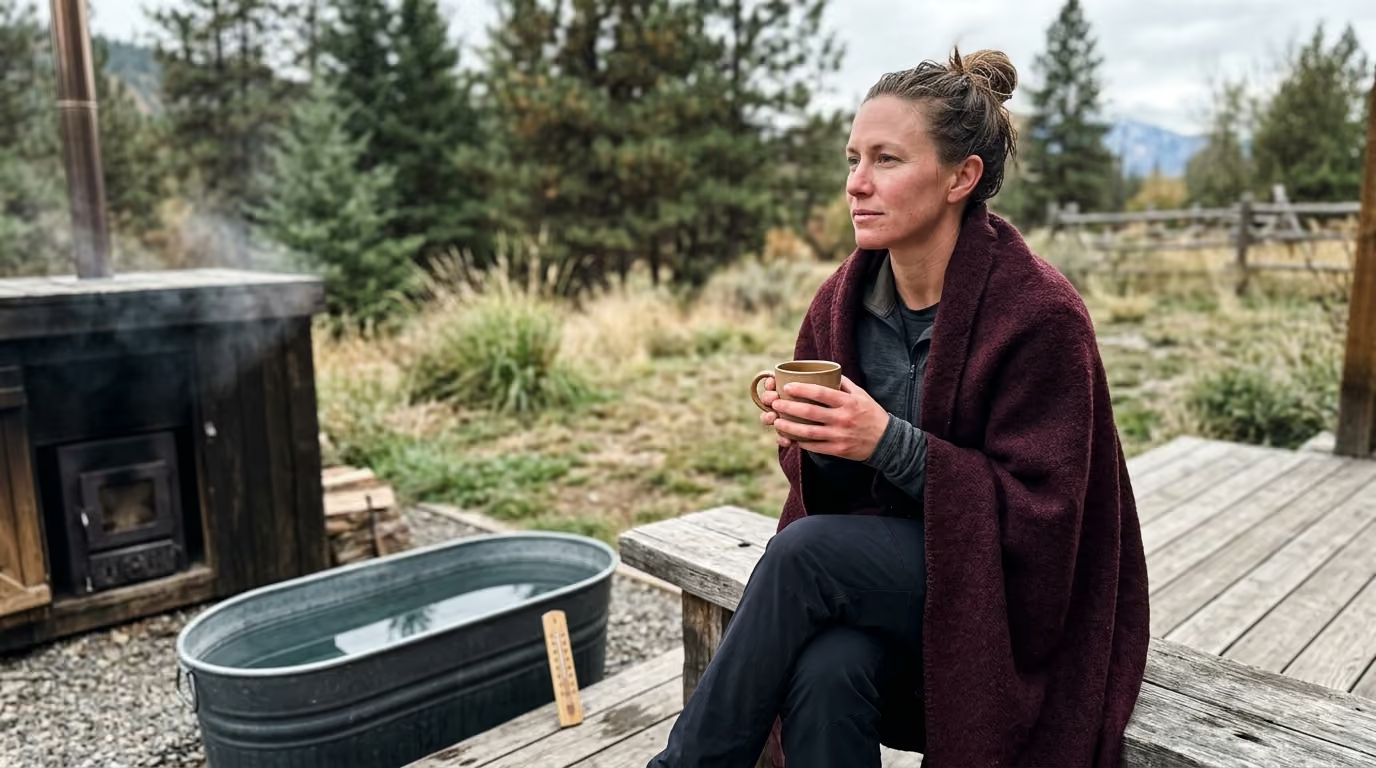

Two primary thermal therapies provide distinct physiological adaptations that help protect cellular structures and improve systemic blood vessel function over time.





You have likely searched for the exact number of minutes required in a sauna to protect your heart, or whether an ice bath can truly slow cellular aging. The internet offers extreme claims, from guaranteed lifespan extension to instant cellular rejuvenation.
The reality is more nuanced, grounded in cardiovascular physiology, cellular stress responses, and recovery dynamics. This guide provides a definitive assessment of the scientific literature surrounding thermal stress. It outlines what the evidence actually proves, where the limits lie, and how to apply these practices safely to maintain vitality across decades.
Passive heat exposure through traditional saunas carries compelling observational evidence for cardiovascular health and reduced mortality risk. Cold water immersion provides clear benefits for acute soreness, perceived recovery, and alertness, but lacks longitudinal data demonstrating extended lifespan. Meanwhile, contrast therapy serves primarily as a subjective restoration tool rather than a cellular longevity intervention.
Understanding these differences allows you to design a routine that supports your physical performance, cardiovascular capacity, and daily energy without unnecessary risk.
Thermal stress operates through the principle of hormesis. Hormesis occurs when a mild, transient environmental stressor stimulates adaptive biological pathways that leave the body more resilient. Extreme temperatures challenge the body to maintain a stable internal core temperature of roughly 37 degrees Celsius. To survive these shifts, the cardiovascular, endocrine, and nervous systems activate protective cascades.
Passive heat exposure increases core body temperature, triggering immediate cutaneous vasodilation. Blood vessels near the skin widen significantly to radiate heat away from the body. To compensate for this sudden expansion of the peripheral vascular bed, heart rate rises from resting levels to 100 or even 150 beats per minute. This response creates a cardiac output profile similar to moderate aerobic exercise.
As blood flows rapidly toward the skin surface, it generates laminar shear stress against the vascular lining. This mechanical force stimulates endothelial nitric oxide synthase, which increases nitric oxide bioavailability. Nitric oxide signals the smooth muscle cells surrounding arteries to relax, improving arterial compliance and reducing systemic vascular resistance.
Over time, regular exposure can improve flow-mediated dilation and arterial elasticity. However, sweating simultaneously removes significant plasma volume. If fluid is not replaced, stroke volume declines, creating potential lightheadedness, orthostatic hypotension, or fainting upon standing.
At the cellular level, hyperthermia stresses intracellular proteins, threatening to denature their delicate structural folds. In response, cells upregulate heat-shock proteins, particularly HSP70 and HSP90. These molecular chaperones bind to unfolded or misfolded polypeptides, preventing toxic protein aggregation and facilitating proper refolding.
Heat-shock proteins also assist in protein degradation through the ubiquitin-proteasome system when damaged proteins cannot be repaired. While these cellular mechanisms are vital for maintaining protein quality control, transient increases in circulating heat-shock proteins do not automatically translate into a documented slowing of human aging. They represent an acute defensive reaction to thermal insult rather than direct proof of extended lifespan.
Immersion in water below 15 degrees Celsius triggers an immediate, profound neuroendocrine reaction known as the cold-shock response. Water conducts heat away from the body roughly twenty-four times faster than air of the same temperature. Rapid cooling of peripheral thermoreceptors in the skin stimulates a massive surge of norepinephrine and epinephrine from the sympathetic nervous system and adrenal medulla.
This catecholamine release causes immediate peripheral vasoconstriction. Blood vessels in the extremities clamp down tightly to shunt warm blood toward vital core organs. The sudden increase in systemic vascular resistance raises both systolic and diastolic blood pressure.
Concurrently, the respiratory center in the brainstem initiates an involuntary gasp reflex followed by transient hyperventilation. Heart rate accelerates rapidly. If a person submerges their face or holds their breath, competing autonomic signals can occur. The sympathetic cold shock drives tachycardia while the parasympathetic dive reflex drives bradycardia, creating an autonomic conflict that can trigger cardiac arrhythmias in susceptible individuals.
Prolonged or repeated cold exposure activates non-shivering thermogenesis, primarily mediated by brown adipose tissue. Unlike white adipose tissue, which stores excess calories, brown adipocytes contain high densities of mitochondria rich in uncoupling protein 1. When stimulated by norepinephrine, uncoupling protein 1 uncouples the mitochondrial respiratory chain from ATP synthesis, releasing energy directly as heat.
Small clinical studies demonstrate that cold exposure can increase brown fat volume and improve whole-body glucose disposal and insulin sensitivity. However, these metabolic shifts do not guarantee real-world fat loss or disease prevention. Cold exposure frequently stimulates appetite, and the total daily caloric expenditure contributed by brown fat remains modest.
Evaluating thermal therapy requires distinguishing between acute physiological responses and long-term health outcomes. A practice that produces a surge in adrenaline or a flush of skin blood flow may feel invigorating, but clinical value depends on hard endpoints such as cardiovascular events, chronic disease incidence, and all-cause mortality.
The primary source of human longevity data regarding heat exposure comes from the Kuopio Ischemic Heart Disease Risk Factor Study. This prospective observational cohort followed 2,315 middle-aged men in eastern Finland over an average duration of 20.7 years. Researchers tracked the frequency and duration of traditional dry sauna bathing alongside cardiovascular health metrics.
The findings demonstrated a clear, graded dose-response relationship between sauna frequency and reduced risk of premature death:
Session length also mattered. Sessions lasting longer than 19 minutes were associated with significantly greater cardiovascular protection than sessions under 11 minutes.
While these statistics appear extraordinary, the study was observational and cannot prove direct causality. In Finland, sauna bathing is deeply embedded in social and cultural life. Frequent sauna users often possess higher socioeconomic status, greater health consciousness, more leisure time, lower occupational stress, and stronger social networks.
Statistical adjustments can control for known confounders like age, smoking, and baseline fitness, but unmeasured variables always remain. Furthermore, randomized controlled trials of sufficient duration to test mortality endpoints do not exist. Shorter randomized trials examining intermediate markers show mixed results: some demonstrate improved arterial stiffness and resting blood pressure, while broader systematic reviews find inconsistent effects across general cardiometabolic biomarkers.
The scientific foundation for cold-water immersion differs substantially from passive heat. There are no large, prospective cohort studies demonstrating that regular cold plunges reduce cardiovascular disease, prevent chronic illness, or extend human life. The popular claims that cold water strengthens the immune system or prevents metabolic decline rely almost entirely on small, short-term interventional trials or animal models.
Cold water immersion possesses robust evidence for two specific applications: acute reduction of perceived muscle soreness and rapid core temperature reduction in exertional heat illness. Beyond these acute uses, cold exposure must be evaluated as an invigorating, subjective practice rather than a proven tool for longevity. Engaging with evidence-based longevity practices requires clear separation between well-documented cohort data and speculative biological theories.
Applying thermal therapy requires structured protocols that prioritize physical safety, personal tolerance, and repeatable habits. Extreme durations and temperatures introduce unnecessary physiological strain without proportional benefits.
Traditional dry saunas operate between 75 and 90 degrees Celsius with low relative humidity, broken up by occasional water thrown over heated rocks. This format matches the conditions documented in the Finnish research cohorts.
Cold water immersion should focus on controlled respiration and gradual adaptation rather than extreme cold or prolonged endurance. Temperatures between 10 and 15 degrees Celsius are sufficient to induce physiological adaptations without triggering severe hypothermia risks.
Contrast water therapy alternates between warm and cool water immersion. It is frequently employed in athletic facilities to accelerate perceived recovery and ease joint stiffness after intense physical exertion.
Integrating thermal stress around physical training requires careful timing. The physiological adaptations driven by exercise can be either supported or blunted depending on when and how thermal exposure is applied.
The most critical conflict occurs between cold-water immersion and resistance exercise. Hypertrophy and strength gains depend on an initial inflammatory signaling cascade, downstream activation of the mechanistic target of rapamycin (mTOR) pathway, and muscle protein synthesis. Cold immersion immediately following resistance training causes profound vasoconstriction, reducing blood flow, nutrient delivery, and amino acid uptake in worked muscles.
Controlled clinical trials demonstrate that routine post-lifting cold-water immersion significantly blunts muscle fiber hypertrophy and long-term strength gains. A meta-analysis examining post-exercise cooling reported an overall negative effect size of -0.23 on muscular strength development.
If your primary objective is maintaining muscle mass, bone density, and functional force production, avoid cold plunges for at least four to six hours following resistance training. Reserve cold immersion for dedicated rest days or use it exclusively after endurance sessions where structural muscle growth is not the primary adaptation.
The relationship between cold water immersion and endurance training is far more favorable. Endurance adaptations rely heavily on mitochondrial biogenesis, capillarization, and metabolic efficiency, regulated in part by peroxisome proliferator-activated receptor gamma coactivator 1-alpha (PGC-1alpha). Cold exposure stimulates PGC-1alpha expression through adrenergic pathways without interfering with aerobic signaling.
Following long, demanding endurance sessions or competitive events, cold-water immersion reduces perceived muscle soreness and lowers core body temperature rapidly. This makes cold immersion particularly valuable during multi-day competitions, tournaments, or back-to-back training days where immediate performance readiness outweighs long-term muscular hypertrophy. Incorporating these strategies into structured recovery protocols preserves physical capability without compromising training quality.
Sauna bathing immediately following exercise adds a secondary cardiovascular and thermal load. In a healthy, well-acclimatized individual, post-exercise heat can amplify plasma volume expansion and stimulate cardiac remodeling. However, using a sauna when already dehydrated from a hard workout raises the risk of severe hypotension and syncope.
If you choose to use the sauna after training, reduce session duration, drink water containing electrolytes, and rest for 10 to 15 minutes before entering the heat. Never enter a sauna if you feel dizzy, exhausted, or significantly dehydrated after high-intensity exercise. Balancing heat with functional fitness and performance requires prioritizing hydration and recovery over arbitrary sweat volume.
Thermal exposure serves as an effective, non-pharmacological tool for managing the physical tolls of demanding travel, high-altitude trekking, and crossing multiple time zones. Environmental temperature shifts interact directly with human circadian biology and vascular tone.
The human circadian clock relies primarily on ocular light exposure, but core body temperature rhythm acts as a critical internal synchronizer. Under normal conditions, core temperature reaches its lowest point roughly two hours before habitual waking, rises steadily through the afternoon, and drops sharply before sleep onset. Strategic heat and cold application can help reset this internal thermal curve when adjusting to new destinations.
A morning cold shower or cold plunge stimulates immediate epinephrine release and elevates daytime alertness, signaling the biological clock that the active phase has begun. Conversely, taking an evening sauna or hot bath roughly 90 minutes before your target bedtime initiates peripheral vasodilation. When you exit the heat, rapid heat dissipation through the skin causes a drop in internal core temperature. This drop mimics the natural nocturnal temperature curve, promoting endogenous melatonin release and facilitating deep sleep architecture.
Long-haul flights involve prolonged seated immobility, low cabin humidity, and mild hypoxia, leaving travelers with peripheral fluid pooling, stiff joints, and systemic fatigue. After a grueling thirty hour transit to Tokyo, I realized my old strategy of just powering through was no longer working. I felt foggy for three days. I started digging into circadian biology and realized that timing my light exposure, hydration, and thermal shifts could completely alter my travel recovery.
In our experience, scheduling a moderate heat session followed by a brief cold rinse upon arrival restores peripheral circulation, reduces spinal compression, and eliminates transit-related muscle heaviness. Now, our team never manages long-haul travel without utilizing thermal routines alongside strict light exposure schedules. It makes the difference between losing the initial days of a trip to brain fog and hitting the ground fully capable of exploring new environments. Implementing these habits into demanding travel itineraries protects both cognitive focus and physical energy.
For adults preparing for mountain trekking, desert expeditions, or endurance events in hot climates, intentional passive heat exposure can accelerate physiological acclimatization. Adding 20-minute sauna sessions directly after moderate training sessions for 10 to 14 consecutive days stimulates plasma volume expansion, lowers resting core body temperature, and triggers earlier sweating onset at lower internal thresholds. These adaptations significantly reduce cardiac strain and improve thermal comfort when operating in remote, challenging outdoor environments.
The wellness landscape frequently exaggerates the mechanisms and outcomes of thermal therapies. Differentiating biological fact from marketing claims ensures that expectations remain grounded in clinical reality.
The claim that saunas eliminate environmental heavy metals, metabolic toxins, and synthetic pollutants through perspiration is biologically unfounded. The human body relies almost exclusively on the liver, kidneys, gastrointestinal tract, and lungs for detoxification and metabolic clearance. Sweat consists of 99 percent water, along with trace amounts of sodium, potassium, chloride, urea, and lactate.
While minute quantities of certain compounds can appear in sweat, the volume is physiologically insignificant compared to hepatic and renal processing. Prolonged sweating in an attempt to detoxify simply produces severe dehydration and electrolyte imbalances without improving cellular clearance pathways.
Commercial trends often encourage users to endure freezing water temperatures for extended periods, treating cold exposure as a test of mental toughness. From a physiological perspective, maximum sympathetic activation and norepinephrine release occur within the first 60 to 120 seconds of immersion in water between 10 and 15 degrees Celsius.
Submerging in near-freezing water or remaining immersed past five minutes does not amplify metabolic adaptations. Instead, it exponentially increases the danger of non-freezing cold injury, peripheral nerve damage, loss of motor control, and severe cardiac arrhythmias.
Stepping out of an ice bath produces an intense feeling of euphoria and mental clarity, driven by the massive surge of circulating catecholamines, dopamine, and endorphins. This subjective mental boost is genuine and psychologically valuable.
However, experiencing an acute neurochemical high is not proof of improved vascular health, enhanced immune function, or extended lifespan. Confusing short-term subjective stimulation with durable biological adaptation is one of the most common pitfalls in modern health optimization.
Because sauna bathing elevates heart rate and induces cutaneous vasodilation, it is sometimes marketed as a passive alternative to cardiovascular exercise. While heat induces similar vascular shear stress, it lacks the skeletal muscle contractions, joint loading, metabolic substrate utilization, and pulmonary ventilation demands required to build muscular strength, metabolic flexibility, and cardiorespiratory fitness (VO2 max).
Passive heating serves as an effective adjunct to physical training, but it cannot substitute for regular aerobic and resistance exercise in supporting long term healthy aging.
Deliberate exposure to extreme temperatures places acute demands on the circulatory, respiratory, and autonomic nervous systems. Implementing thermal protocols safely requires understanding baseline contraindications, medication interactions, and hydration parameters.
Individuals with documented cardiovascular conditions must exercise extreme caution. Passive heating decreases systemic vascular resistance while significantly increasing cardiac output. Cold immersion abruptly elevates peripheral vascular resistance and central arterial blood pressure.
Common pharmacological agents can significantly alter thermal tolerance, heart rate responsiveness, and fluid balance:
Dehydration is the most frequent acute complication of heat therapy. Fluid intake must be guided by session duration, ambient humidity, and individual sweat rates. Weighing yourself immediately before and after a sauna session provides an accurate assessment of fluid loss; every kilogram lost represents approximately one liter of water that must be replaced alongside dietary electrolytes.
Alcohol consumption before or during thermal therapy represents a severe, potentially fatal hazard. Alcohol impairs central thermoregulation, accelerates systemic vasodilation, blunts protective autonomic reflexes, and induces cardiac electrical instability. Observational analyses indicate that a substantial percentage of sauna-related fatalities involve concurrent alcohol consumption. Never enter a sauna or cold plunge while intoxicated, hungover, or experiencing acute illness.
Achieving the health benefits of thermal stress does not require daily optimization or hours spent in high-temperature environments. Sustainable longevity strategies prioritize consistency and efficiency, fitting seamlessly into an active, demanding lifestyle.
The scientific consensus indicates that the minimal effective dose for sauna use is two to three sessions per week, lasting 15 to 20 minutes per session at temperatures between 75 and 85 degrees Celsius. This volume provides the necessary vascular shear stress and endothelial stimulation to support cardiovascular function without causing chronic dehydration, sleep disturbances, or systemic fatigue.
For cold water immersion, the minimal effective dose is even smaller: 1 to 3 minutes per session, one to two times weekly, in water maintained at 10 to 15 degrees Celsius. Exceeding this exposure volume provides diminishing biological returns while escalating the risk of blunting muscular adaptations or provoking excessive sympathetic strain.
To ensure that thermal therapies are delivering genuine benefits rather than hidden fatigue, establish a structured evaluation system based on objective data and standardized stopping rules.
Before adjusting your routine, define precisely what physiological or functional outcome you aim to improve. Track relevant metrics for two to four weeks to establish a clear baseline:
Introduce one thermal modality at a time. If you begin using a sauna three times weekly, avoid adding cold plunges, changing your training split, or introducing new supplements simultaneously. Maintain this consistent protocol for six to eight weeks while tracking your selected metrics against your baseline data.
Evaluate whether your resting blood pressure shows favorable downward trends, whether your post-training soreness resolves more efficiently, and whether your sleep remains undisturbed. If your morning heart rate trends upward or your sleep quality deteriorates, you are likely accumulating systemic fatigue rather than positive hormetic adaptations.
Thermal stress should always remain within safe physiological boundaries. Discontinue exposure immediately and seek medical evaluation if you encounter any of the following warning signs:
To incorporate safe, evidence-based thermal exposure into your routine this week, follow this practical checklist:
Stay connected for research and practical guidance on longevity, strength, recovery, energy and active living. New ideas to help you stay capable, curious and ready for more.


Explore practical guidance on strength, recovery, energy, travel and longevity for a life that stays active.
explore the Blog