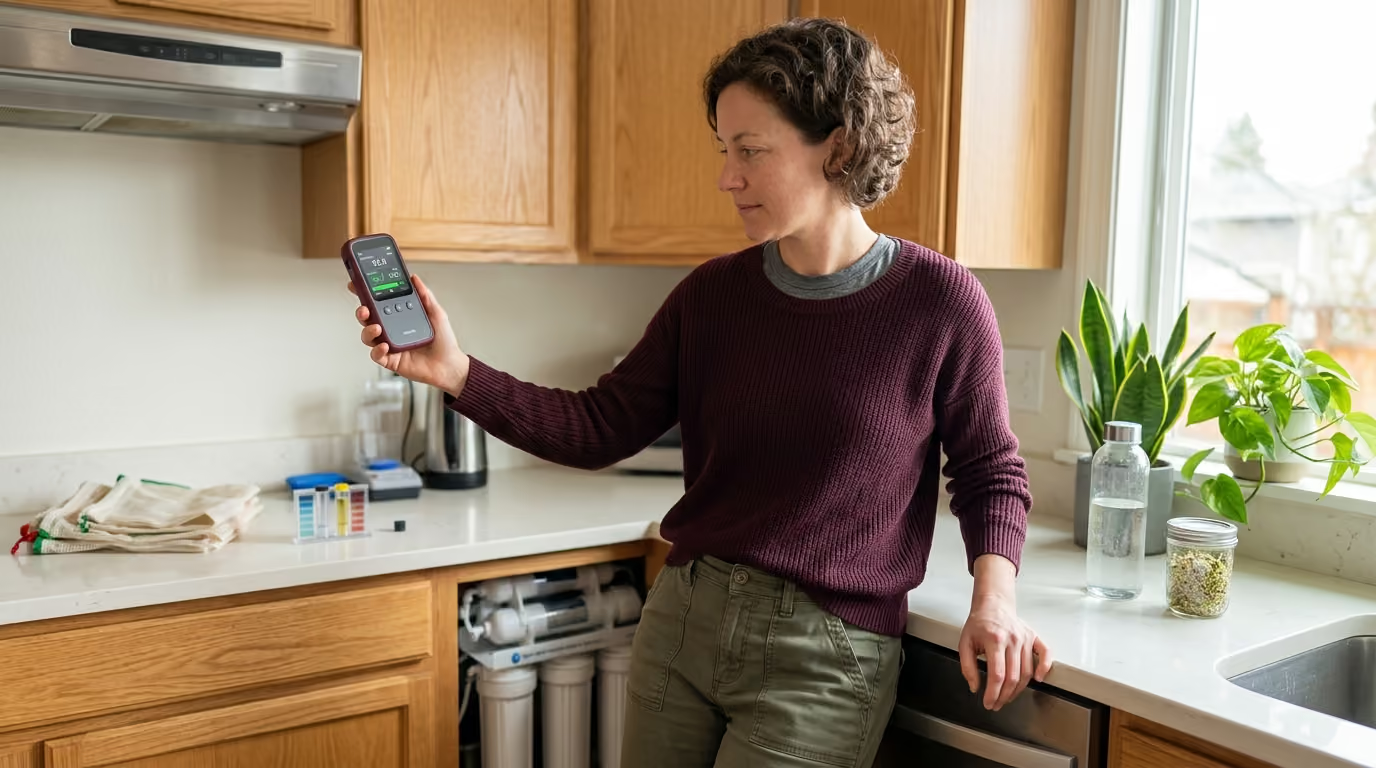

Environmental biohacking is not about extreme detoxes but rather practical, evidence-based adjustments to your daily air, water, and light.





Many people find themselves typing a familiar question into a search engine: how do I clean up my home environment to protect my long-term health? The search results usually swing between two useless extremes. On one side are alarmist blogs demanding that you throw away every modern convenience, buy thousands of dollars in commercial cleanses, and panic over every microscopic molecule. On the other side is conventional complacency, which ignores the measurable biological toll that poor air, chronic noise, contaminated water, and artificial light take on the human body over decades.
This guide provides a definitive, practical answer. Environmental health biohacking is the systematic, evidence-based optimization of your daily surroundings to reduce harmful exposures, protect sleep, preserve sensory function, and support physical capacity as you age. It is not about restrictive fear or aggressive detox protocols. It is about identifying the highest-frequency physical inputs in your daily life, measuring their impact, and controlling them at the source.
The World Health Organization reports that modifiable environmental factors account for roughly 13.7 million deaths each year, representing nearly a quarter of the global disease burden. Most of this burden does not come from exotic poisons. It stems from everyday air pollution, unsafe water, continuous noise, excessive heat, and chemical hazards in our living and working spaces. By treating your environment as a foundational pillar of health, you can make targeted adjustments that yield compounding biological benefits for decades to come.
To manage your environment effectively, you must understand the basic mechanics of how external inputs interact with human physiology. The human body is equipped with sophisticated metabolic and excretory systems, including the liver, kidneys, skin, and lungs. These systems process and eliminate normal metabolic waste and modest environmental byproducts constantly. However, these physiological mechanisms can be overwhelmed by chronic, high-volume, or highly concentrated inputs.
Environmental risk is determined by a specific set of variables known as the exposure equation:
Rather than obsessing over single molecules, it is helpful to think in terms of cumulative biological budgets. For instance, your respiratory system handles a combined load from outdoor particulate matter, indoor cooking byproducts, and workshop dust. Your cardiovascular system processes the combined strain of ambient temperature, emotional stress, and sleep fragmentation caused by background traffic noise. When you lower the baseline load in one area, you expand your body's capacity to handle the physical demands of sport, work, and travel.
True environmental optimization focuses on exposure reduction rather than downstream detox remedies. Commercial detox programs, juice cleanses, and aggressive supplements often claim to scrub tissues after a toxic exposure has occurred. Scientific literature does not support these claims. The only reliable way to protect your cells is to eliminate, substitute, or engineer barriers against the exposure before it enters your biological system.
To build a resilient daily routine, active adults frequently combine these principles with an evidence-based longevity biohacking framework that prioritizes high-impact lifestyle modifications over expensive wellness fads.
People spend the vast majority of their lives indoors. Modern building designs often prioritize airtight energy efficiency, which can trap pollutants inside living spaces if mechanical ventilation is inadequate. The World Health Organization identifies air pollution as a primary driver of ischemic heart disease, stroke, chronic pulmonary disease, and lung cancer. Data from the organization indicates that millions of premature deaths occur annually from combined ambient and household air pollution.
Indoor air contains several distinct categories of contaminants, each requiring a specific management strategy:
Managing indoor air requires a strict hierarchy of actions. Source control is always your first and most effective defense. If you cook with gas, always run an exhaust hood that vents directly to the outdoors. Avoid burning scented candles, incense, or unvented indoor fuel heaters. Keep indoor relative humidity between 30 and 50 percent to prevent mold proliferation.
Filtration and ventilation serve as your secondary line of defense. High-efficiency particulate air (HEPA) purifiers are highly effective at capturing airborne particles, but they do not eliminate gases, carbon monoxide, or radon. Carbon monoxide alarms should be installed on every level of your home and outside sleeping areas.
Radon deserves special attention because it is the leading cause of lung cancer among non-smokers. The Environmental Protection Agency estimates that approximately one in fifteen homes in the United States has elevated radon levels. The agency recommends taking mitigation action if your indoor radon level reaches or exceeds 4 picocuries per liter. Testing is inexpensive, simple, and essential for every homeowner regardless of geographic region.
Water quality is a foundational biological input that varies significantly by geography, municipal infrastructure, and private plumbing. Municipal water suppliers in developed nations regularly monitor and treat water to meet legal safety thresholds. However, aging distribution pipes, industrial runoff, agricultural chemicals, and natural mineral deposits can alter water quality by the time it reaches your kitchen tap.
Private wells present unique responsibilities because they are not monitored by municipal authorities. A nationwide survey conducted by the United States Geological Survey found that approximately one in five private wells contained at least one contaminant at levels exceeding human health benchmarks. Common private well issues include nitrates from agricultural fertilizers, coliform bacteria from septic systems, heavy metals like arsenic, and dissolved radon.
A sensible approach to household water involves systematic testing rather than buying generic filtration products:
Per- and polyfluoroalkyl substances, commonly known as PFAS, have become a major focus of environmental health research. These persistent industrial compounds enter water supplies through industrial discharge and consumer waste. The Environmental Protection Agency has established enforceable limits for several prominent PFAS variants at very low concentrations.
If your local water supply contains elevated PFAS or heavy metals, point-of-use reverse osmosis systems or certified activated carbon block filters offer proven, cost-effective reduction. Avoid assuming that bottled water is inherently superior to filtered tap water. Many bottled water brands simply bottle municipal tap water or introduce microplastic particles from single-use packaging.
Noise is frequently overlooked in conversations about longevity, yet it acts as a continuous physical stressor on both the auditory apparatus and the autonomic nervous system. Chronic noise exposure triggers systemic neuroendocrine responses, elevating cortisol, increasing blood pressure, and impairing endothelial function. The World Health Organization reports that at least one in five European residents is exposed to road traffic noise levels that are detrimental to long-term health.
The impact of nighttime noise on sleep architecture is especially profound. Auditory processing remains active while you sleep. Background sounds cause micro-arousals, elevate heart rate, and shift your brain out of deep, restorative sleep stages without waking you fully.
The World Health Organization Night Noise Guidelines recommend keeping outdoor nighttime noise below 40 decibels to prevent adverse health effects. For bedroom interiors, continuous background noise should remain below 30 decibels, with intermittent peak noises kept below 45 decibels.
Preserving acoustic health requires practical modifications to your living space:
Occupational and hobby environments often combine loud sounds with hazardous chemicals, creating an amplified risk. Research from the National Institute for Occupational Safety and Health highlights that certain solvents, heavy metals, and asphyxiants are ototoxic. These substances damage the delicate hair cells of the inner ear and make them far more susceptible to noise-induced destruction. When working with paints, degreasers, or finishes, combine adequate hearing protection with excellent respiratory ventilation.
Implementing these acoustic safeguards directly protects your restorative sleep and nervous system recovery, allowing your body to repair tissue and consolidate memory efficiently.
Light is the primary environmental cue that synchronizes the human master circadian clock located in the hypothalamus. For millions of years, biological systems evolved under bright daytime sunlight followed by near-total darkness at night. In recent decades, the widespread adoption of artificial light at night has disrupted this ancient physiological rhythm.
Exposure to artificial light during natural sleeping hours suppresses the pineal gland's secretion of melatonin, a hormone that regulates sleep timing, antioxidant pathways, and immune surveillance. Large systematic reviews and meta-analyses have shown that individuals exposed to high levels of artificial light at night experience a 27 percent higher risk of sleep disturbance compared to those in dark environments.
Managing your photic environment involves balancing biological optimization with practical safety:
Daytime light exposure is equally critical for circadian stability. Getting 15 to 30 minutes of natural outdoor sunlight exposure soon after waking sets your circadian timer, promotes daytime alertness, and improves nocturnal sleep quality. A robust circadian rhythm maintains sustained daily energy and mental focus across demanding professional and athletic schedules.
Thermal stress represents a powerful environmental challenge that grows increasingly important with age. Physiological thermoregulation changes over time. Aging decreases cutaneous vascular reactivity, reduces sweat gland output, and blunts thirst perception. Data from the World Health Organization shows that nearly half a million heat-related deaths occur globally each year, with heat mortality among adults over 65 increasing by roughly 85 percent in recent decades.
Heat strain places immense stress on the cardiovascular and renal systems. When the body works to cool itself, it directs large volumes of blood to the skin, forcing the heart to beat faster and harder. Dehydration reduces plasma volume, raising the risk of acute kidney injury, thrombosis, and heat stroke.
Safe management of thermal exposures requires a structured approach:
The modern interest in thermal biohacking, including traditional saunas and cold plunges, offers genuine cardiovascular and metabolic benefits when practiced responsibly. However, these practices must be viewed as hormetic stressors that demand careful dosage.
Saunas impose a significant cardiovascular workload similar to moderate aerobic exercise. They should never be combined with severe fasting, alcohol, or extreme dehydration. Cold immersion causes rapid peripheral vasoconstriction and transient spikes in blood pressure. Active adults should approach thermal modalities with gradual progression, listening to physiological signals rather than pursuing extreme duration records.
Many active adults spend significant leisure time pursuing demanding hobbies such as woodworking, metal fabrication, automotive restoration, marksmanship, gardening, and home renovation. While these activities offer profound cognitive and psychological rewards, they often expose participants to concentrated doses of physical and chemical hazards.
A home workshop or garage can quickly generate contaminant levels that exceed standard industrial exposure limits if proper controls are absent:
To protect your physical capacity while enjoying these pursuits, apply the classic occupational hierarchy of controls. First, look for opportunities to substitute hazardous materials with safer alternatives, such as using water-based finishes instead of solvent-based lacquers. Second, implement engineering controls by using local source-capture dust extractors on power tools and working in well-ventilated areas.
Finally, utilize high-quality personal protective equipment suited to the specific task. A standard dust mask offers minimal protection against solvent vapors, and generic foam earplugs provide inadequate attenuation if inserted incorrectly. Invest in a properly fitted elastomeric respirator with interchangeable particulate and organic vapor cartridges, along with certified hearing protection rated for impulse noise.
After completing hazardous hobby work, change out of your work clothing and wash your hands thoroughly before entering your main living areas. This simple administrative step prevents the transport of lead dust, chemical residues, and fine particulates into your home.
Frequent international travel exposes the human body to rapid shifts in air quality, ambient noise, water sources, and circadian time zones. Long-haul flights combine low cabin humidity, mild hypoxia from reduced cabin pressure, and altered cabin air circulation. These physical factors can leave active adults feeling depleted long before they reach their destination.
After a grueling thirty hour transit to Tokyo, I realized my old strategy of just powering through was no longer working. I felt foggy for three days. I started digging into circadian biology and realized that timing my light exposure and fasting during the flight could completely shift my recovery. Now, I never board a long haul flight without a precise schedule for when to eat and when to put on an eye mask. It is the difference between losing a week of your trip and hitting the ground running.
To maintain physical resilience during active travel and adventure, use a reliable environmental playbook:
Adapting your surroundings quickly while on the road ensures that travel remains an invigorating physical adventure rather than a source of chronic biological exhaustion.
The wellness market is saturated with commercial products promising effortless protection from environmental toxins. Discerning active adults must separate scientifically validated exposure management from profitable pseudoscientific myths.
One of the most persistent myths is the concept of systemic detoxification through sweat, juice fasts, or foot baths. Sweating is an essential thermoregulatory process designed to cool the skin, not an excretory pathway for industrial chemicals. The concentration of environmental pollutants excreted in human sweat is physiologically negligible compared to the filtration performed by your liver and kidneys. Attempting to sweat out heavy metals or persistent organic pollutants in a sauna while dehydrated places dangerous strain on your cardiovascular and renal systems.
Another common misconception is the belief that all natural products are inherently safe while all synthetic chemicals are dangerous. Poison ivy, asbestos, radon, and mold mycotoxins are entirely natural, yet they pose substantial biological risks. Conversely, many synthetic materials are chemically inert, durable, and safe for human use. Safety is determined by chemical structure, dosage, biological pathway, and duration of contact, not by marketing labels.
Active adults should also be cautious with unvalidated commercial testing panels:
Focusing your energy and capital on legitimate primary prevention delivers measurable physiological protection without the stress and confusion of commercial detox trends.
You do not need to overhaul your entire lifestyle, rebuild your home, or abandon modern technology to achieve exceptional environmental health. Applying the principle of the minimal effective dose allows you to capture 80 percent of the biological benefits with a handful of targeted, high-impact actions.
Begin by addressing the physical spaces where you spend the largest number of continuous hours: your bedroom and your primary workspace. Optimizing your sleep environment alone addresses one-third of your total lifetime exposure budget.
Focus on these foundational interventions first:
Once these baseline engineering controls are established, they function automatically in the background. You can then access comprehensive in-depth longevity resources to refine other areas of your training, recovery, and nutritional programming.
Leading international public health bodies, including the World Health Organization, the Environmental Protection Agency, and the Centers for Disease Control and Prevention, share a clear consensus regarding environmental risks. The evidence confirms that environmental factors play a decisive role in cardiovascular health, respiratory function, sensory preservation, and metabolic resilience over the human lifespan.
Public health guidance emphasizes three overarching principles:
Regulatory standards established by environmental agencies serve as broad public health thresholds designed to protect populations. Individual susceptibility varies based on biological age, preexisting health conditions, and genetic factors. By taking proactive, measured steps to optimize your personal living and working spaces, you create a physical foundation that supports vigorous physical activity, sharp cognitive performance, and independent living well into your advanced years.
Improving your daily exposures works best when approached as a systematic, step-by-step project rather than an overwhelming weekend overhaul. Follow this simple checklist to establish your environmental health baseline over the coming weeks.
Stay connected for research and practical guidance on longevity, strength, recovery, energy and active living. New ideas to help you stay capable, curious and ready for more.


Explore practical guidance on strength, recovery, energy, travel and longevity for a life that stays active.
explore the Blog