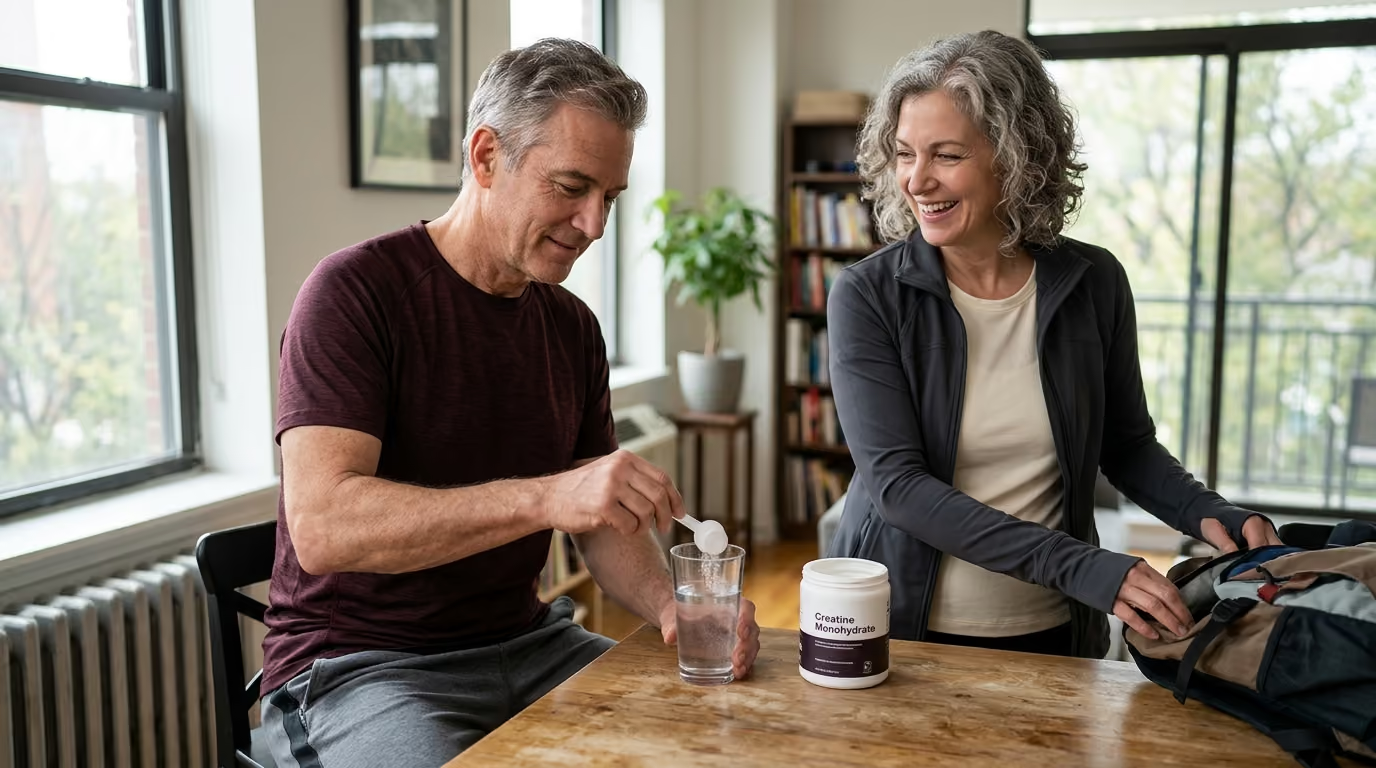

Twenty percent of the body's resting energy fuels the brain, making daily creatine supplementation an effective tool for supporting neural processing during fatigue.





Creatine is widely dismissed as an aggressive supplement for competitive bodybuilders seeking rapid bulk. That narrow perception overlooks its most valuable real-world application. For active adults over forty, creatine monohydrate is actually one of the most thoroughly researched tools for protecting physical capability, muscular power, and cognitive energy.
As we age, preserving physical independence requires maintaining skeletal muscle mass and high-velocity power. Muscle strength declines faster than muscle mass alone, and neuromuscular power drops even quicker. Creatine directly targets this decline by replenishing the immediate fuel our muscle fibers require for explosive, demanding efforts.
Beyond physical performance, cellular energy demands remain constant across the entire body. Emerging research highlights creatine storage within neural tissue, suggesting subtle benefits for processing speed and working memory under fatigue. Far from being an extreme bodybuilding aid, creatine functions as a baseline nutritional support for healthy vitality.
When combined with progressive resistance training, creatine acts as a reliable force multiplier. It does not replace balanced meals, structured exercise, or restorative sleep. Instead, it provides the underlying cellular fuel that helps you complete an extra repetition, recover between strenuous sets, and sustain athletic capacity across decades of active living.
To build an intelligent wellness strategy, explore our sustainable longevity and living well strategies.
To understand how creatine works, consider how your cells produce energy during movement. Every muscular contraction depends on a molecule called adenosine triphosphate, commonly known as ATP. During brief, intense activities like sprinting or lifting heavy luggage, your body burns through its immediate ATP stores within two to three seconds.
To keep moving with force, your cells must immediately regenerate ATP. This is where phosphocreatine comes into play. Phosphocreatine donates a high-energy phosphate molecule to spent adenosine diphosphate (ADP), converting it back into usable ATP in fractions of a second. This rapid recycling is managed by the enzyme creatine kinase.
Your skeletal muscles store a baseline pool of free creatine and phosphocreatine obtained from dietary meat, fish, and internal synthesis. However, standard dietary intake rarely saturates these intracellular reserves. Daily supplementation increases total muscle creatine content by roughly twenty percent, creating a larger reservoir of rapidly deployable energy.
This bioenergetic mechanism is not limited to physical movement. The human brain is a metabolically demanding organ that accounts for roughly twenty percent of total resting energy consumption. Brain cells also rely on the phosphocreatine system to buffer energy fluctuations during demanding mental tasks, high-stress conditions, or periods of sleep disruption.
Deepen your understanding of cellular vitality by reading our foundational nutrition and metabolism guidance.
The primary benefit of saturated creatine stores is the ability to sustain high-intensity physical output. In practical terms, this allows you to perform more work across multiple sets of resistance exercise. Over months of consistent training, that extra volume stimulates greater muscular strength and functional hypertrophy.
Clinical trials consistently support this training synergy across diverse age groups. A comprehensive meta-analysis of adults engaging in resistance training demonstrated that creatine supplementation produced significant strength gains compared to training alone. Participants experienced an average increase of 4.43 kilograms in upper-body strength and 11.35 kilograms in lower-body strength.
These improvements translate directly into greater total training volume and mechanical tension. In a pooled analysis of 61 clinical trials, creatine combined with resistance training increased fat-free mass by approximately 1.39 kilograms. Importantly, this increase occurred without any accompanying gain in fat mass or body fat percentage.
Understanding the difference between acute water retention and chronic structural adaptation is essential. During the first two weeks of supplementation, increased total body mass often reflects intracellular water drawn into the muscle cell alongside stored creatine. Over several months, this cellular hydration combines with sustained training output to support genuine muscle protein accretion.
Explore structured training protocols by viewing our progressive strength and physical performance protocols.
Age-related loss of muscle mass and neuromuscular function presents a real threat to long-term mobility. Without deliberate intervention, muscle cross-sectional area and type II fast-twitch muscle fibers decline steadily after midlife. This loss impairs everyday functional capabilities, such as climbing stairs, carrying heavy recreation gear, or recovering balance after a slip.
Structured exercise paired with creatine supplementation offers a reliable defense against this decline. Clinical reviews of older adults show that this combination improves chair-stand performance, walking speed, and leg press power. Rather than evaluating progress by body weight alone, older adults should focus on movement velocity and joint stability.
For postmenopausal women, maintaining skeletal muscle and bone integrity is particularly important. A systematic review evaluating postmenopausal women found that daily creatine intake of at least five grams, when paired with resistance training, yielded significant improvements in lean mass and lower-body strength. Leg press single-repetition maximum improved by an average of 7.5 kilograms compared to placebo groups.
Interestingly, studies examining doses of three grams or less per day without resistance training showed no meaningful changes. This distinction proves that creatine is an adjunct to physical effort, not an independent solution. While evidence regarding bone mineral density remains mixed, preserving muscular strength provides immediate mechanical support to vulnerable joints and bones.
To sustain your physical performance over time, review our dedicated recovery and sleep routines.
Because the brain requires constant cellular energy, researchers have increasingly investigated creatine for cognitive support. When neural networks fire rapidly during complex problem-solving or sustained focus, ATP depletion occurs locally. Supplementing with creatine raises brain phosphocreatine concentrations, helping buffer these localized energy drops.
A 2024 systematic review and meta-analysis identified positive effects of creatine on memory retention, attention span, and information-processing speed. These cognitive advantages appear most pronounced under conditions of acute metabolic stress, such as chronic sleep deprivation, demanding mental workloads, or advanced chronological age.
However, scientific rigor requires distinguishing between modest cognitive support and exaggerated therapeutic claims. The broader neurological literature remains nuanced, with several reviews characterizing overall cognitive evidence as promising yet variable. Creatine is not a treatment for dementia, nor does it prevent degenerative cognitive diseases.
The most practical takeaway for healthy adults over forty is cognitive resilience. When navigating challenging work schedules, time zone shifts, or prolonged physical expeditions, maintaining saturated cellular energy stores provides subtle support against mental fatigue. It helps maintain cognitive clarity when physiological resources are stretched thin.
Dietary habits heavily influence baseline creatine stores. Because natural dietary creatine occurs almost exclusively in meat, poultry, and seafood, individuals consuming plant-based diets maintain significantly lower cellular reserves. Research indicates that vegetarians consume roughly 0.01 grams of dietary creatine daily, compared to 1.73 grams consumed by omnivores.
When active adults transition to a vegetarian diet without supplementation, muscle creatine concentrations can decline by up to fourteen percent within three months. Controlled trials demonstrate that vegetarians who supplement with creatine experience robust increases in muscle phosphocreatine, lean tissue, and muscular endurance. However, a lower baseline intake does not guarantee superior cognitive benefits compared to omnivores.
Female physiology also warrants specific attention. While early sports nutrition studies focused heavily on male athletes, newer research clarifies female responses across different life stages. Active women experience consistent improvements in functional power and lean tissue retention when pairing supplementation with progressive loading.
Women frequently express concern regarding scale weight fluctuations associated with initial supplementation. This initial weight change represents intracellular water inside the muscle fibers, not subcutaneous fluid or adipose tissue. Focusing on gym performance, recovery speed, and athletic stamina provides a far more accurate measure of success.
Translating creatine science into a daily routine is straightforward. The simplest, most well-documented approach is using pure creatine monohydrate powder. You do not need complex dosing schedules, expensive delivery formulas, or proprietary ingredient blends to achieve full cellular saturation.
There are two primary ways to begin supplementation:
For most active adults over forty, the steady protocol represents the optimal strategy. It eliminates the need for frequent dosing throughout the day and minimizes the risk of mild stomach discomfort. Once tissue saturation is achieved, timing becomes flexible. You can take your daily serving whenever it best fits your morning or evening routine.
Consider a practical scenario such as preparing for a demanding ski season in the Italian Dolomites. By establishing a steady daily intake alongside your pre-season leg conditioning, you build the muscular endurance needed for long descents. The added phosphate energy helps you maintain crisp edge control on your final run of the afternoon.
Frequent international travel introduces unique stressors that disrupt training schedules, nutrition quality, and cellular recovery. Long flights, irregular dining options, and shifting time zones can leave you feeling physically drained. Maintaining your daily creatine intake provides baseline metabolic stability while away from home.
After a grueling thirty hour transit to Tokyo, I realized my old strategy of just powering through was no longer working. I felt foggy for three days. I started digging into circadian biology and realized that timing my light exposure and fasting during the flight could completely shift my recovery. Now, I never board a long haul flight without a precise schedule for when to eat and when to put on an eye mask.
Combining that precise circadian strategy with consistent daily supplementation makes an enormous difference. In our experience, traveling with creatine requires basic preparation rather than complicated routines. Keeping your routine consistent keeps your cellular reserves full, whether you are traversing airports or hiking high mountain trails.
Practical travel management involves simple habits:
If you enjoy active global expeditions, view our curated travel and adventure pursuits.
Despite hundreds of peer-reviewed human trials confirming its safety, persistent misconceptions continue to surround creatine. The most common myth claims that creatine behaves like an anabolic steroid. Creatine is actually a naturally occurring nitrogenous compound synthesized from amino acids, operating entirely outside the endocrine system.
Another widespread concern involves renal health. In healthy individuals, long-term clinical trials using standard doses for up to five years have demonstrated no adverse effects on kidney function or glomerular filtration rate. However, creatine does naturally break down into creatinine, a standard metabolic byproduct measured on routine blood panels.
Because blood tests use serum creatinine to estimate kidney filtration, supplementing with creatine can cause a benign elevation in this single biomarker. This statistical shift does not reflect renal distress. If you undergo routine blood testing, inform your physician that you supplement with creatine so they can interpret your kidney panel accurately.
Finally, claims connecting creatine to muscle cramping and systemic dehydration are contradicted by controlled research. Clinical studies examining athletes exercising in high heat show that creatine does not impair thermoregulation or electrolyte balance. Muscle cramps typically stem from sudden training volume spikes, muscular fatigue, or poor conditioning rather than creatine use.
The supplement industry contains countless heavily marketed variations claiming superior absorption over standard monohydrate. Brands frequently charge premium prices for creatine hydrochloride, buffered creatine, creatine ethyl ester, or liquid suspensions. None of these alternative forms have been proven more effective than traditional creatine monohydrate in controlled human trials.
Standard creatine monohydrate remains the undisputed benchmark across athletic and clinical longevity research. When selecting a product, look for unflavored, micronized creatine monohydrate without added sugars, artificial sweeteners, or proprietary filler blends. Micronized powders dissolve more easily in water, minimizing any gritty texture or residue.
Independent quality verification is equally important. Dietary supplements are not strictly regulated prior to reaching retail shelves, creating a risk of heavy metal contamination or inaccurate dosage labeling. Look for independent third-party testing certifications, such as NSF Certified for Sport or Informed Choice, on the product label.
These certifications confirm that the product contains exactly what the label claims, free from unlisted compounds or banned substances. Purchasing pure, third-party certified creatine monohydrate ensures you receive a clean, effective product at an honest price.
Maintaining high physical capacity and mental clarity throughout midlife requires reliable, evidence-based tools, and consistent creatine supplementation remains one of the simplest habits for staying strong, capable, and ready for adventure.
Stay connected for research and practical guidance on longevity, strength, recovery, energy and active living. New ideas to help you stay capable, curious and ready for more.


Explore practical guidance on strength, recovery, energy, travel and longevity for a life that stays active.
explore the Blog