
Two validated exertion scales and tailored respiratory rhythms optimize endurance pacing across running, cycling, open water swimming, and alpine trekking.





Most athletes believe their legs, heart, and lungs operate on separate schedules. When fatigue sets in on a steep climb or during the final miles of a race, conventional wisdom blames muscular exhaustion or rising heart rates. Yet the primary determinant of your physical limit is rarely muscular failure alone.
Your performance is dictated by how your brain processes breathing sensations, manages energy budgets, and translates effort into pacing decisions. By learning to interpret these internal signals accurately, active adults can sustain higher outputs with greater control.
Sustainable performance requires balancing external output with internal strain. Heart rate, power meters, and GPS watches provide useful external data. However, your perception of effort and respiratory rhythm provide immediate biological feedback that no digital monitor can match. When you master the relationship between breathing, pacing, and perceived exertion, demanding pursuits become manageable, repeatable, and deeply rewarding.
This comprehensive guide examines the physiology of ventilation and the mechanics of perceived exertion. It also outlines field-tested pacing strategies across multiple sports and demanding travel environments.
Breathing serves two primary biological functions during exercise. It delivers oxygen to working muscles, and it clears metabolic carbon dioxide from the bloodstream. When your exercise intensity rises, your metabolic rate climbs in tandem.
Carbon dioxide accumulates rapidly in the blood, which triggers an increase in both breathing rate and tidal volume. Many athletes assume that feeling breathless means their muscles lack oxygen. In reality, the sensation of breathlessness is driven largely by the urgent need to exhale carbon dioxide and reduce blood acidity.
Ventilatory efficiency measures how much air you must move through your lungs to consume a specific volume of oxygen or eliminate a specific volume of carbon dioxide. Efficient ventilation is not simply a matter of taking larger breaths.
If you hyperventilate beyond your metabolic requirement, you blow off too much carbon dioxide. This causes respiratory alkalosis, which constricts cerebral blood vessels and creates lightheadedness. Conversely, shallow or erratic breathing increases dead-space ventilation, forcing your respiratory muscles to work harder without improving gas exchange.
The work performed by the respiratory muscles is a major factor in overall fatigue. During intense or prolonged exercise, the diaphragm, intercostals, and abdominal muscles consume significant amounts of oxygen and blood flow.
When these muscles fatigue, a protective physiological mechanism known as the respiratory muscle metaboreflex is activated. This reflex increases sympathetic nervous system activity and constricts blood vessels in your legs and arms. As a result, blood flow is diverted away from your working limbs to keep the respiratory pump functioning. This explains why heavy breathing is frequently accompanied by a sudden feeling of leaden, heavy legs.
The healthy human pulmonary system can become a limiting factor in endurance performance, particularly as we age. Research demonstrates that intensive endurance events like marathons can cause acute pulmonary function reductions of 10 to 15 percent, along with respiratory muscle fatigue reductions of 15 to 25 percent.
However, studies show that unloading the respiratory muscles during moderate exercise below 90 percent of maximal aerobic capacity does not alter total exercise time or oxygen uptake. Respiratory muscle fatigue is intensity-dependent, making breathing economy vital when sustaining challenging physical outputs.
Understanding these mechanics allows you to manage energy and stamina through better somatic awareness. When you recognize that breathlessness reflects respiratory work and carbon dioxide clearance, you can regulate your breathing calmly rather than reacting with anxiety.
Rating of perceived exertion, commonly known as RPE, is the subjective assessment of how hard an exercise bout feels. Rather than relying solely on external numbers, RPE integrates whole-body strain, local muscular tension, joint discomfort, thermal stress, and mental fatigue into a single metric.
The American College of Sports Medicine first endorsed RPE as a foundational exercise prescription tool in 1986. It remains one of the most reliable performance indicators available to active adults.
Perceived exertion is evaluated using two primary scales in sports science:
Developed by Gunnar Borg, this scale ranges from 6, representing total rest, to 20, representing maximal physical exertion. It was originally designed to correspond loosely with heart rate in young, healthy adults when multiplied by ten.
A rating of 12 to 13 corresponds to moderate intensity, where breathing is elevated but steady. Ratings of 14 to 17 represent vigorous effort, characterized by sustained physical tension and deep ventilation. Ratings of 18 to 19 reflect near-maximal output, which most athletes can maintain for only brief intervals.
The 0 to 10 scale is often more intuitive for daily training and adventure planning:
RPE is uniquely valuable because it automatically adjusts for real-world confounders. Heart rate can be heavily distorted by high temperatures, dehydration, poor sleep, travel fatigue, caffeine, altitude, or prescription medications like beta-blockers.
A power target or running pace that feels routine at sea level on a cool morning can become utterly unsustainable in high heat or after an international flight. Your brain processes these combined stressors and raises your perceived effort. This provides an immediate physiological warning before systemic exhaustion occurs.
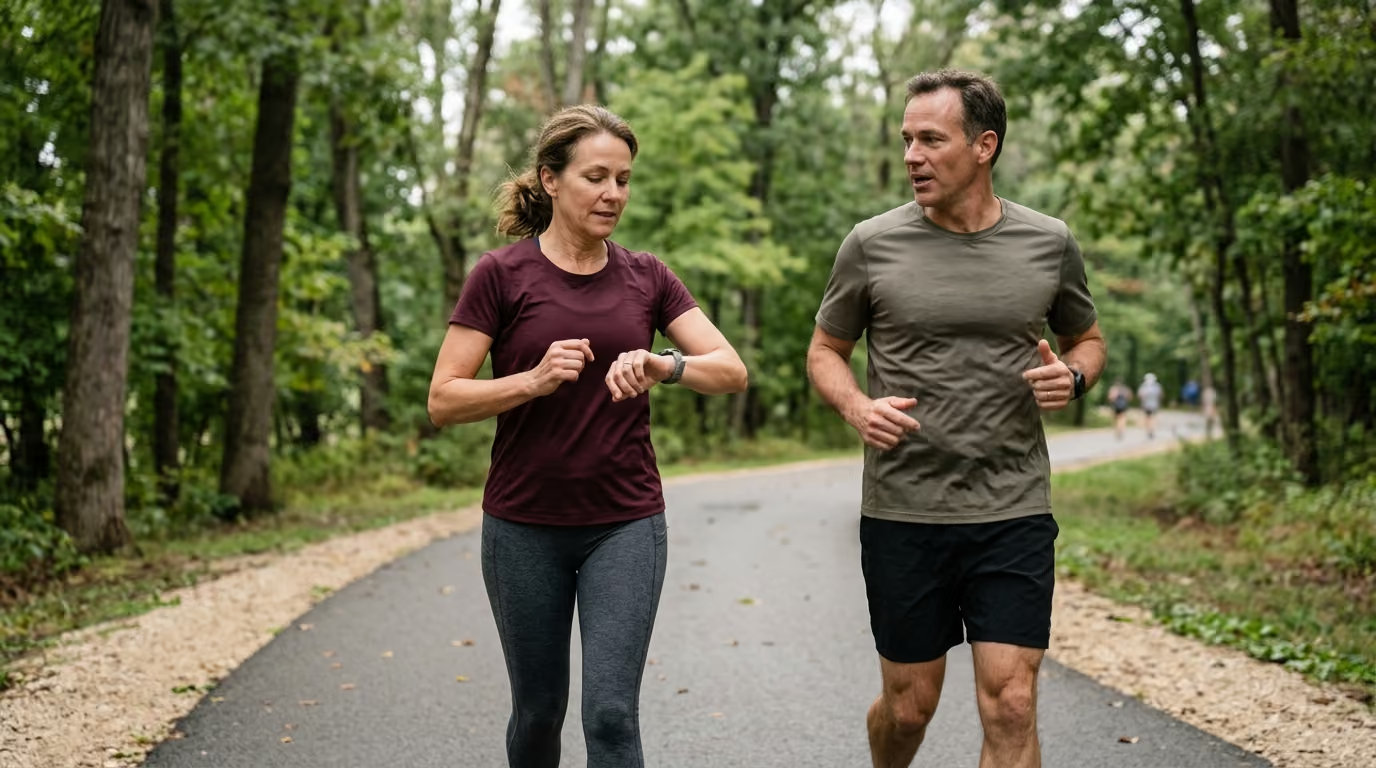
The Talk Test serves as an accessible field tool that aligns directly with metabolic thresholds. At a moderate intensity of RPE 3 to 4 on the 10-point scale, an athlete can speak comfortably in complete sentences, speaking roughly three to five words per breath.
When intensity crosses the ventilatory threshold into RPE 5 to 7, speech becomes broken into short phrases. At maximal efforts above RPE 8, continuous conversation ceases entirely. Integrating the talk test with RPE allows you to manage your energy and focus without being tethered to a digital screen.
Pacing is the conscious or subconscious regulation of speed, power output, and energy expenditure across an exercise bout. The core pacing objective is simple: work as hard as possible toward your goal without exhausting metabolic reserves prematurely.
Pacing is inherently anticipatory. Your brain continually calculates remaining distance, ambient conditions, internal fuel status, and current RPE to determine sustainable output. If you believe an effort will last ten minutes, you will naturally tolerate a higher rate of exertion than if you expect to be moving for six hours.
Athletes employ several recognized pacing frameworks depending on their goals, terrain, and discipline:
Even pacing involves maintaining a constant speed or power output throughout the entire duration. This strategy is aerodynamically and metabolically optimal for flat, predictable environments such as track events, flat cycling time trials, or pool swimming. By preventing sudden surges in lactate production and oxygen consumption, even pacing minimizes premature glycogen depletion.
A negative split occurs when the second half of an outing or race is completed faster than the first. Starting conservatively lowers early cardiovascular stress and prevents premature activation of the respiratory muscle metaboreflex.
Negative splitting is an exceptional strategy for unfamiliar routes, long endurance events, or multi-hour alpine ascents where early errors carry high penalties. It preserves both physical capacity and mental confidence for the later stages of an event.
A positive split occurs when an athlete starts quickly and steadily slows over time. While occasionally seen in short, all-out sprint events lasting under two minutes, it is generally disastrous in endurance contexts.
Beginning an event at an RPE of 8 out of 10 usually leads to severe muscle acidosis, early hyperventilation, and an involuntary reduction in speed. Positive splits in recreational athletics are almost always the unintentional result of poor early judgment or excessive excitement.
Variable pacing is essential for real-world adventures, hilly trails, mountain passes, and windy conditions. Forcing a constant speed on an uphill gradient causes an exponential spike in metabolic demand, heart rate, and respiratory muscle work.
A superior strategy is to maintain a stable RPE or power output while accepting a natural reduction in forward speed. On descents, you can increase cadence and speed while allowing your breathing and heart rate to recover.
Terrain-adjusted pacing prevents the sharp physiological spikes that deplete cellular glycogen stores. When you allow external speed to fluctuate while holding internal effort steady, you preserve muscular efficiency over hours of continuous movement. This approach supports long-term strength and physical performance across demanding physical challenges.
Translating respiratory mechanics and pacing into movement requires sport-specific coordination. Every discipline introduces unique biomechanical constraints, postural requirements, and environmental challenges.
Running creates ground impact forces that travel through the skeleton, interacting directly with the diaphragm and visceral organs. Establishing rhythmic locomotor-respiratory coupling coordinates your breathing with your foot strikes, reducing unnecessary tension in the torso.
For easy to moderate aerobic running, a 3:3 or 3:2 step-to-breath pattern works well. You inhale over three foot strikes and exhale over two or three foot strikes.
During tempo runs or uphill climbs where ventilatory demand escalates, transitioning to a 2:2 or 2:1 pattern provides higher minute ventilation. Keep your shoulders relaxed, drop your arms slightly, and avoid high chest breathing that recruits the scalene and trapezius muscles unnecessarily.
Cycling places the torso in a flexed, forward-leaning posture that can compress the abdominal cavity and restrict diaphragm excursion. This postural constraint makes diaphragmatic movement more challenging, forcing riders to rely on rib cage expansion.
Use your power meter or cadence sensor alongside your RPE. On flat roads, establish a steady pedal cadence between 85 and 95 revolutions per minute while maintaining slow, controlled nasal or oral inhalations.
When encountering steep climbs or heavy headwinds, do not fight the resistance by mashing high gears at low cadences. Shift to an easier gear to preserve pedal speed, relax your grip on the handlebars, and breathe rhythmically across pedal strokes to prevent upper-body tension.
Swimming presents distinct respiratory constraints because inhalation can only occur when the face turns or clears the water. Swimmers often make the mistake of holding their breath underwater, which causes rapid carbon dioxide accumulation and triggers acute respiratory panic.
Exhale smoothly and continuously into the water through your nose and mouth from the moment inhalation finishes until your next breath. Use a bilateral breathing pattern of three strokes per breath during moderate conditioning to maintain stroke symmetry.
If intensity rises during interval sets or competitive swims, switch to breathing every two strokes on your preferred side to maximize ventilation. Never compromise body position or propulsion to force an arbitrary breathing rhythm.
Hiking with a loaded backpack across uneven, high-elevation terrain demands constant pacing vigilance. Forward speed is an unreliable metric in the mountains due to changing pack weights, loose rock, and steep inclines.
Anchor your movement to a steady stride cadence and continuous nasal or pursed-lip breathing. Shorten your stride length as the gradient steepens, maintaining an RPE between 3 and 4 on the 10-point scale.
Use switchbacks fully rather than cutting straight up the fall line. If your breathing becomes ragged or you cannot speak three consecutive words, pause briefly, reset your posture, and reduce your ascent speed before continuing.
The interaction between breathing and effort is equally relevant to daily activities, such as carrying heavy luggage, climbing long flights of stairs, or performing yard work.
Many people subconsciously hold their breath when lifting loads or ascending stairs, causing a sudden spike in blood pressure and rapid fatigue. Practice exhaling through the sticking point of any heavy lift, and match your breathing rhythm to stair climbing steps. Staying conscious of breath control during routine chores builds a reliable foundation for athletic outings.
Mainstream fitness culture is filled with dogmatic claims regarding breathwork, pacing metrics, and endurance limits. Discarding these misconceptions allows you to build a practical, science-backed approach to human capability.
Many athletes are instructed to take massive, deep inhalations whenever they feel tired. In reality, healthy resting arterial blood is already 95 to 99 percent saturated with oxygen.
Forcing large volumes of air when metabolic demand is low does not increase oxygen uptake. It simply expels excess carbon dioxide, potentially causing dizziness and respiratory muscle fatigue. Breathing volume should always match your actual physical workload.
Nasal breathing is an effective tool for filtering air, promoting diaphragmatic movement, and enforcing an easy pace during low-intensity recovery sessions. However, the nasal passages provide significantly higher airway resistance than the mouth.
During high-intensity intervals, tempo efforts, or competitive events, your body naturally shifts to combined oral-nasal breathing to meet ventilatory demands. Forcing strict nasal breathing during vigorous work restricts minute ventilation unnecessarily and hampers performance.
A widespread belief in exercise physiology is that the cardiovascular system and skeletal muscles are the sole limiters of endurance, while the lungs possess unlimited reserve. While true for moderate exercise in untrained individuals, well-trained endurance athletes frequently stress their pulmonary systems.
High cardiac outputs can cause exercise-induced arterial hypoxemia, where blood moves through pulmonary capillaries too quickly for complete gas equilibration. Furthermore, respiratory muscle fatigue is a well-documented phenomenon that limits oxygen delivery to working limbs.
Critics often dismiss RPE as unscientific guesswork, preferring digital heart rate monitors or power targets. However, RPE is an extraordinarily sophisticated biological computation.
It synthesizes mechanical work, core temperature, blood sugar availability, environmental heat, mental fatigue, and sleep quality. While digital devices measure only the external work or cardiovascular response, RPE reflects the true total physiological cost of the activity.
Endurance athletes frequently succumb to the temptation of banking time by starting an event well above their target pace. This strategy almost always fails.
The metabolic cost of early anaerobic surges produces acute muscular acidosis, elevated core temperatures, and rapid glycogen depletion. The time lost during the latter half of an event due to positive splitting is invariably far greater than the few seconds saved during the opening minutes.
Inspiratory muscle training devices can significantly strengthen the diaphragm and intercostal muscles, delaying the onset of the respiratory metaboreflex. A systematic review of 21 randomized controlled trials demonstrated clear improvements in respiratory endurance, time-trial performance, and time to exhaustion.
However, respiratory training is an adjunct to athletic conditioning, not a replacement. It will not build mitochondrial density, capillarization, or muscular durability in your legs.
You do not need complicated equipment or complex protocols to improve breathing control and pacing accuracy. A minimalist, consistent routine will build sustainable respiratory fitness and somatic awareness.
Dedicate 70 to 80 percent of your weekly aerobic volume to true low-intensity training. During these sessions, keep your effort anchored at an RPE of 2 to 3 out of 10.
Confirm this intensity periodically by speaking several complete sentences out loud without gasping. If you cannot speak comfortably, you have drifted into moderate-to-hard territory and must slow your pace.
If you want to strengthen your respiratory musculature, use an adjustable mechanical resistance breathing device:
Accelerate your recovery after demanding workouts by spending three to five minutes down-regulating your autonomic nervous system. Lie flat on your back with your knees bent and feet flat on the floor.
Place one hand on your lower abdomen and one hand on your upper chest. Inhale slowly through your nose for a count of four, allowing your abdomen to rise gently. Exhale softly through pursed lips for a count of six to eight.
This extended exhalation stimulates the vagus nerve, lowers resting heart rate, and shifts your physiology into a parasympathetic state. Incorporating this habit into your recovery and sleep routine promotes faster cellular restoration.
High-altitude travel and international exploration present severe challenges to the respiratory system. When you travel to mountainous regions, barometric pressure drops, reducing the inspired partial pressure of oxygen.
At an elevation of 3,050 meters (approximately 10,000 feet), the partial pressure of inspired oxygen is only 69 percent of its sea-level value. Unacclimatized travelers may see their resting arterial oxygen saturation fall rapidly from 98 percent to 88 or 91 percent.
The body responds to this hypoxic stress through hypoxic ventilatory response, causing you to breathe faster and deeper even at rest. Activities that feel effortless at sea level suddenly require substantial respiratory work. Maximal aerobic capacity decreases by roughly 1 to 2 percent for every 100 meters gained above 1,500 meters of elevation.
To travel and perform safely in alpine environments, implement these field-tested acclimatization principles:
The Centers for Disease Control and Prevention recommends that travelers avoid flying or driving directly to sleeping altitudes above 2,750 meters (9,000 feet) in a single day.
When ascending above 3,000 meters, limit the increase in your sleeping altitude to no more than 500 meters (roughly 1,600 feet) per 24-hour period. Schedule an additional rest day without altitude gain for every 1,000 meters of total elevation climbed.
The mountaineering maxim "climb high, sleep low" remains biologically sound. You can safely hike or ski at higher elevations during the day provided you return to a lower, safer altitude to sleep. Your body performs the bulk of its physiological acclimatization while resting overnight.
Engage in only mild, non-strenuous physical activity during your first two days at high elevation. Allow your renal system time to excrete bicarbonate in urine, which compensates for respiratory alkalosis and normalizes blood pH.
Rely strictly on RPE rather than sea-level pace or power targets. An uphill walking pace that feels like an RPE 2 at home will easily register as an RPE 5 at 3,000 meters. Accept slower movement speeds to keep metabolic stress within safe bounds.
Never confuse life-threatening high-altitude illness with routine physical fatigue. Mild headache, slight fatigue, and mild breathlessness during exertion are common symptoms of acute mountain sickness that usually resolve with rest, hydration, and acclimatization.
However, severe worsening headaches, vomiting, mental confusion, loss of physical coordination (ataxia), persistent breathlessness at rest, or a wet cough producing pink sputum are signs of High-Altitude Cerebral Edema (HACE) or High-Altitude Pulmonary Edema (HAPE).
These conditions are medical emergencies. They cannot be managed with breathing drills, hydration, or pacing adjustments. The only effective treatment is immediate, assisted descent to lower elevation and urgent medical care.
Incorporating these protocols into your travel and human performance plans ensures you remain capable and protected during high-altitude adventures.
The broader scientific community across exercise physiology, pulmonology, and sports medicine shares a clear consensus regarding human performance:
By honoring these scientific principles, active adults over 40 can maintain high physical performance and explore demanding environments with confidence.
Mastering the connection between your breath, pace, and perceived exertion ensures you remain capable, resilient, and ready for any adventure.
Stay connected for research and practical guidance on longevity, strength, recovery, energy and active living. New ideas to help you stay capable, curious and ready for more.


Explore practical guidance on strength, recovery, energy, travel and longevity for a life that stays active.
explore the Blog