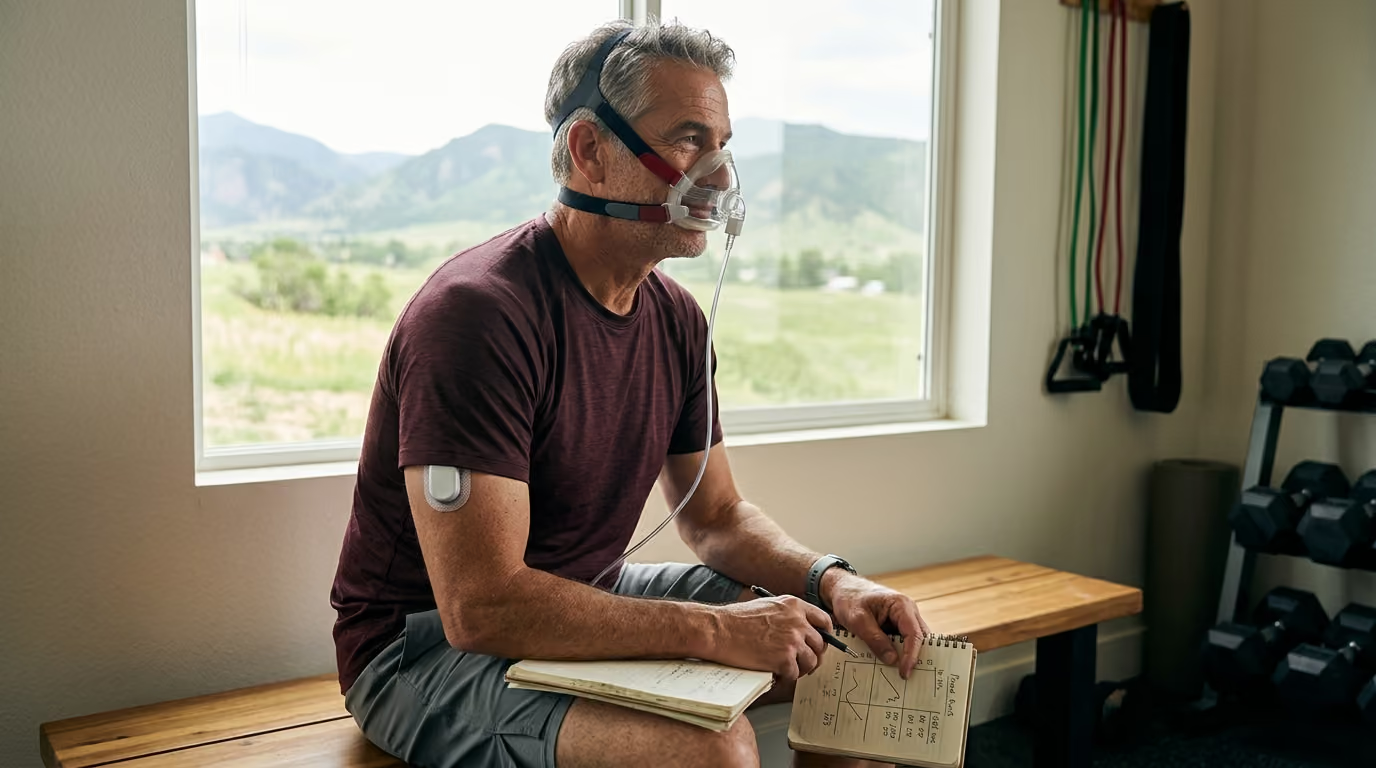

Optimized athletic performance and safer mountain acclimatization stem from understanding hypoxic training models, underlying physiological adaptations.





Restricting the oxygen supply to your lungs sounds like an intuitive way to force rapid biological adaptation. For decades, athletes traveled to high mountain ranges to build stamina, and modern wellness clinics now market hypoxic air chambers as tools for cellular renewal. Yet stripping oxygen from the body is not an automatic upgrade.
Hypoxia is a potent, dose-dependent stressor that can impair physical output, disrupt restorative sleep, and trigger serious medical emergencies if handled carelessly. When applied with precision, it stimulates crucial ventilatory, vascular, and hematological adjustments. When mismanaged, it leads to rapid deconditioning, acute mountain sickness, or profound fatigue.
Understanding the distinction between beneficial adaptation and dangerous overexposure is essential for anyone interested in high-altitude trekking, mountain sports, or long-term vitality. This guide breaks down the underlying physiology, analyzes the science behind popular training models, and provides practical frameworks for safe mountain travel and performance.
The air around us contains roughly twenty-one percent oxygen whether you stand at sea level or on the summit of Mont Blanc. What changes with elevation is barometric pressure. As you ascend, the weight of the atmosphere decreases, which lowers the partial pressure of oxygen in the air you breathe.
When inspired oxygen partial pressure drops, less oxygen moves across the alveolar membranes in your lungs and into your bloodstream. This drop in arterial oxygen availability creates hypoxemia, which leads directly to tissue-level hypoxia. Your working muscles, brain, and organs must sustain their energy production with a fraction of their normal supply.
To maintain adequate oxygen delivery to vital tissues, your body initiates an immediate cascade of survival responses. The primary defense is hyperventilation, driven by the peripheral chemoreceptors sensing lower blood oxygen. By breathing faster and deeper, you draw more oxygen into the alveoli, but you also blow off significant amounts of carbon dioxide.
Exhaling excessive carbon dioxide causes the blood to become unusually alkaline. This state, known as respiratory alkalosis, temporarily suppresses the brain's drive to breathe, especially during sleep. Over the next seventy-two hours, your kidneys compensate by excreting bicarbonate in your urine, which gradually normalizes your blood pH and allows sustained hyperventilation to continue.
At the same time, the cardiovascular system works harder to offset the lower oxygen content in each milliliter of blood. Resting heart rate and cardiac output climb during the initial days of exposure. Over several weeks, the hormone erythropoietin prompts the bone marrow to generate more red blood cells, expanding total red-cell mass to carry oxygen more efficiently.
These adaptations demand substantial biological energy. If you are pursuing long term functional capacity and vigor, you must recognize that acute hypoxia increases total baseline strain. It challenges the heart, brain, and respiratory systems long before you lift a weight or hike an incline.
Athletic interest in low-oxygen environments expanded rapidly after the 1968 Olympic Games in Mexico City. Coaches noticed that athletes living at elevation displayed enhanced aerobic endurance upon returning to sea level. However, modern exercise science reveals a far more nuanced picture than traditional training lore suggests.
Maximal oxygen uptake, known as VO2max, drops predictably as elevation rises. Clinical exercise research shows that VO2max declines by approximately six percent for every one thousand meters of ascent above baseline. For well-trained individuals, time to exhaustion at a set running velocity can decrease by more than fourteen percent per one thousand meters.
The reason highly fit endurance athletes often suffer severe relative performance drops at altitude comes down to pulmonary transit time. Their hearts pump blood through the lungs so rapidly that red blood cells spend less time in the pulmonary capillaries. Under low barometric pressure, oxygen cannot diffuse across the alveolar barrier quickly enough to fully saturate the blood before it leaves the lungs.
To balance the physiological stimulus of hypoxia with high-intensity training requirements, sports scientists have developed distinct operational models.
In this classic framework, the athlete lives, sleeps, and completes all physical workouts at moderate to high altitude. While this approach maximizes hematological adaptations like red blood cell production, it forces a major compromise.
Because oxygen availability is low, the absolute workload, running pace, and power output an athlete can sustain are markedly reduced. Over several weeks, this reduction in speed and power can cause muscular deconditioning. The athlete gains blood-carrying capacity but loses top-end neuromuscular conditioning.
This protocol was designed to offer the benefits of both environments without the drawbacks. The individual sleeps and spends resting hours at moderate elevation, usually between 2,500 and 3,000 meters, but travels down to lower altitudes for intense training sessions.
By resting in hypoxia, the body stimulates erythropoietin and increases red-cell mass over time. By training near sea level, the athlete maintains high power output, high running speeds, and full muscular recruitment. Meta-analyses indicate that spending at least 9.5 hours daily in hypoxia for a minimum of two weeks yields the most consistent improvements in aerobic markers under this model.
In this approach, the individual resides at sea level but conducts specific workouts while breathing oxygen-depleted air or exercising in a hypobaric chamber. This structure appeals to busy professionals because it does not require relocating to a mountain town or investing in an altitude tent.
However, research comparing normoxic training to hypoxic workout sessions shows mixed results. While intermittent hypoxia can improve time to exhaustion during specific tests, meta-analyses demonstrate little meaningful difference in running economy, sea-level VO2max, or time-trial speed compared to identical training in normal air. Performing hard workouts in low oxygen restricts absolute power output, which often negates the potential physiological upside.
For active adults dedicated to conditioning and athletic stamina, the evidence is clear. Altitude exposure is a powerful tool for acclimatization prior to mountain travel, but it is not a guaranteed method for boosting sea-level athletic performance.
Ascending into alpine environments places immediate demands on your cardiorespiratory system. Whether you are heli-skiing in the Canadian Rockies, trekking the Inca Trail, or hiking through the Swiss Alps, proactive acclimatization determines whether your trip is an invigorating success or a debilitating struggle.
The human body adapts remarkably well to high elevation when given adequate time. The most reliable variable you can control is your rate of ascent, specifically your nightly sleeping elevation. Daytime excursions to higher ridges are well tolerated, provided you return to a lower, stable altitude to rest.
The Wilderness Medical Society and the Centers for Disease Control and Prevention outline clear parameters for high-altitude travel. If you travel from sea level to destinations above 2,750 meters, avoid ascending directly in a single day whenever possible.
Spending two to three nights at an intermediate elevation between 2,450 and 2,750 meters provides profound protection against acute mountain illnesses. Once you cross above 3,000 meters, restrict your net sleeping elevation gain to no more than 500 meters per twenty-four-hour cycle. Add a dedicated rest day every two to three days, or whenever you gain an additional 1,000 meters of sleeping elevation.
Hydration and caloric intake require intentional management in alpine environments. Cold, dry mountain air accelerates respiratory fluid loss through continuous hyperventilation. The renal excretion of bicarbonate also acts as an involuntary diuretic during your first week at elevation.
Drink sufficient fluids to keep your urine pale and clear, but avoid aggressive over-hydration, which can dilute serum sodium levels. In our experience, traveling across multiple time zones before an alpine ascent multiplies the physiological burden.
After a grueling thirty-hour transit to Tokyo, I realized my old strategy of just powering through was no longer working. I felt foggy for three days. I started reviewing circadian biology and learned that timing my light exposure and fasting during the flight could completely shift my recovery.
Now, our team never approaches high-elevation travel or international expeditions without a precise schedule for hydration, light exposure, and rest intervals. Aligning your internal biological rhythms before you begin a mountain trek protects your energy reserves and dramatically accelerates physical acclimatization.
Nutrition should shift toward easily digestible carbohydrates. Carbohydrates yield more energy per mole of oxygen consumed than dietary fats or protein, making them the most metabolically efficient fuel when oxygen is scarce. Consuming adequate carbohydrates supports metabolic efficiency and sustained vigor throughout arduous mountain ascents.
Acute altitude illness is not a reflection of poor physical conditioning. Highly trained marathoners and casual walkers face similar risks if they ascend too quickly. Altitude-related disorders fall into three primary clinical categories, ranging from common discomfort to life-threatening emergencies.
Acute Mountain Sickness is the most common form of altitude illness, typically appearing six to twelve hours after ascending above 2,500 meters. The hallmark symptom is a throbbing headache, usually accompanied by nausea, loss of appetite, fatigue, dizziness, or insomnia.
A common error among active travelers is blaming an altitude headache on simple dehydration or afternoon sun exposure. Treat any new headache occurring at elevation as AMS until proven otherwise. Never ascend to a higher sleeping altitude while experiencing active symptoms of AMS.
High-Altitude Cerebral Edema is a severe, life-threatening progression of altitude illness involving brain swelling. Symptoms include severe confusion, profound lethargy, bizarre behavioral shifts, and ataxia, which is a total loss of physical coordination.
An individual displaying an unsteady, drunken gait or struggling to walk heel-to-toe in a straight line must be evaluated immediately for HACE. Suspected HACE is an absolute medical emergency requiring immediate descent, administration of supplemental oxygen, and clinical care.
High-Altitude Pulmonary Edema is a life-threatening condition caused by excessive, uneven vasoconstriction in the pulmonary blood vessels, which forces fluid into the lung air sacs. It is the leading cause of death from altitude illness.
Warning signs include breathlessness out of proportion to exertion, a persistent dry cough, chest tightness, marked physical weakness, and rapid resting pulse. As HAPE progresses, the individual develops severe breathlessness at rest, blue-tinted lips, and a wet cough producing pink, frothy sputum.
When managing severe altitude sickness, remember that descent is treatment. Supplemental oxygen, portable hyperbaric chambers, and medications are useful bridge therapies, but they must never delay an immediate descent of at least 500 to 1,000 meters.
For travelers with a known history of altitude illness or those forced into rapid ascents, prophylactic medications can be considered under medical supervision. The Wilderness Medical Society identifies acetazolamide as the gold-standard prevention for AMS. It forces the kidneys to excrete bicarbonate, inducing a mild metabolic acidosis that stimulates continuous ventilation and accelerates natural acclimatization.
For individuals with documented susceptibility to HAPE, targeted therapies such as nifedipine or tadalafil help lower pulmonary arterial pressure. These medications require a comprehensive medical consultation and should never be used as a substitute for gradual ascent.
The wellness and longevity fields frequently adopt athletic recovery tools, promoting them for healthy aging. Intermittent hypoxic-hyperoxic training (IHHT) and passive normobaric hypoxia are now promoted as therapies to rejuvenate mitochondria, clear damaged cells, and support cognitive health.
The theoretical mechanisms behind these claims are biologically sound. Brief, controlled exposures to low oxygen stabilize Hypoxia-Inducible Factor 1-alpha (HIF-1a), a master regulator protein that triggers vascular endothelial growth factor (VEGF), stimulates new blood vessel formation, and enhances cellular resistance to oxidative stress.
However, translating these cellular mechanisms into proven clinical longevity outcomes requires careful scrutiny. In systematic reviews evaluating intermittent normobaric hypoxia in healthy older adults between the ages of 50 and 75, the real-world findings remain modest.
When compared directly against standard exercise performed in normal room air, passive or light hypoxic exposure shows limited additional benefit for body composition, resting blood pressure, or general cardiovascular health. High-quality clinical trials evaluating intermittent hypoxia for dementia prevention or cognitive enhancement in older adults are currently lacking.
Hypoxic exposure also introduces genuine cardiovascular strain that older adults must consider carefully. Oxygen restriction elevates sympathetic nervous system activity, raises pulmonary arterial pressure, and increases resting heart rate.
For an individual with undiagnosed coronary artery disease, mild pulmonary hypertension, or sleep-disordered breathing, unmonitored hypoxic training creates unnecessary clinical risk. A rational healthy aging strategy prioritizes proven lifestyle fundamentals before experimenting with environmental stressors.
Protecting your sleep quality and physical restoration remains vastly more effective for cellular repair and hormonal balance than sleeping in an oxygen-depleted tent. Use hypoxia for specific mountain preparation, but rely on established lifestyle habits for lifelong health.
Commercial interest in altitude training and hypoxic gadgets has generated several pervasive myths. Sorting clinical facts from marketing narratives protects your time, financial resources, and physical safety.
Many marathoners and triathletes assume their cardiovascular stamina protects them against the effects of thin air. However, acute mountain sickness is triggered by ventilatory sensitivity, fluid shifts, and pulmonary vascular responses, not your 10k running pace.
An elite athlete who pushes their physical limits too quickly upon arrival is just as vulnerable to HAPE as an unconditioned traveler. Gradual ascent profiles remain non-negotiable regardless of your fitness level.
It is widely believed that sleeping or training at altitude permanently expands aerobic capacity. Yet large meta-analyses evaluating competitive athletes reveal that altitude exposure does not reliably boost sea-level VO2max.
While total red blood cell volume often expands, reductions in training intensity at altitude can lead to slight drops in cardiac stroke volume and neuromuscular speed. The primary performance benefit gained from altitude is enhanced submaximal efficiency and improved tolerance for demanding endurance efforts.
Neoprene workout masks that restrict airflow during gym sessions are frequently marketed as altitude simulators. These devices do not reduce barometric pressure, nor do they lower the fraction of oxygen in the air you breathe.
They simply add mechanical resistance to your breathing, forcing your intercostal muscles and diaphragm to work harder. While they may condition the respiratory muscles, they fail to trigger the systemic physiological adaptations of real environmental hypoxia.
Pulse oximeters are valuable tools for tracking trends, but a single saturation percentage does not determine whether someone has altitude sickness. Arterial oxygen saturation drops naturally at high elevation, even in healthy, fully acclimatized individuals.
Diagnosing AMS, HACE, or HAPE relies primarily on clinical symptoms, neurological coordination, and respiratory comfort rather than a specific number on a screen. Never ignore severe nausea, ataxia, or worsening breathlessness simply because a pulse oximeter reads within an acceptable range.
Because low-oxygen environments place heavy demands on the heart, lungs, and central nervous system, certain individuals should avoid unsupervised hypoxic training or rapid high-elevation travel. A comprehensive medical evaluation is essential before participating in high-altitude expeditions.
Individuals with underlying cardiopulmonary disorders face distinct challenges at altitude. The natural hypoxic pulmonary vasoconstriction that occurs in thin air increases resistance in the pulmonary arteries. For someone with existing pulmonary hypertension, this shift can lead to rapid right-heart strain.
Similarly, people with sleep apnea experience more pronounced oxygen desaturations during high-altitude sleep, as low oxygen amplifies periodic breathing patterns. If you take prescription medications for blood pressure, cardiac rhythm, or renal function, consult a physician before using acetazolamide or traveling to remote mountain regions.
A standard resting checkup at sea level will not reveal how your cardiovascular system behaves under hypoxic stress. When preparing for high-country adventures, active adults should prioritize medical clearance, personalized risk assessments, and conservative itineraries over aggressive travel schedules.
You do not need an altitude chamber in your home to prepare for a successful high-elevation trip. A methodical, step-by-step approach ensures safe acclimatization while protecting your energy and physical performance.
Focus your preparation on progressive zone 2 cardiovascular training and lower-body strength work. A well-conditioned aerobic system processes metabolic waste efficiently and maintains physical output at lower relative heart rates.
Building strong quadriceps, calves, and glutes protects your joints during steep descents, reducing muscular fatigue when oxygen availability is compromised.
When booking expedition and high country travel, structure your schedule around sleeping elevations rather than daytime hiking targets. Plan your flights and ground transit to spend at least two nights between 2,400 and 2,800 meters before moving higher.
Ensure your itinerary includes accessible descent routes from every major camp or lodging point. Having an exit strategy provides peace of mind and ensures swift action if severe weather or illness occurs.
Treat your first forty-eight hours at elevation as an active recovery period. Keep physical exertion light, consume balanced meals rich in complex carbohydrates, and drink plenty of fluids and electrolytes.
Avoid alcohol and sleep-inducing sedatives during this initial phase, as they suppress your respiratory center and worsen nighttime oxygen drops.
Track your morning resting heart rate, appetite, and general energy levels. If you wake with a mild headache or nausea, remain at your current sleeping altitude for an additional day until symptoms resolve completely.
If symptoms worsen, or if you notice any loss of balance, confusion, or severe resting breathlessness, begin an immediate descent. Respecting these physiological boundaries ensures you return home strong, healthy, and ready for your next adventure.
Approaching high-altitude travel and hypoxic conditioning with scientific discipline allows you to enjoy demanding alpine environments safely while preserving your vitality for years to come.
Stay connected for research and practical guidance on longevity, strength, recovery, energy and active living. New ideas to help you stay capable, curious and ready for more.


Explore practical guidance on strength, recovery, energy, travel and longevity for a life that stays active.
explore the Blog