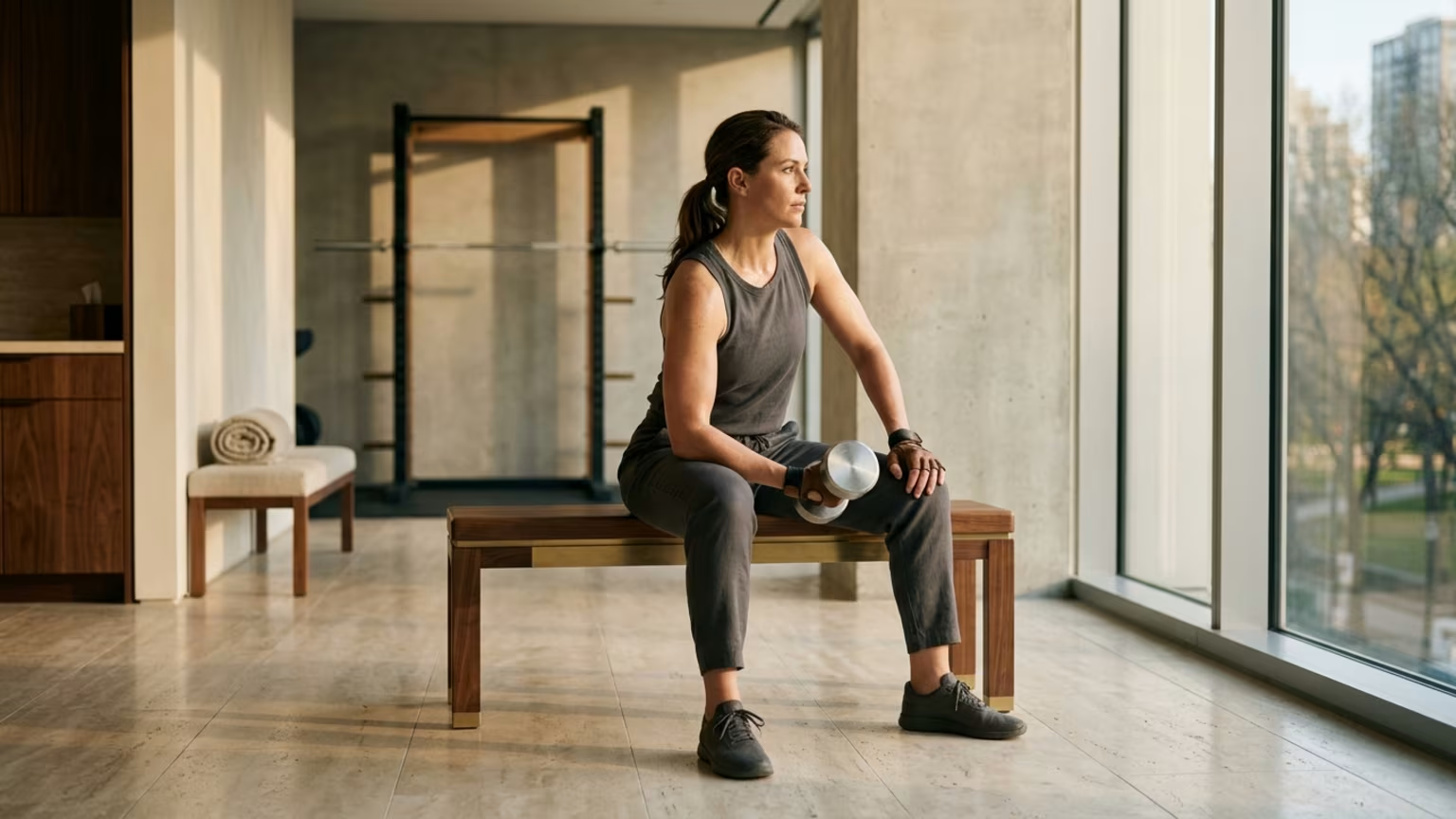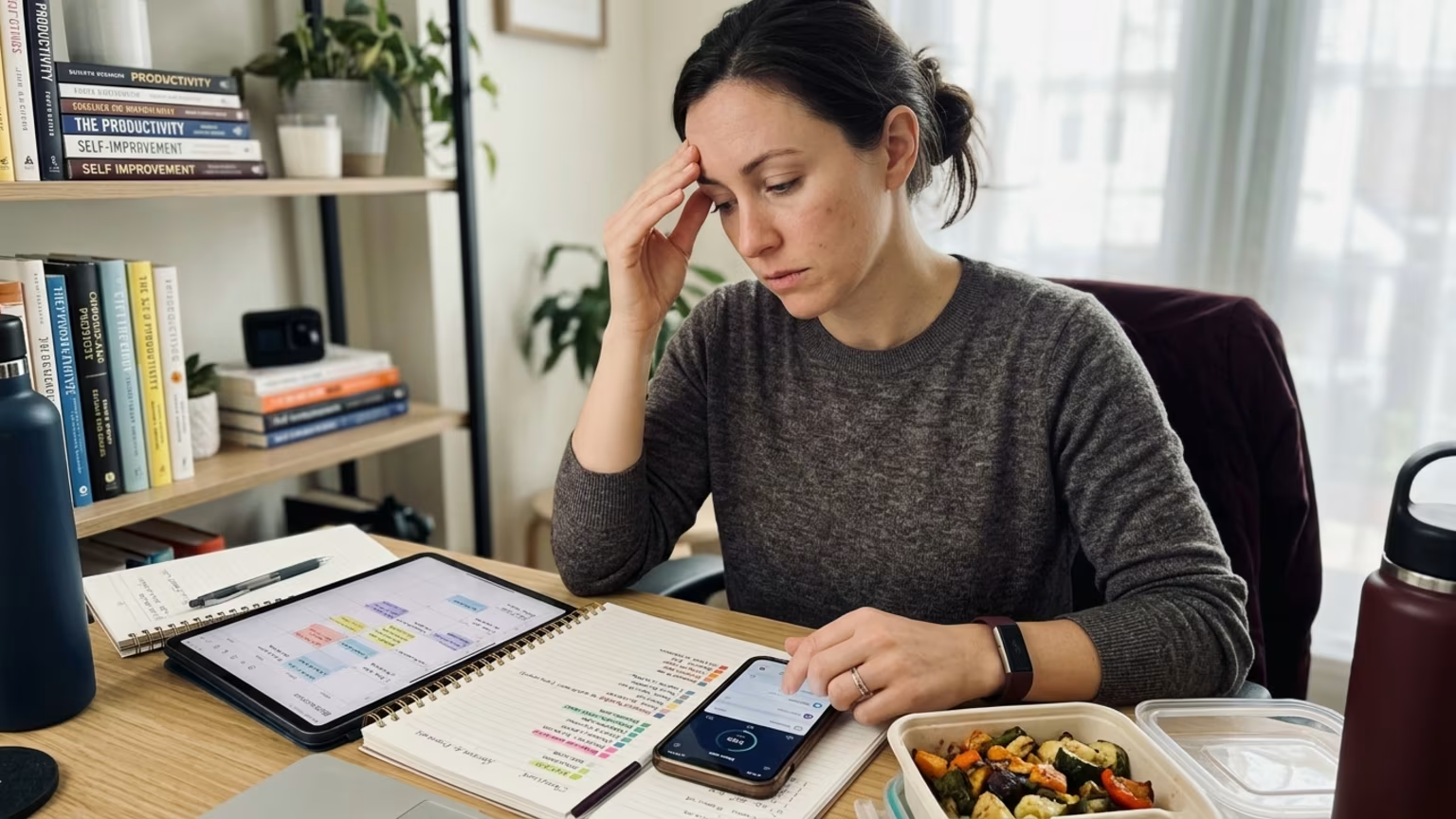

Examine how hidden stressors like alcohol, travel, and overtraining quietly drain your recovery capacity, and learn practical strategies for healthy aging.





Why does it take three days to recover from a flight to Tokyo now, when it used to take one?
A meta-analysis summarized by Evidenced Health, reviewing 17 observational studies, found that the highest categories of cumulative stress carry a hazard ratio of 1.41 for overall mortality. This statistic matters immensely because visible physical fitness often hides deep systemic exhaustion. We often assume that our discipline in the gym protects us from the rigors of frequent travel and high-pressure careers. The reality is that all these demands pull from the exact same biological reserves.
Active adults over forty frequently push their limits across multiple domains simultaneously. You might be managing complex business deals, training for a half-marathon, and traveling across time zones in a single month. This ambition is admirable, but it requires a sophisticated approach to biological budgeting. WealthAtPlay focuses on helping you maintain true physical capability for the long haul. This requires recognizing how hidden habits quietly undermine your resilience.
Visible fitness does not always equal internal resilience. Conventional markers of a healthy weight often miss the cumulative strain on your nervous and metabolic systems. This combined biological wear and tear is known as allostatic load. A meta-analysis summarized by Evidenced Health found that higher allostatic load was strongly associated with higher overall mortality.
Specifically, the review reported a pooled hazard ratio of 1.22 for all-cause mortality and 1.31 for cardiovascular mortality. Each one-point increase in allostatic load carried an 11% higher hazard of overall mortality. These numbers come from studies with follow-up periods ranging from 5 to 25 years. Most samples in these studies had mean ages of at least 44.
The mortality estimates from Evidenced Health come from observational studies with substantial heterogeneity. The researchers noted I² values of 92% for all-cause mortality and 91% for cardiovascular mortality. This means allostatic load is a useful risk marker rather than a precise personal stress age. It highlights that maintaining a lean physique does not protect you from chronic sleep disturbance or elevated metabolic strain.
Many high-performing adults mistakenly believe they can adapt to any level of stress indefinitely. However, your autonomic nervous system has a finite capacity for processing daily demands. When this capacity is exceeded, you begin operating on a physiological deficit. This deficit eventually manifests as a sudden loss of stamina or recurring joint pain.
Many active adults view moderate drinking as a harmless reward after a demanding week of work. However, alcohol represents a significant health trade-off for those pursuing healthy aging and optimal performance. A recent review summarized by Aura Vodka highlighted a 2025 systematic review of 27 studies on this topic. The researchers found delayed and shortened REM sleep at alcohol doses as low as 0.50 grams per kilogram of body weight.
For some adults, that dose equals just two standard drinks in a single evening. The disruption to your crucial REM sleep occurs even if the alcohol helps you fall asleep faster initially. Subjective sleepiness should never be confused with truly restorative sleep. Waking up feeling rested requires cycling through all natural sleep stages without chemical interference.
The World Health Organization explicitly describes alcohol as toxic, psychoactive, and dependence-producing. They note that it causes at least seven cancers, including cancers of the colon, liver, and esophagus. This does not mean every drinker has a clinically significant problem. It simply makes moderate consumption a deliberate health exposure rather than a neutral lifestyle choice.
Exercise does not magically neutralize these risks. You cannot out-train the cellular impact of a known carcinogen. The defensible scientific position is that low intake should never be promoted as a healthy aging intervention. Try creating alcohol-free periods around key training sessions, long-haul travel, and demanding work deadlines.
Sleep is an active component of physical recovery rather than a passive period of rest. A recent narrative review detailed how sleep deprivation directly impairs post-exercise muscle recovery. Missing crucial hours of sleep may alter endocrine function and reduce vital muscle-protein synthesis. It also impairs mitochondrial function and decreases your baseline insulin sensitivity.
Affluent consumers often spend heavily on cold-water immersion, hyperbaric chambers, or massage devices. However, the evidence suggests that fundamental sleep must be prioritized over these supplementary recovery modalities. You cannot simply stretch or foam-roll your way out of a systemic recovery deficit. Solidifying your sleep habits provides the necessary foundation for serious physical adaptation.
Investing in healthy aging practices starts with your nightly routine. Proper sleep regulation maintains your growth-hormone axis and keeps inflammatory responses in check. Treat your time in bed as the most critical block of your daily training schedule.
For adults pursuing genuine longevity, sleep hygiene is entirely non-negotiable. You must protect your sleeping environment from excessive heat, light, and noise. Consistency in your sleep and wake times is just as important as total duration. Prioritizing this consistency helps anchor your circadian rhythm despite an otherwise chaotic schedule.
The short answer is absolutely not. Wearable technology provides valuable warnings, but no single biomarker can independently diagnose overtraining. The Ctyeh summary of the consensus from the European College of Sport Science and the American College of Sports Medicine confirms this. Overtraining syndrome requires a fully integrated assessment rather than one universal test.
Low heart rate variability or elevated resting heart rate should certainly prompt questions about your routine. However, they are not formal medical diagnoses on their own. A review of resistance-training overreaching noted that sustained performance decline is the most reliable indicator available. If your lifting numbers or running paces are dropping consistently, you must pay attention.
Recent sports-health guidance increasingly emphasizes monitoring mental health alongside your physical readiness metrics. An IOC consensus statement published in the British Journal of Sports Medicine called for routine mental-health screening in elite athletes. Wearables can produce false reassurance as easily as they create unnecessary alarm. Combine your device trends with subjective measures of mood, sleep quality, and daily motivation.
Ultimately, the goal is to use wearable data as a conversation starter with yourself. If your metrics look poor but you feel exceptional, trust your physical sensation. Conversely, if your device says you are fully recovered but you feel drained, respect the fatigue. Your subjective experience remains an essential piece of the performance puzzle.
Consistent discipline is essential, but forcing your body through severe fatigue often creates a dangerous recovery debt. This debt is a cumulative mismatch between your daily demands and your actual biological recovery capacity. Work pressure, severe jet lag, caloric restriction, and emotional strain all reduce your margin for physical adaptation. Continuing to force intense workouts in this state simply depletes your reserves further.
Instead of ignoring your physical reality, implement a basic traffic-light system for your daily decisions. Green means your sleep, mood, and performance are entirely stable, allowing you to proceed as planned. Yellow means two or more signals are deteriorating, which should prompt a reduction in session intensity. Red indicates persistent performance decline, requiring you to pause hard training and seek professional assessment.
A sustainable program must preserve the capacities that actually matter for your independence. This includes maintaining strength, aerobic fitness, balance, and basic mobility. You do not need to constantly pursue new personal records to stay highly functional. Ensure you schedule at least one genuinely low-demand day after your most intense sessions.
Adults who value adventure should focus on managing their recovery margin rather than avoiding travel completely. Travel inherently disrupts your regular sleep timing, nutritional quality, and psychological stability. This makes your standard training load far more expensive for your nervous system to process. The itinerary must leave enough biological margin for you to adapt.
Before a major trip, reduce unnecessary high-intensity training in the days immediately preceding your departure. Avoid stacking late flights, business dinners, and maximal workouts into a single stressful forty-eight-hour window. Treat the first two days after a long-haul flight as a dedicated biological adaptation period. Keep your movement light and prioritize hydration until your baseline metrics stabilize.
If your judgment, coordination, or sleep is impaired, delay any high-risk technical or endurance objectives. Integrating travel and human performance requires acknowledging that stress is fully cumulative. Give your body the grace period it needs to reset in a new time zone.
The wellness industry frequently promotes solutions that fail to address cumulative systemic stress. If you want to maintain independence and capability, there are a few common recommendations you should explicitly disregard.
Many modern programs suggest that constant monitoring is the absolute key to perfect health. In reality, chasing daily fluctuations in resting heart rate or sleep scores often creates unnecessary psychological anxiety. Wearables are highly useful for identifying long-term trends over several months. They cannot independently diagnose overtraining or replace your subjective sense of physical fatigue.
A surprisingly common misconception is that a hard workout cancels out the negative effects of drinking. While regular exercise is highly beneficial, it does not erase alcohol-related cancer risks or organ strain. Low alcohol intake should never be promoted as a valid longevity intervention. Treat alcohol as a deliberate biological trade-off rather than a completely neutral accessory.
When profound fatigue sets in, the standard advice is often to simply take a few days off entirely. However, active adults usually need better overall nutrition, consistent sleep timing, or heavily altered travel schedules. A short break followed by the exact same demanding routine will only recreate the underlying problem. You need structural lifestyle changes rather than temporary pauses.
Maintaining high physical capacity into your later decades requires treating your recovery with deep respect. As we consider that grueling flight to Tokyo, remember that your body is processing total systemic load. It is not just logging your workout history.
The next time you land in a new time zone, you will not be wondering why recovery takes so long. By honoring your biological limits, you will already have the margins in place to thrive. You will step off the plane feeling strong, sharp, and entirely capable.
Stay connected for research and practical guidance on longevity, strength, recovery, energy and active living. New ideas to help you stay capable, curious and ready for more.





Explore practical guidance on strength, recovery, energy, travel and longevity for a life that stays active.
explore the Blog