
Discover why social connection and shared activity are just as crucial for long-term healthspan and physical capability as physical training and nutrition.





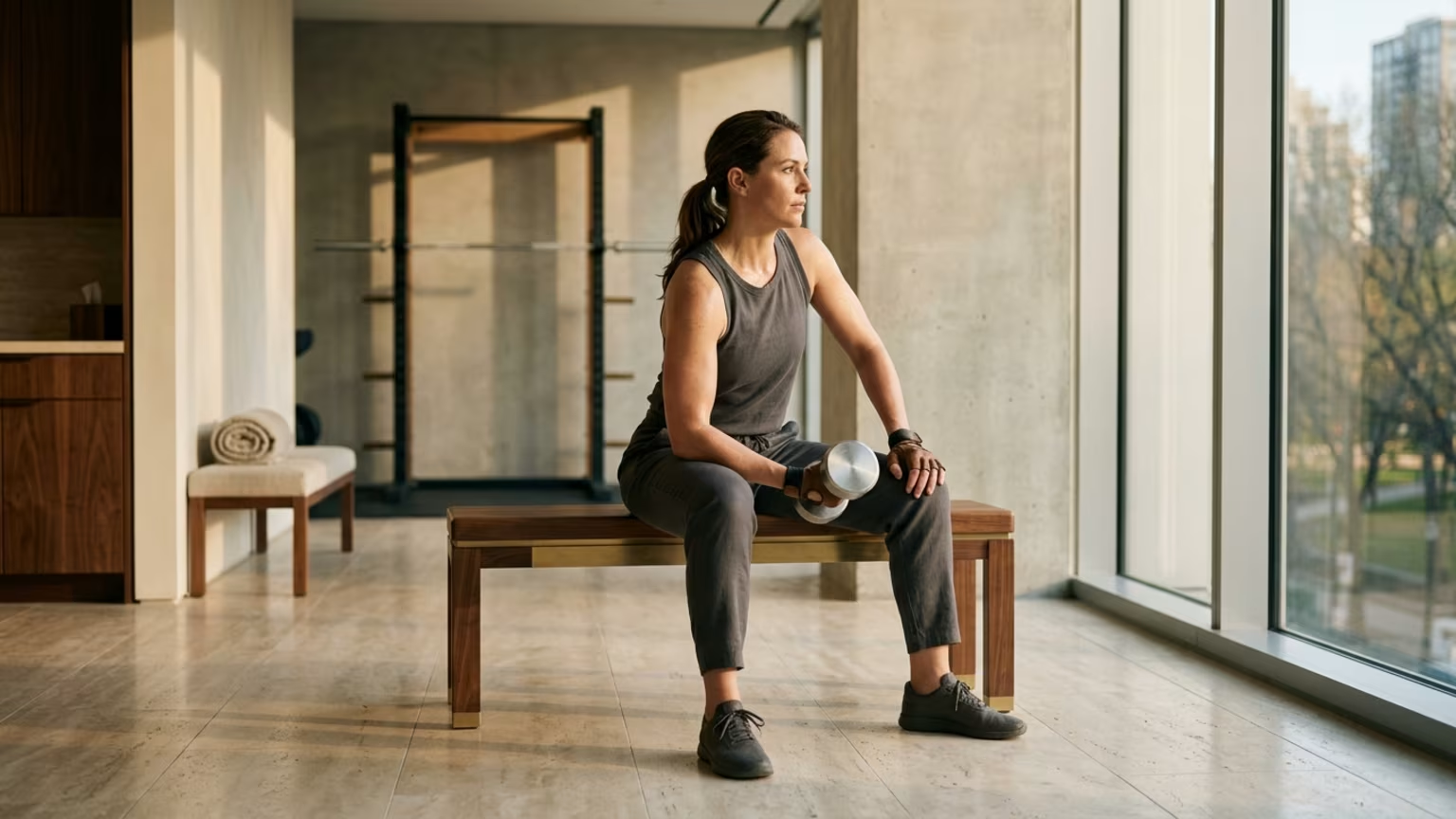
The key to a long and capable life is found entirely inside a squat rack or a carefully measured supplement routine. Physical training and intelligent nutrition are undeniably critical for maintaining independence as we age. We often treat friendship as an optional luxury that sits secondary to rigorous biomarker tracking. In reality, durable healthspan requires social connection just as much as physical capability, with isolation posing a measurable threat to long-term vitality.
The modern approach to healthy aging was built on a foundation of fierce independence. For decades, wellness culture prioritized variables that an individual could easily measure and control. We learned to track our daily steps, monitor our resting heart rate, and calculate our exact protein intake. This hyper-focused approach made perfect sense because it gave people clear and actionable goals.
However, this intense focus on individual metrics created a dangerous blind spot regarding our fundamental need for community. When health is framed strictly as a solitary physical pursuit, relationship building starts to look like a distraction from serious training. The irony is that treating social time as an inefficient use of hours actively undermines the physical resilience we work so hard to build. We forget that historical populations thrived primarily because they relied heavily on tight community networks.
Moving frequently for careers or travel only amplifies this modern trap. It is much easier to find a premium gym in a new city than it is to build a trusted circle of peers. Affluence and mobility can expand our opportunities while simultaneously disrupting our sense of continuity. Belonging generally requires time, vulnerability, and repetition.
The medical community now recognizes that disconnected living carries heavy physiological consequences. The World Health Organization's Commission on Social Connection describes loneliness and social isolation as widespread public-health concerns associated with serious health consequences. Their estimates suggest that roughly one in six people globally experiences loneliness. This staggering statistic proves that disconnection is not just a passing emotional state or a private lifestyle issue.
The physical toll of this widespread isolation is remarkably severe. The U.S. Surgeon General’s advisory used smoking up to 15 cigarettes a day as a population-level comparison for the mortality impact of social disconnection. While this does not mean loneliness is medically identical to smoking, the comparison powerfully illustrates the physiological burden of living without support. Cross-national cohort evidence links later-life social isolation and loneliness with higher all-cause mortality, while frailty may help explain part of the relationship.
It is crucial to understand that isolation and loneliness are two entirely different experiences. Isolation generally describes the quantity or frequency of your social contact, whereas loneliness describes a subjective experience of insufficient connection. Someone can be surrounded by people at a busy executive retreat and still feel deeply lonely. Conversely, another person might enjoy substantial solitude in the mountains without ever feeling distressed by their lack of company.
A widely cited meta-analysis reported that people with stronger social relationships had about a 50% greater likelihood of survival. Furthermore, the Harvard Study of Adult Development famously observed that relationship satisfaction at age 50 predicted health at age 80 more strongly than cholesterol measured at midlife. These findings emphasize relationship quality and dependability rather than social media numbers or an expanding contact list. A small number of trusted relationships often matters significantly more than a vast network of weak ties.
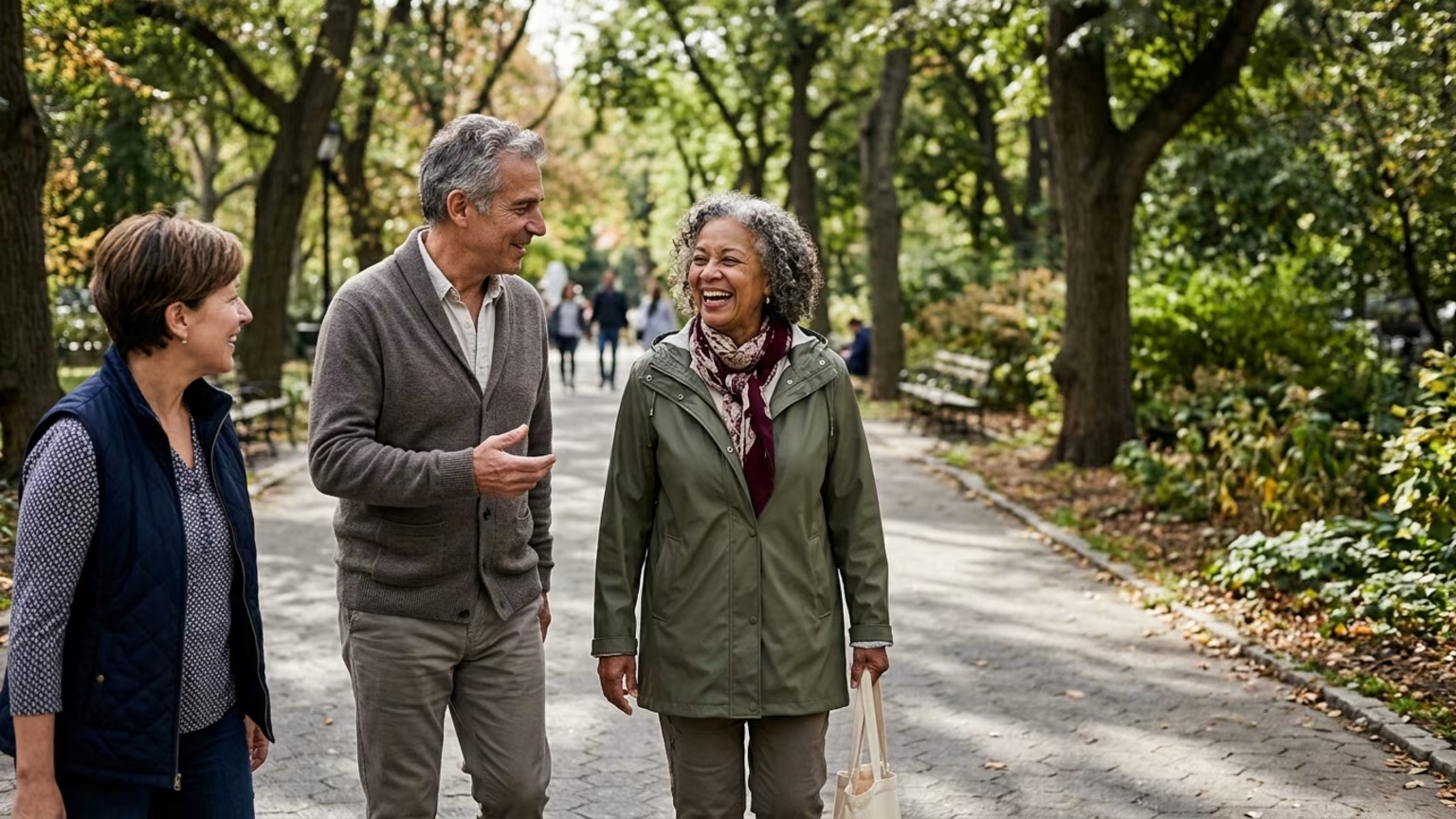
Combining physical movement with social participation offers a highly effective way to protect your long-term capability. Physical activity remains a critical contributor to independence, but the social setting often determines whether an activity becomes truly sustainable. In the LEAP pre-post study, participants in community-based group health classes reported lower loneliness and social isolation at six-month follow-up. Another systematic review found community-based exercise interventions improved health status more than minimal intervention among prefrail older adults.
Group activity creates repeated contact without forcing an artificial networking agenda. This practical approach prevents relationships from feeling like another item on a very long task list. A recent narrative review describes dance-based exercise as a promising approach that combines physical and social engagement, while noting that effects vary by intervention and population. Whether you prefer a master's swimming group or a local cycling club, the shared environment builds natural accountability. You show up for the training, but you return for the people.
These group environments also help adults navigate difficult transition periods with greater ease. Retirement, relocation, bereavement, and injury can severely disrupt a person's established social structure. Treating these life changes as reasons to actively rebuild routines prevents a temporary setback from becoming permanent isolation. Combining capability training with social exposure ensures that living a capable life remains a highly sustainable practice.
Belonging is often strengthened by being needed rather than simply consuming premium wellness services. Many longevity behaviors are significantly easier to maintain when they are attached to a meaningful social ritual. One study of older adults found that meaning in life and perceived social support were significant positive predictors of happiness. Purpose provides a sense of orientation that independent living alone cannot replicate.
This dynamic is particularly true when we contribute our time and expertise to others without expecting a financial return. Intergenerational service offers a compelling way to stay connected while transferring valuable knowledge to younger groups. The Lori’s Hands study reported stable or improved outcomes in at least one target area for 83% of participants after at least six months. Mentoring young professionals, organizing a club outing, or supporting a local conservation project positions you as an active community pillar.
Such service creates purposeful and reciprocal contact that anchors you securely to a specific local place. Healthspan is not a competition to see who can achieve the best individual metrics. Framing connection as just another measurable score could easily undermine the very qualities that make relationships so valuable. The most important question is not how efficiently you network, but who knows you well enough to share ordinary life.
Globally mobile adults face unique challenges when attempting to maintain deep community ties. Frequent relocations, demanding executive travel, and seasonal living can easily fragment a carefully planned social calendar. To counteract this disruption, active adults should prioritize portable rituals rather than trying to recreate an identical lifestyle everywhere. Establishing a weekly open-water swim or a recurring hiking day provides immediate structure when landing in a new location.
It is also vital to maintain a few anchor relationships that survive these geographic changes. A recurring monthly video call or an annual adventure trip can protect relationships that have real emotional substance. When moving to a new city, joining a local group with a stable schedule for several consecutive weeks allows casual acquaintances to develop into real trust. This repetition helps active adults maintain healthy travel routines without feeling isolated from their peers.
Creating a specific landing plan before you relocate can smooth this transition significantly. You should aim to identify one activity-based group and one professional community before you even unpack your bags. Finding a place for unstructured recurring contact, like a neighborhood cafe or a local market, builds casual familiarity. This intentional strategy prevents the common pattern of filling a calendar with isolated events that fail to develop true continuity.
Finally, you must ensure your friendships are broader than pure performance tracking. It is incredibly easy to make every conversation about optimizing physical performance, career advancement, or longevity protocols. We absolutely need moments where nobody has to perform. Unstructured conversations and shared meals are essential parts of maintaining long-term independence.
Physical strength and metabolic health provide the necessary hardware for a long and independent life. Yet, a resilient body requires a compelling reason to keep moving through the world. The ultimate value of maintaining our fitness is not found in solitary longevity or isolated physical achievements. True capability is realized when we have the energy to show up for the people who matter most.
Stay connected for research and practical guidance on longevity, strength, recovery, energy and active living. New ideas to help you stay capable, curious and ready for more.



Explore practical guidance on strength, recovery, energy, travel and longevity for a life that stays active.
explore the Blog