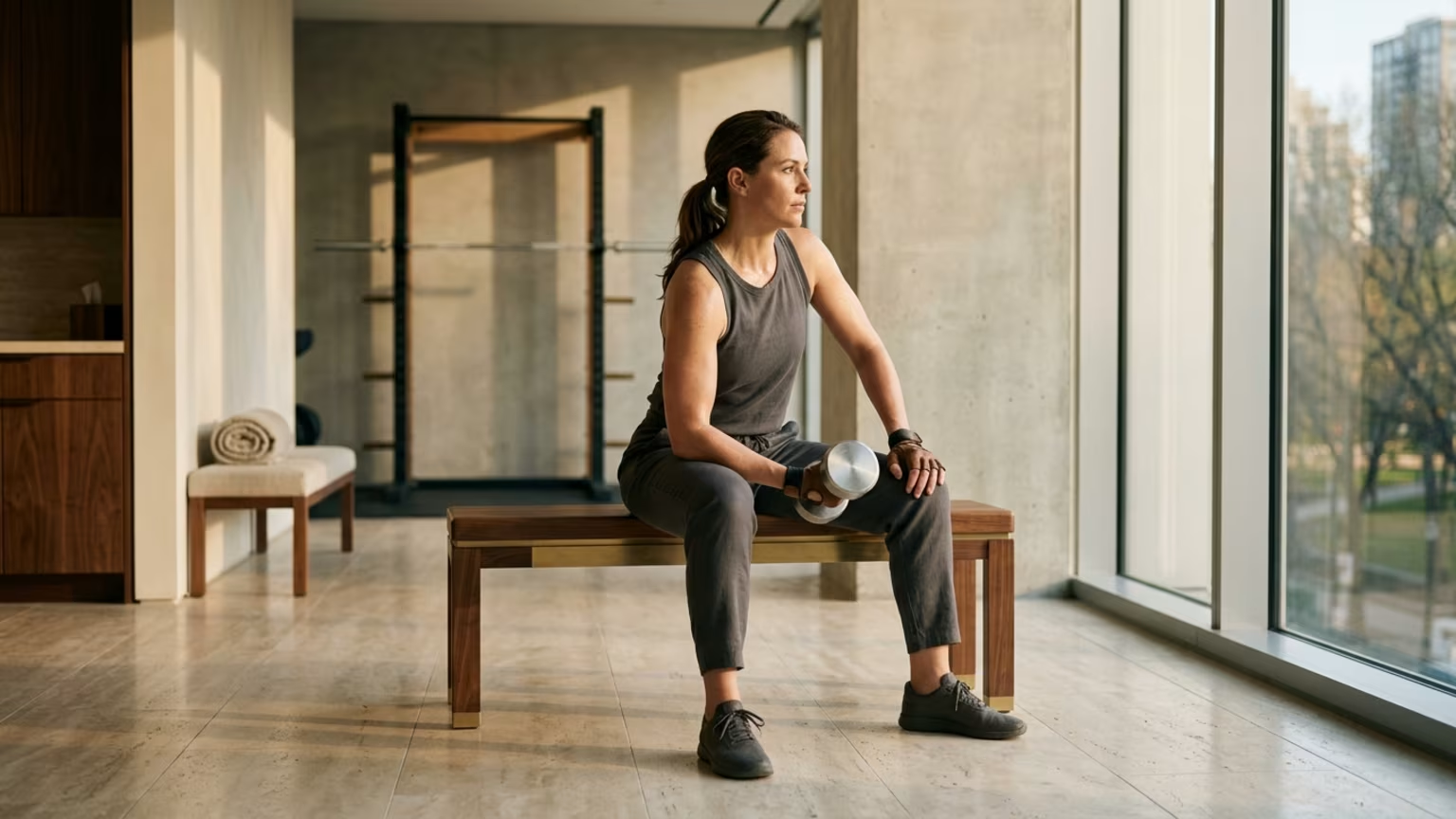

Learn how to build a practical longevity dashboard to track strength, aerobic fitness, and cognition without turning daily life into a medical project.





A traveler pauses at the base of the stairs in a busy transit hub with a heavy suitcase in hand. The physical toll of the long flight feels noticeably heavier than it did a decade ago. The immediate internal question is often why a long transit day now requires three days of recovery instead of one. This shift changes the way active adults plan their schedules and manage their physical energy.
The World Health Organization focuses on the physical and mental capacities people can draw on. This healthy aging framework evaluates functional ability rather than relying only on diagnosed disease. It is about maintaining the specific independence required to navigate the world confidently. A practical personal dashboard can track these useful signals without causing unnecessary medical anxiety.
Strength is expressed through everyday tasks like lifting luggage into an overhead bin or rising from a low chair. Professional guidance describes grip strength and chair rises as useful functional signals rather than standalone diagnoses. A systematic review found that higher baseline grip strength was generally associated with better later functional outcomes. This evidence is observational rather than proof that strength directly extends lifespan.
You can track strength using a consistent resistance movement or a simple loaded carry. You should test these metrics monthly rather than daily. A temporary dip after a poor night of sleep is less important than a persistent downward trend. A strong grip does not prove that every other aspect of health is perfectly satisfactory.
Aerobic capacity dictates whether you can spend a full day walking through a new city without complete exhaustion. The World Health Organization guidance is commonly summarized as 150 to 300 minutes of moderate aerobic activity weekly. Alternatively, you can aim for 75 to 150 minutes of vigorous activity. Both targets should include muscle strengthening on at least two days each week to maximize functional benefits.
A laboratory test is informative but entirely optional for most active adults. A more sensible measure is the talk test during a brisk walk or bike ride. Tracking your perceived exertion on a familiar route is highly effective for measuring aerobic reserve. You can easily monitor how quickly your breathing returns to normal after a steep climb.
Balance is the ability to respond to a misstep or move across uneven ground smoothly. The research literature links slower gait and changes in gait characteristics with falls. However, suggested gait speed thresholds vary significantly across different clinical studies. These numbers should always be interpreted alongside strength, cognition, previous falls, and the environment.
You can test your balance safely with a single-leg or tandem stance near a stable support. Moving under distraction is another practical test of real-world confidence. You might try naming items in a category while walking in a safe, controlled environment. The goal is usable control rather than an impressive personal record on an unstable surface.
Mobility combines joint range, coordination, and the confidence to change direction quickly. Gait speed has been described in geriatric research as a particularly useful indicator of overall health status. This metric is associated with survival and functional decline in older populations. A recent review emphasized that gait speed should not be interpreted in isolation.
Instead of overcomplicating things, time a comfortable walking speed over a fixed distance periodically. You can also combine lower-body power and coordination by tracking your stair capacity. For affluent adults, the most vital consideration for healthy aging and living well is whether you can execute preferred movements. This might mean getting into a boat or sitting on the floor comfortably with family.
Cognition involves attention, processing speed, planning, and the ability to handle competing demands simultaneously. A 2026 systematic review and meta-analysis found that cognitive training improved cognitive-motor dual-task gait speed. This showed a standardized mean difference of 0.39 across 376 participants. However, the evidence for single-task mobility and balance benefits was not significant.
The most practical metric is your real-world competence in unfamiliar settings. You can track your progress when learning a demanding new skill like a language or an instrument. Safely combining a walk with a simple cognitive task offers a great functional check. Persistent changes in memory or task management should be discussed with a professional immediately.
Poor sleep quickly manifests as reduced attention, slower recovery, and impaired physical training. Wearable devices often create false precision that can increase daily anxiety levels. Evidence suggests consumer trackers are more useful for broad sleep patterns than for detecting wakefulness or diagnosing sleep disorders. A 2026 study reported poor correlation across devices for most sleep measures, with duration being the main exception.
You should focus on sleep duration and morning alertness instead of obsessing over deep sleep stages. A wearable cannot reliably diagnose insomnia or sleep apnea under any circumstances. You should record your approximate time in bed alongside factors like late meals or travel. Evaluating your daytime energy is the ultimate metric for managing recovery and sleep effectively.
Social connection is the least obvious biometric signal on a personal longevity dashboard. The World Health Organization includes psychological capacity within its comprehensive healthy aging framework. Maintaining friendships and entering new environments are essential components of capable, independent aging. A cross-continental study found that the associations between functional domains and daily living risks differ significantly across cultures.
You can track meaningful contact by noting genuine conversations or group activities each week. Participating in a club or a group workout provides both physical and social benefits. Avoid reducing your relationships to a simple numbers game or a weekly contact leaderboard. One meaningful interaction provides far more value than multiple superficial contacts.
Many conventional approaches to aging rely on flawed assumptions that complicate everyday life unnecessarily. Active adults aiming to optimize physical performance should intentionally ignore the following common advice:
Reducing your entire physical capacity to one number ignores vital context and daily reality. Health relies on a combination of functional domains interacting together dynamically. A single poor score after jet lag is not the same as a permanent physical decline.
Consumer wearable sleep stage estimates are materially less dependable than their broad duration tracking. Fixating on these specific numbers often increases anxiety without actually improving your rest. You should prioritize daytime restoration and consistent habits over a nightly device score.
Strength, aerobic fitness, balance, and mobility overlap constantly in real life. They should be integrated into the same training plan rather than treated as entirely separate identities. A balanced approach supports everything from local travel and adventure to basic household tasks.
A practical dashboard prioritizes trend, context, and functional capability over strict clinical precision. Active adults can monitor their physical and mental signals using these straightforward principles:
True capability is measured by the ability to continue doing the things you love with confidence. WealthAtPlay focuses on translating these scientific signals into sustainable, realistic daily habits.
Stay connected for research and practical guidance on longevity, strength, recovery, energy and active living. New ideas to help you stay capable, curious and ready for more.





Explore practical guidance on strength, recovery, energy, travel and longevity for a life that stays active.
explore the Blog