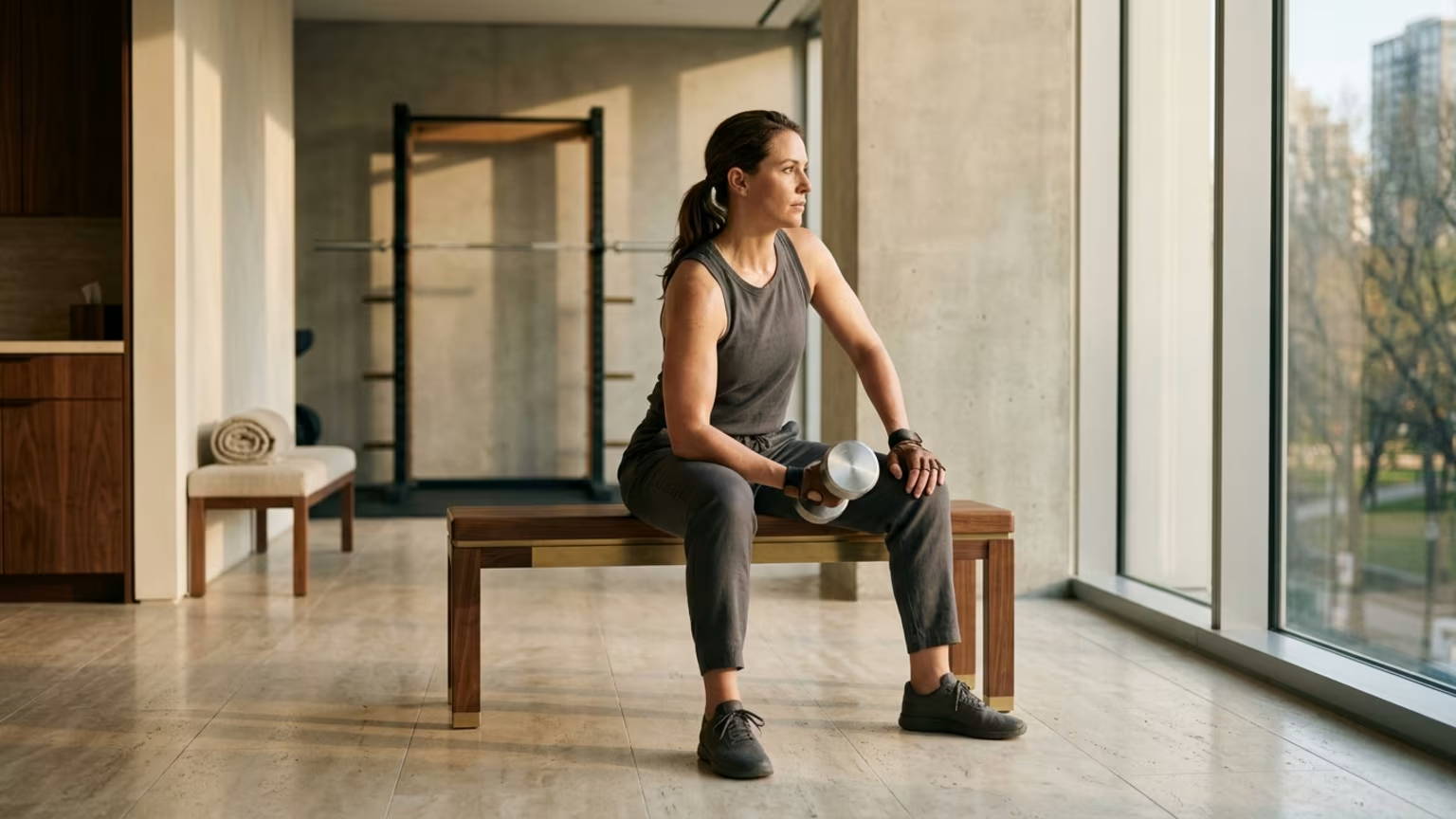
New research links aerobic fitness to a 15 percent better performance in noisy speech perception, helping active adults stay engaged during demanding travel.





On September 3, 2026, new preliminary research from Northeastern University revealed that cardiorespiratory fitness is associated with a greater ability to understand speech in difficult listening environments. For the active adult who values physical and mental independence, this connects physical stamina directly to everyday cognitive sharpness. Being fit means more than just maintaining strength for demanding adventures. It also helps you stay fully engaged in complex social settings when you travel or dine out.
This connection between the body and the brain changes how we view routine cardio workouts. Many people associate aerobic training strictly with heart health or endurance for long flights. However, these new findings suggest that breaking a sweat might also help you filter out background noise and stay mentally present. A strong cardiovascular system appears to support the cognitive resources required to preserve your communication skills as you age.
The ongoing Northeastern University study is currently in its first phase under the guidance of researcher Joe Peelle and his collaborator Carey. To understand the relationship between physical conditioning and hearing, the team asked participants to run on a treadmill. The subjects wore masks that measured oxygen consumption to accurately estimate their cardiorespiratory fitness. Afterward, the participants completed specialized speech-in-noise tests by repeating recorded sentences played against varying levels of background noise.
The early results highlight a fascinating link between physical health and auditory processing capabilities. Participants with higher fitness levels performed approximately 15 percent better on the speech-in-noise tasks compared to less fit individuals. Understanding speech in a noisy room requires attention, executive function, and working memory to separate the target voice from competing sounds. A strong cardiovascular system allows the aging brain to allocate these critical resources more efficiently.
The researchers are now investigating whether physical conditioning directly influences these cognitive resources over time. While the current data shows a strong association, it does not yet prove that exercise causes better speech perception on its own. To investigate this further, the scientific team plans a next-phase test using a vigorous 20-minute treadmill session. They want to see if a single bout of intense exercise produces an acute improvement in how well people process complex speech.
This planned single-session experiment is intended to serve as a prototype for a comprehensive six-month intervention. The eventual goal is to determine if regular workouts can improve functional communication in real-world situations. This objective aligns with a broader scientific interest in how movement protects the aging brain against decline. A 2026 meta-analysis found that structured exercise was associated with better global cognition in older adults.
That meta-analysis noted a positive trend, but the researchers characterized the certainty of the evidence as very low. There is no simple rule linking a specific number of exercise minutes to guaranteed cognitive benefits. A separate 2026 review reported potential benefits for attention, executive function, and working memory across various exercise modalities. However, researchers have not identified one universally superior exercise prescription for absolute cognitive longevity.
Joe Peelle offered valuable perspective on what a 15 percent improvement actually means for everyday communication. He stated that the difference corresponds roughly to understanding one or two additional words per sentence. Those extra words matter greatly in chaotic spaces by providing enough context to significantly improve overall comprehension. When you catch the critical verb or noun in a loud room, the entire conversation becomes easier to follow.
Peelle also noted that attention and working memory might benefit from even a single bout of aerobic exercise. These are the exact cognitive processes required to decipher speech when competing sounds try to drown it out. If a short workout primes the brain for better focus, active adults have yet another reason to prioritize their daily movement. The ability to concentrate is just as important as physical mobility when navigating a highly demanding environment.
These findings have direct implications for how you manage travel recovery and sustained energy during demanding trips. Imagine arriving at a bustling international airport after a long and exhausting flight. If your cardiorespiratory fitness is high, your brain has a better capacity to filter out the overwhelming terminal noise. You can maintain your focus to communicate with a fast-talking customs agent without becoming entirely overwhelmed.
This same principle applies to recovering from altitude changes or adjusting to new time zones abroad. When you spend the day hiking or skiing at high elevation, your body and mind experience significant physical fatigue. Gathering in a loud ski lodge afterward can feel exhausting if your brain struggles to isolate conversation from the background music. Maintaining strong cardio capacity preserves the cognitive stamina you need to enjoy the social aspects of your adventure.
Furthermore, research using auditory data from adults aged 40 and older confirms the reality of these acoustic challenges. Older participants consistently perform worse than younger people across difficult environments, but those with better working memory scores perform better under noise. Staying fit might keep those working memory reserves robust, ensuring you remain fully engaged and connected during your travels. Maintaining this baseline ensures your mental fitness after 40 remains sharp.
Proper conditioning helps you navigate these acoustic hurdles without withdrawing from social engagement. When you know you can rely on your physical and mental stamina, you approach active group travel with confidence. Understanding how to manage demanding environments requires a holistic view of your health. Your cardiovascular resilience directly influences your sensory processing and overall comfort.
While we await the final results of the Northeastern intervention, the current evidence strongly supports a proactive approach to physical health. You do not need to wait for a six-month clinical trial to start reaping the broader benefits of steady movement. Professional reviews suggest that cardiorespiratory endurance and muscle strength are strongly linked to better hearing-related outcomes. Integrating consistent aerobic exercise into your routine is a highly practical step toward comprehensive healthy aging.
Public health guidance recommends accumulating 150 to 300 minutes of moderate-intensity aerobic activity each week. Alternatively, you can aim for 75 to 150 minutes of vigorous activity while including muscle-strengthening sessions on at least two days per week. For those returning to exercise after a long break, it is vital to build volume and intensity progressively over time. You should not immediately attempt a vigorous 20-minute treadmill session without a proper fitness foundation.
While exercise builds your cognitive reserves, you can also take immediate steps to reduce listening demands during your active adventures. When dining out or traveling with a group, deliberately choose quieter venues whenever possible. Position yourself away from loudspeakers, face your conversation partners directly, and ensure the lighting allows you to see facial expressions. Visual cues significantly reduce the cognitive load required to successfully follow a complex conversation in a busy space.
You can also ask speakers to pause slightly between thoughts rather than simply asking them to speak much louder. A brief pause gives your working memory a crucial moment to process the incoming information. If you experience persistent difficulty understanding speech in noise, you should schedule a professional assessment. Exercise supports your cognitive auditory processing, but it cannot replace a proper evaluation or necessary interventions for underlying structural hearing changes.
To preserve your ability to communicate effortlessly in chaotic environments, maintain a consistent aerobic training routine as a core pillar of your healthy aging strategy.
Stay connected for research and practical guidance on longevity, strength, recovery, energy and active living. New ideas to help you stay capable, curious and ready for more.





Explore practical guidance on strength, recovery, energy, travel and longevity for a life that stays active.
explore the Blog