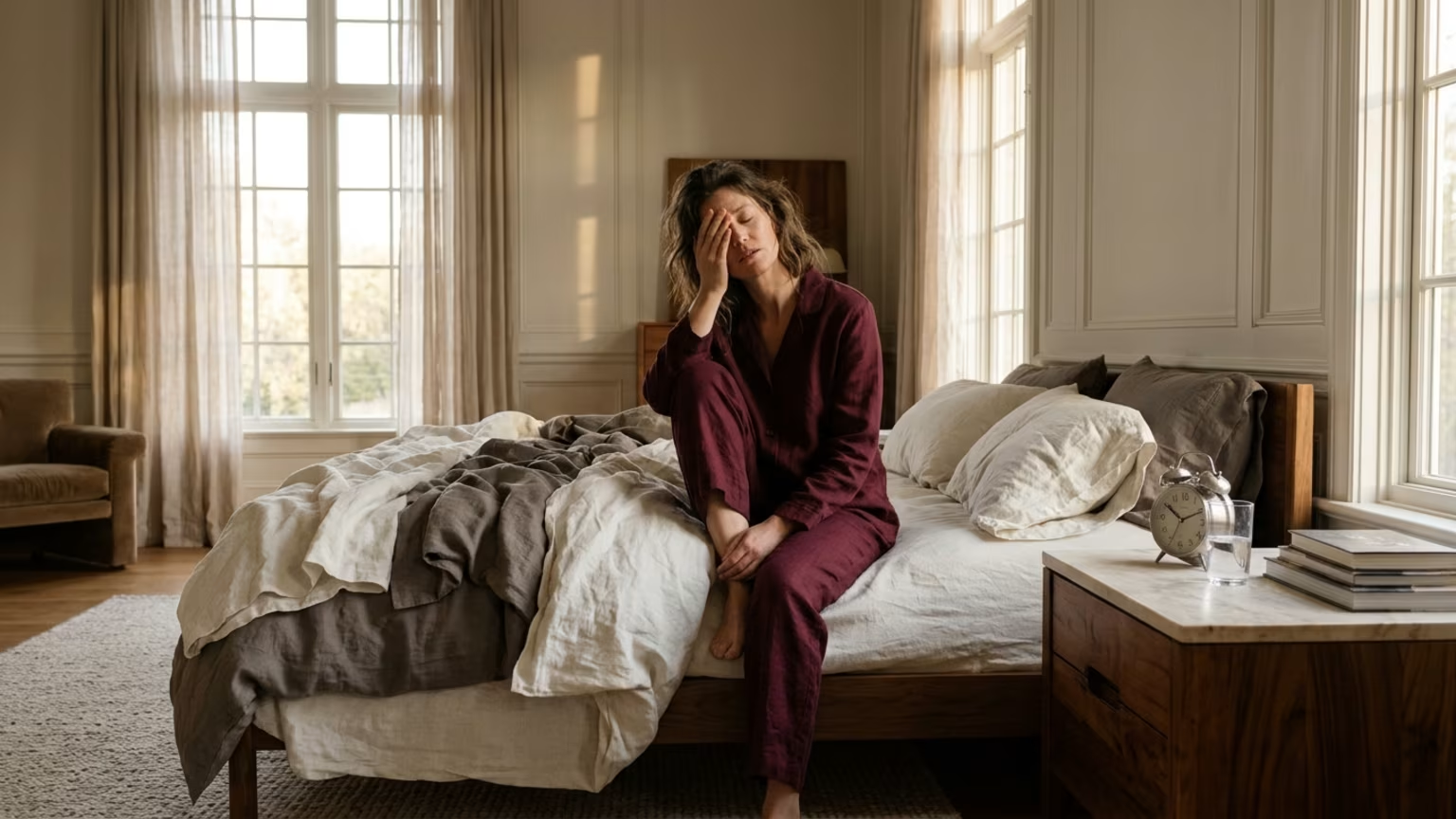

Clock changes may affect sleep for up to a week. See how morning daylight and consistent timing fit into travel and active days.





On October 21, 2026, British GQ published Emily Laurence’s guidance on preparing for the UK’s autumn clock change. It reported that a one-hour shift can affect sleep schedules for up to a week. If you have an early flight or a demanding day outdoors ahead, that finding deserves a place in your planning.
The useful question is not simply whether the clock gives you an extra hour. It is whether your sleep timing supports the day you want to enjoy. For active adults who value their independence, the practical response centers on familiar habits: morning daylight and consistent sleep timing.
GQ traces the week-long adjustment finding to a review in Sleep Medicine Reviews by Liverpool John Moores University’s Dr Yvonne Harrison. The central distinction is between changing the time on a clock and changing the timing of sleepiness and alertness.
The clock changes at once. Your usual pattern of feeling ready for bed or ready to get moving may not follow immediately. GQ’s coverage emphasizes that this is a scheduling issue as well as a question of how much sleep you get.
Light helps explain the practical advice. GQ quotes sleep-medicine specialist Dr Wissam Mansour explaining that bright light after waking can signal morning to the brain. Dimming lights and avoiding screens before bedtime can reduce alerting cues in the evening.
Think of these as signals marking the beginning and end of the day. The recommendation is to make those signals consistent, rather than treating the clock change as permission to rearrange the whole routine. That is a more useful starting point than assuming an autumn change automatically delivers better recovery.
BBC News Polska reports that a 2024 UK study involving more than 11,000 people found average sleep was 65 minutes shorter on the Sunday after the spring change than in the preceding week. That finding describes sleep duration around the spring transition.
The autumn result was different. According to BBC News Polska, people slept an average of 33 minutes longer on the Sunday after the autumn change. Moving the clocks back did not translate into a full extra hour of sleep on average.
These figures answer a different question from the review summarized by GQ. The BBC figures describe how much sleep people obtained on particular days. The review concerns how long sleep schedules can remain affected by a one-hour shift.
GQ’s account does not provide the review’s methods or effect estimates. The BBC averages do not establish any individual’s adjustment time. Neither finding should be read as a measurement of sporting endurance or altitude adaptation.
Individual variation also puts the headline in perspective. Sleep specialist Alejandro Pastor, speaking to La Vanguardia, says most people adapt within a few days. He recommends morning outdoor light and similar sleep and wake times while cautioning against becoming overly preoccupied with the change.
Taken together, the reporting supports a measured response: allow for temporary disruption without expecting a difficult week. The useful emphasis is on keeping your routine recognizable rather than anticipating a problem.
For travel and sport, the immediate implication is about preparation. GQ’s reporting describes a shift in when people may feel sleepy or alert. That makes sleep timing relevant when an itinerary includes early departures or demanding starts.
A sensible planning response is to protect the routine around those commitments. Rather than counting the autumn change as a guaranteed recovery bonus, keep the surrounding days straightforward. This fits a broader approach to making recovery part of an active life, without turning a seasonal adjustment into a major project.
The following suggestions reflect the expert advice in the coverage. Each focuses on a single part of the day so that the response stays manageable.
Morning light is a consistent recommendation across the reporting. GQ’s interviewed sleep doctors recommend it. Dr Mercer makes a similar recommendation in Tom’s Guide, while Pastor advises going outside soon after waking in La Vanguardia.
The practical action is straightforward: make outdoor light part of the morning. At home or while traveling, this can sit within your existing routine rather than becoming another performance target. The sources do not call for an elaborate setup or a tracking exercise.
For an active holiday, keep the focus on that simple morning habit rather than adding a separate recovery ritual. The aim is to give the start of the day a familiar signal, not to fit another demanding activity into the itinerary.
GQ’s advice pairs morning light with dimmer evenings. Mansour explains that dimming lights and avoiding screens before bedtime can reduce signals that encourage alertness. This addresses the other end of the day without requiring a complete lifestyle overhaul.
Choose the evening environment as the next point of attention. Keep lighting quieter as bedtime approaches rather than focusing only on the hour displayed by the clock. The advice is about supporting a consistent transition toward sleep.
This is especially practical when packing or organizing an early departure. Treat the evening as part of the travel plan, not merely the time left over after everything else is finished. Protecting that space is a planning choice rather than a promise of perfect sleep.
Both GQ and La Vanguardia emphasize consistent sleep and wake times. Pastor’s recommendation is to keep those times similar, rather than allowing the clock change to become a reason for an entirely different schedule.
For a trip or a sporting weekend, put sleep timing alongside the other commitments you are organizing. An early start deserves attention to the evening before it. The useful goal is continuity across the transition, not a rigid pursuit of an ideal night.
That distinction keeps the advice realistic. You are maintaining an ordinary routine through a small calendar disruption. Pastor’s caution against becoming overly preoccupied is worth retaining alongside the practical recommendations.
For people who are sensitive to schedule changes, Tom’s Guide quotes Dr Zoe Williams suggesting a gradual adjustment before the autumn change. Her advice is to move bedtime and wake time 15 minutes later each day for a few days beforehand.
This is practitioner advice for sensitive sleepers, not a universally tested prevention strategy. It is best understood as an alternative way to approach the transition rather than an additional requirement for everyone.
The distinction matters when deciding how much attention to give the change. Morning daylight and familiar timing are the recurring recommendations across the coverage. A gradual schedule shift is a more specific suggestion for people who already find these changes disruptive.
For travel recovery, the most useful application is to avoid building an itinerary around the assumption of a free hour of restorative sleep. The autumn average reported by BBC News Polska gives a clear reason to question that assumption. Clock time and sleep obtained are not interchangeable.
If the change falls near a journey, keep your attention on the sleep routine surrounding departure. Our coverage of planning sleep around travel demands offers another place to consider that planning question. Here, the immediate action remains modest: preserve familiar timing and make room for morning daylight.
For skiing or hiking, the same planning principle applies. Do not count the clock change itself as extra preparation for a demanding start. Keep the evening and morning routine visible when arranging the day’s activities.
There is also no need to turn every restless night into evidence that the adjustment is going badly. Pastor’s message is that most people settle within a few days. Hold on to that reassurance while maintaining the simple habits the experts recommend.
Around the clock change, preserve familiar sleep timing and morning daylight while planning travel or sport around your actual alertness rather than an assumed extra hour of recovery.
Stay connected for research and practical guidance on longevity, strength, recovery, energy and active living. New ideas to help you stay capable, curious and ready for more.


Explore practical guidance on strength, recovery, energy, travel and longevity for a life that stays active.
explore the Blog
